Most headlines treat an intercepted missile like a closed book. Saudi air defences intercept three Houthi cruise missiles launched toward Riyadh, everyone breathes a sigh of relief, and the news cycle moves on within six hours.
That framing misses the entire point.
When three low-flying cruise missiles cross hundreds of kilometers of desert toward the Saudi capital and get knocked out before hitting a single building, you're not just looking at a routine military update. You're looking at a live stress test of some of the most expensive, tightly integrated radar and interceptor networks on the planet—and a clear signal about how Houthi strike tactics have shifted away from high-altitude ballistic shots toward terrain-hugging weapons that are much harder to spot.
Why Cruise Missiles Toward Riyadh Change the Equation
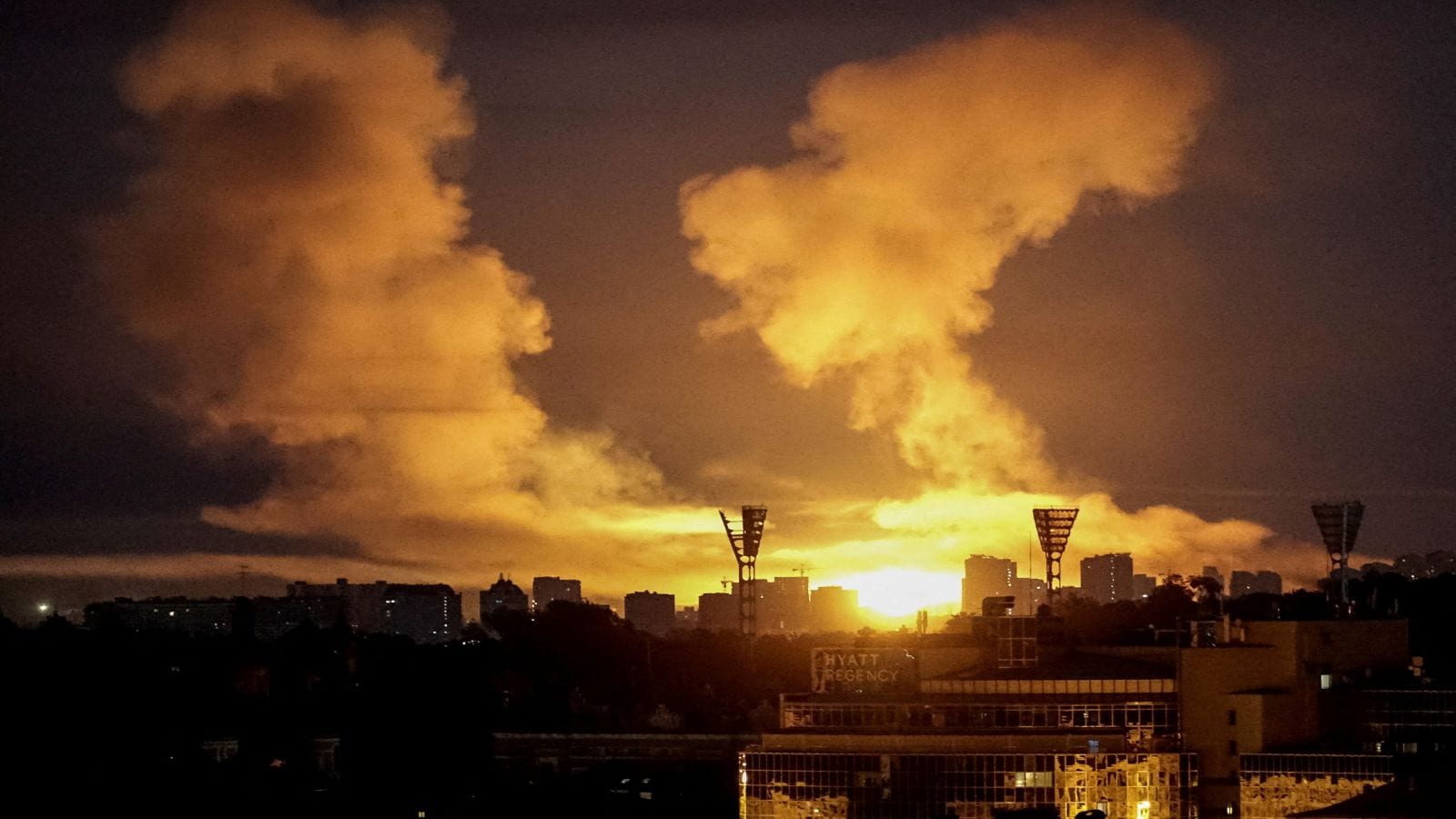
Ballistic missiles get all the press because they look dramatic on grainy smartphone footage. They arc high into the upper atmosphere, light up the night sky over Riyadh, and give early-warning satellites plenty of time to track their trajectory.
Cruise missiles don't play by those rules.
Instead of climbing high, a land-attack cruise missile flies low—sometimes just dozens of meters above the desert floor—using terrain contours to hide beneath the horizon of ground-based radar. By the time a standard surface radar sees a low-altitude target, the window to calculate a firing solution and launch an interceptor shrinks from several minutes down to seconds.
Three missiles launched simultaneously toward Riyadh isn't an accident or a symbolic gesture. Firing in a small salvo is a classic saturation tactic designed to force defending batteries to split their radar attention, burn through expensive interceptor inventory, and expose any blind spots along the southern approach corridor from Yemen.
How Saudi Air Defences Actually Track and Stop Low-Altitude Threats
Stopping three cruise missiles before they reach urban Riyadh requires more than a single battery sitting on the edge of the city. If a defender waits until a cruise missile is over the suburbs, even a successful interception drops heavy burning debris onto highways, residential blocks, or industrial facilities.
To prevent that, Saudi Arabia relies on a layered architecture that stretches all the way back toward the southern border:
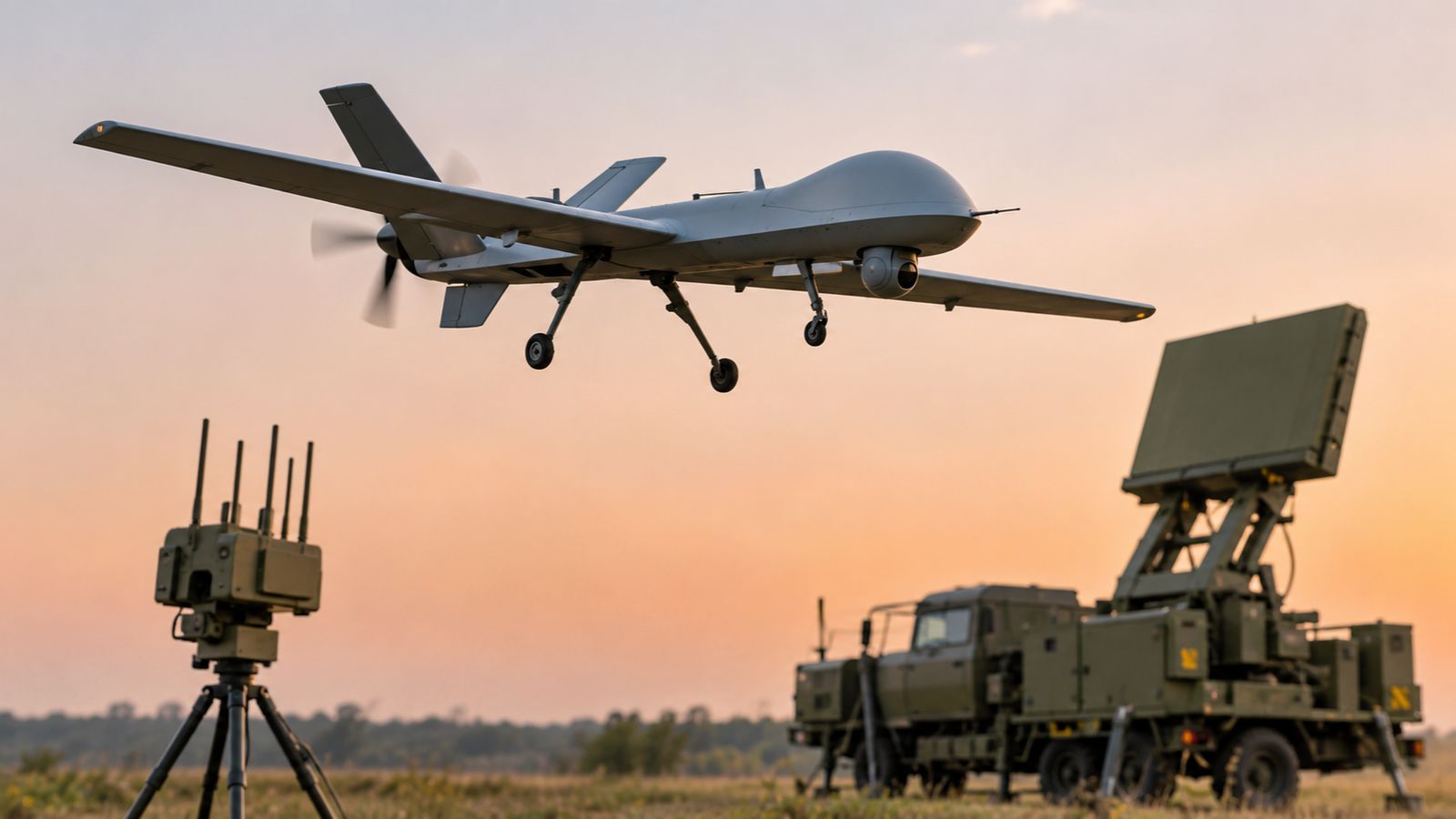
- Airborne early warning radar. Ground radars suffer from the curvature of the Earth, so Saudi forces lean heavily on airborne radar aircraft like the Boeing E-3 Sentry to look down from high altitude and spot low-flying objects against ground clutter.
- Medium- and short-range terminal batteries. While Patriot PAC-2 and PAC-3 batteries handle high-altitude ballistic threats, lower-tier systems—including upgraded Skyguard batteries, Shahine units, and newer point-defence interceptors—are positioned specifically to catch slow, low-flying cruise missiles and drones before they enter dense airspace.
- Centralized battle management. Radar tracks from airborne sensors, border posts, and capital-region batteries feed into shared command centers so a shooter near Riyadh knows a target is coming long before its own local dish locks on.
Intercepting all three missiles without reported casualties or major infrastructure damage means that sensor-to-shooter chain held together under real pressure.
What Houthi Cruise Missile Capabilities Look Like in Practice
For years, skeptics assumed the Houthi movement in Yemen only possessed crude, unguided rockets and legacy Scud variants left over from pre-war Yemeni stockpiles. That assumption aged poorly.
Through sustained technical assistance and smuggled components, Houthi forces have fielded several distinct land-attack cruise missile designs—most notably the Quds series (including Quds-1, Quds-2, and longer-range variants), which analysts at organizations like the Center for Strategic and International Studies (CSIS) and United Nations panels of experts have linked to Iranian Soumar and Hoveyzeh cruise missile designs.
These weapons aren't garage projects. A functional land-attack cruise missile needs a compact turbojet or turbofan engine, a reliable inertial navigation system paired with satellite guidance, and an airframe capable of holding stable flight for more than 800 to 1,000 kilometers—roughly the straight-line distance from northern Yemen to Riyadh.
Here is why that range matters so much. Riyadh sits deep inside the Arabian Peninsula, well north of the border cities like Najran, Jizan, and Khamis Mushait that absorbed the brunt of early cross-border fire. Reaching the capital with a cruise missile requires sustained fuel efficiency, accurate waypoint programming to steer around known air-defence clusters, and reliable terminal guidance at the end of a multi-hour flight.
The Cost Asymmetry Problem Nobody Likes Talking About
Even when Saudi air defences score a clean three-for-three interception, the math behind the engagement remains uncomfortable for military planners.
A Houthi cruise missile built with commercially sourced navigation electronics and a small jet engine costs a fraction of a modern Western surface-to-air interceptor. Depending on the specific interceptor fired—whether a Patriot missile or a specialized short-range air-defence round—a single defensive shot can run anywhere from several hundred thousand dollars to more than $3 million. And standard military doctrine often calls for firing two interceptors at a single incoming target to guarantee a kill.
Do the arithmetic on three incoming missiles. Defending Riyadh for ninety seconds can easily burn through several million dollars in hardware, plus weeks of logistical replenishment.
You can't solve that imbalance just by buying more missiles forever. That's precisely why regional militaries have poured money into electronic warfare, GPS jamming, directed-energy prototypes, and cheaper short-range kinetic interceptors. You don't want to use a Ferrari to stop a moped if you can avoid it.
Reading Between the Lines of Official Military Statements
When the Saudi-led coalition or the Saudi Ministry of Defense releases a brief statement confirming the interception of three Houthi cruise missiles toward Riyadh, you have to pay close attention to both what they say and what they leave out.
Official statements almost always confirm three core details quickly:
- The number of incoming targets destroyed.
- The intended target city or region.
- Whether falling debris caused injuries or property damage on the ground.
What they rarely disclose in the first 24 hours are the exact interception coordinates, which specific battery type scored the kills, or whether any decoys accompanied the main salvo. That silence isn't evasive—it's basic operational security. Giving away the exact kilometer marker where a cruise missile went down tells Houthi planners precisely where the radar horizon picked up their flight path, allowing them to adjust waypoints on the next launch.
At the same time, public confirmation serves a clear strategic purpose. Riyadh wants international investors, energy markets, and domestic residents to see that the capital's airspace remains protected even when regional tensions spike.
What This Means for Regional Security and Airspace Risk
An attempted three-missile strike on Riyadh reverberates well beyond military briefings.
First, it reminds airlines and aviation regulators why civilian flight corridors across the southern and central Arabian Peninsula require constant dynamic routing. Even when air defences perform cleanly, active interceptor launches and falling metallic fragments create immediate hazards for commercial aircraft cruising at 35,000 feet.
Second, it underscores how fragile de-escalation efforts in Yemen remain. Long-range launches toward Riyadh historically spike whenever diplomatic talks stall, ceasefire understandings fray, or broader Middle Eastern flashpoints spill over into Red Sea and Gulf security calculations.
Third, it shows that air defence is no longer a background insurance policy for Gulf capitals—it is an active, daily operational requirement.
How to Follow Future Air-Defence Incidents Without Falling for Rumors
Whenever sirens or loud booms echo over Riyadh, social media fills up within minutes with recycled videos from completely different conflicts, misidentified sonic booms, and exaggerated casualty claims. If you want an accurate picture of what actually happened during a missile interception, stick to a simple verification routine:
- Cross-check video metadata before sharing. Look for landmarks specific to Riyadh—like the Kingdom Centre or King Abdullah Financial District skyline—and verify local weather and time of day against live feeds before trusting dramatic night-sky clips.
- Wait for the official Saudi Ministry of Defense or coalition briefing. Initial wire reports from outlets like Reuters, AP, or The Indian Express usually pull directly from these official releases once debris assessments finish.
- Watch civil aviation notices (NOTAMs) and flight-tracking maps. Sudden holding patterns or temporary diversions around King Khalid International Airport are often the fastest real-time confirmation that active air-defence operations just occurred.
- Separate interception success from debris reports. A loud explosion over a city usually means an interceptor destroyed its target mid-air, not that a missile struck the ground—and small fragments landing in residential districts are a normal byproduct of successful terminal defence.
Three intercepted cruise missiles toward Riyadh prove two things at once: Houthi forces still retain long-range precision strike ambitions, and Saudi Arabia's layered air-defence shield remains sharp enough to catch low-altitude threats before they reach the capital.