The mahogany boardrooms of Wall Street and the subterranean command centers of the American intelligence apparatus usually speak two entirely different languages. One deals in liquidity, quarterly earnings, and the cold arithmetic of mergers and acquisitions. The other deals in intercepted communications, satellite telemetry, and covert operations executed in the dead of night.
Yet, the intersection of these two worlds has just expanded dramatically. Discover more on a related topic: this related article.
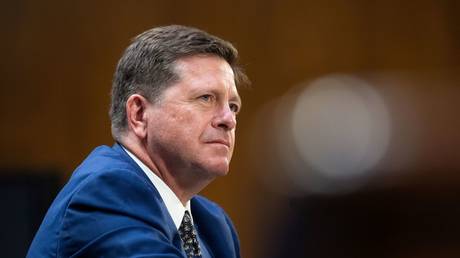
Walter Joseph Clayton III, widely known as Jay, sits at the helm of the United States intelligence community. Confirmed by a narrow, party-line vote in the Senate, Clayton now oversees eighteen distinct spy agencies. For a man whose professional DNA was forged in elite corporate law firms and financial regulatory offices, this transition represents one of the most unusual career arcs in modern government history.
Consider the sheer gravity of the office. The Director of National Intelligence does not merely review daily memos. This official coordinates the information lifeblood of a superpower, balancing foreign threats from hostile nations against domestic civil liberties. Traditionally, occupants of this office have risen through military chains of command, diplomatic corps, or decades within the clandestine services themselves. More reporting by USA Today explores comparable perspectives on the subject.
Clayton arrived with a vastly different resume.
His formative years were spent navigating complex financial transactions. For over two decades, he worked at Sullivan & Cromwell, the powerhouse New York law firm where corporate titans turn when billions of dollars hang in the balance. During the chaotic financial crisis of 2008, Clayton helped architect high-stakes deals, advising on Barclays' acquisition of Lehman Brothers and JPMorgan Chase's takeover of Bear Stearns. He understood balance sheets long before he ever looked at a classified threat assessment.
When Donald Trump won the presidency the first time, Clayton was tapped to lead the Securities and Exchange Commission. During his tenure as SEC chairman from 2017 to 2020, he championed market accessibility while frequently clashing with critics who argued his Wall Street ties made him too lenient on major financial institutions. He was a man comfortable with regulation, bureaucracy, and the slow, deliberate machinery of economic policy.
Then came the pivot.
Following his time at the SEC and a return to private sector advisory roles, Clayton reentered the public sector as the United States Attorney for the Southern District of New York. Stepping into Manhattan's federal prosecutor's office thrust him into the world of criminal indictments, white-collar investigations, and high-profile legal battles. It was a shift from civil regulation to criminal enforcement, bringing him closer to the punitive powers of the state.
Yet, stepping from a federal prosecutors office into the role of nation's top intelligence chief bypassed traditional expectations entirely.
His confirmation hearings exposed deep political fault lines. Lawmakers pressed him on whether his background equipped him for the labyrinthine realities of global espionage and counterintelligence. Contentious exchanges unfolded regarding the 2020 presidential election, with critics questioning his responses and probing whether political pressures would influence how intelligence is gathered and evaluated. Senators from across the aisle voiced sharp reservations about placing an attorney with limited conventional national security credentials at the apex of the nation's spy network.
Supporters, however, pointed to his extensive administrative leadership. They argued that managing massive regulatory agencies and prosecuting complex federal cases demands the exact kind of executive discipline and crisis management required to steer an intelligence community currently grappling with legislative deadlocks and internal restructuring.
Now, the transition is complete. The corporate lawyer who once spent his days poring over initial public offerings and multi-billion-dollar bank buyouts must now weigh intelligence streams concerning foreign adversaries, cyber warfare, and global instability.
The boardrooms of Wall Street feel very far away. But the analytical discipline learned in those high-stakes negotiations remains. Whether that background translates into effective oversight of the nation's most sensitive secrets is a question whose answer will echo far beyond Washington.