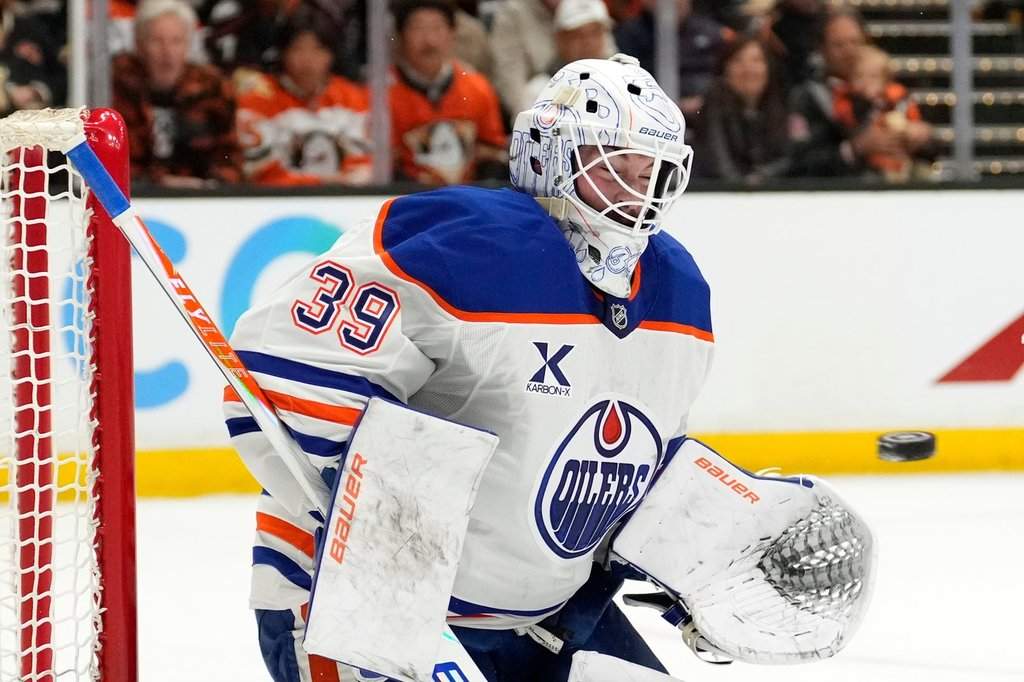
Goaltender Connor Ingram officially walked away from professional hockey at age twenty-nine, announcing his retirement via social media after a turbulent five-season career split across stops with Nashville, Arizona, Utah, and Edmonton. While standard sports ticker reports frame the choice around his recent status as an unrestricted free agent or his performance statistics in the crease, the deeper narrative centers on a player who already beat much darker odds long before hanging up his skates. Ingram earned the Bill Masterton Memorial Trophy in 2024 for perseverance and dedication after publicly detailing his battle with obsessive-compulsive disorder and depression, making his departure from the sport less of a sudden exit and more of a conscious reclamation of life away from the rink.
The professional sports machine demands total compliance. Bodies break down under heavy workloads, while minds fray under the constant spotlight of social media scrutiny and nightly performance evaluations. Ingram understands this pressure better than most. Back in January 2021, before he had firmly established his footing in the majors, the weight became heavy enough to force him into the NHL and NHLPA Player Assistance Program. He later shared how undiagnosed obsessive-compulsive disorder drove him toward self-medication and alcohol just to cope with the crushing anxiety of stopping pucks for a living. Returning from that brink to play high-level minutes required a different kind of bravery than blocking a slapshot in traffic.
The Grind of the Crease
Life as a backup or tandem goaltender in the modern league is uniquely unforgiving. One night you pitch a shutout, and the next week you watch from the bench for a month because the starter caught fire. Ingram carved out a respectable resume across 134 regular-season appearances, posting a career 3.01 goals-against average and a .901 save percentage. His final campaign with the Edmonton Oilers saw him appear in thirty-two regular-season contests, registering a steady 2.60 goals-against average alongside five playoff appearances.
Yet numbers rarely tell the whole story of a player's internal calculus. Free agency arrived this summer without a guaranteed multi-year deal waiting on the table. For a goaltender who has already stared down severe mental health crises, chasing a PTO or bouncing through minor league assignments to squeeze out a few more years of league minimum salary loses its appeal. Walking away at twenty-nine leaves him with his health, his faculties intact, and a clean slate.
Reports indicate that Ingram plans to pivot toward higher education, specifically targeting a degree in psychology. He wants to use his personal survival blueprint to guide others through the exact darkness he managed to escape. That objective shifts his legacy far beyond a .900 save benchmark or a playoff series loss.
Changing the Exit Narrative
Athletes are conditioned to play until they are physically discarded by management or forced out by catastrophic injuries. The cultural script insists on a reluctant decline, followed by an emotional farewell tour or a quiet disappearance into the minor leagues. Ingram rewrote that ending. By choosing to step away while still capable of stopping pucks at a major league level, he strips the franchise system of its absolute authority over his timeline.
Hockey dressing rooms remain notoriously insular spaces where vulnerability is often treated as a liability. When Ingram won the Masterton Trophy, it signaled a temporary shift in how the industry talks about mental health. Yet the day-to-day reality of playing professional sports rarely slows down to accommodate psychological maintenance. The travel schedule is brutal. The demands are relentless. Stepping off that treadmill takes an immense amount of self-awareness.
What the League Can Learn
The business model of hockey relies on treating human assets as interchangeable parts. When a goaltender struggles or enters the assistance program, fans look for immediate replacements rather than systemic root causes. Ingram's entire arc—from nearly quitting during his early years to finding redemption in the desert and finishing his career in a high-pressure Canadian market—stands as a stark reminder of the human cost behind the jersey numbers.
Frederik Andersen and Tristan Jarry will handle the crease duties in Edmonton now. The league will turn its attention to the opening weeks of training camp, tracking rookies and division races. The machine marches forward without pause.
Ingram's final public statement kept it brief. He quoted a familiar sentiment before offering a simple sign-off to the industry that consumed his twenties. He owes hockey nothing. He paid his dues in sweat, saves, and public honesty about battles most athletes prefer to hide in the dark.
The crease is empty now, but the player who left it finally holds the steering wheel.