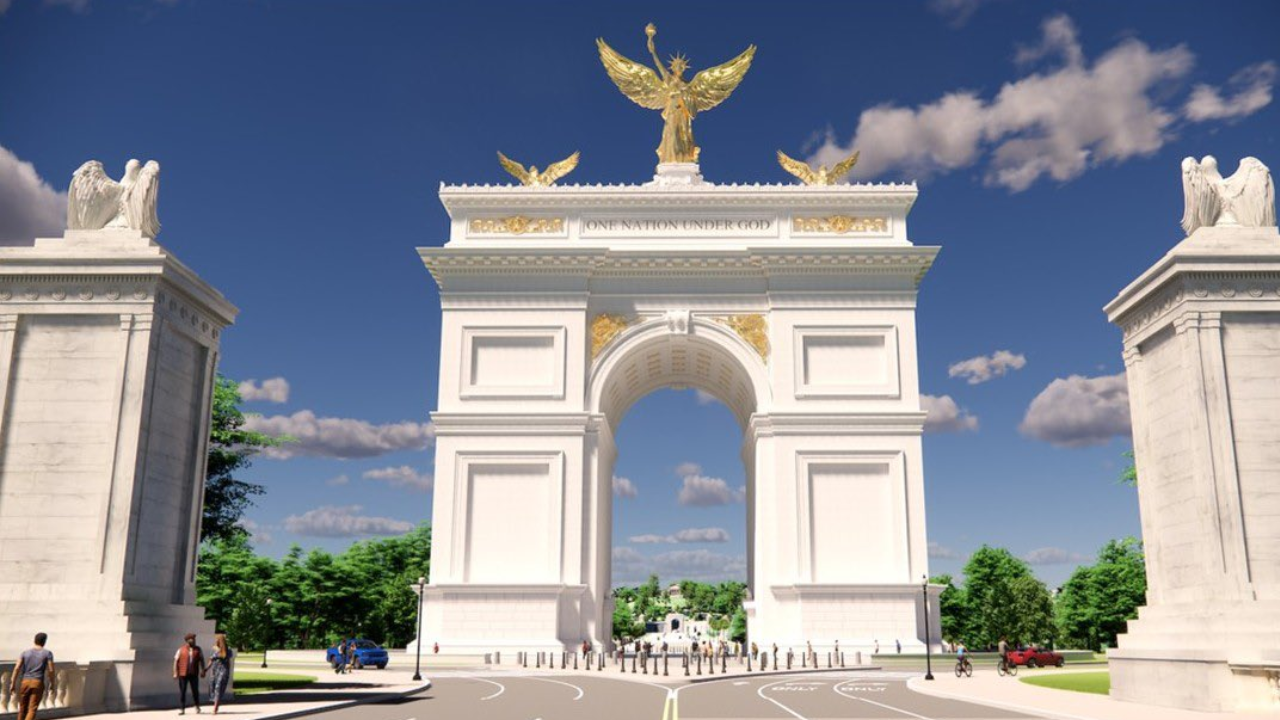
Washington is watching a slow-motion constitutional car crash over a concrete slab. The latest fight centers on a proposed 250-foot triumphal arch that the Trump administration wants to erect near Arlington National Cemetery.
Representative Chellie Pingree just sent a blunt letter to House Speaker Mike Johnson demanding immediate legal action. Her argument is simple. Congress never appropriated a single dollar for this structure, and the executive branch is bypassing the legislative branch entirely. Yet, the administration is pushing forward anyway, betting that political gridlock will keep the courts and Capitol Hill from stopping them.
The Core Conflict Over the Power of the Purse
The fight over the Independence Arch highlights a massive loophole in how federal infrastructure projects get off the ground. Under the Commemorative Works Act of 1986, Congress set up a strict, multi-step authorization process for any monument built on federal land in the District of Columbia. The first requirement is explicit congressional approval.
That approval never happened. Pingree pointed out that the administration is proceeding without statutory authority or appropriated funds. When the executive branch can build massive national monuments using private donations or creative funding workarounds, the constitutional power of the purse becomes little more than a suggestion.
Why Veterans and Historians Are Suing
This isn't just a budget dispute. Earlier this year, a group of Vietnam War veterans and historic preservationists filed a federal lawsuit to block the project. They argue the arch will disrupt the historical, carefully designed sightlines between the Lincoln Memorial and Arlington House.
Those views were intentionally laid out to symbolize national reconciliation after the Civil War. Dropping a massive classical arch into Memorial Circle threatens that heritage. Furthermore, critics have raised alarm bells about potential airspace conflicts with nearby Ronald Reagan National Airport.
Despite ongoing litigation, the Interior Department announced plans to begin preliminary excavation. A federal judge recently stepped in to require 48 hours of notice before any physical work starts, limiting initial actions to basic archaeological surveys. But the legal breathing room is thin.
What Happens When the Legislative Branch Shrugs
The real issue isn't just what happens at Memorial Circle. It is the precedent being set. When a president decides to build a colossal monument without legislative sign-off, the institutional response dictates the balance of power for decades.
If House leadership refuses to file suit, the executive branch effectively gains unilateral control over federal land use in the capital. Pingree's push for Speaker Johnson to take action is a test of whether congressional leaders are willing to defend their own turf.
Keep an eye on how the House leadership responds to these demands over the coming days. If congressional oversight is traded away for political convenience, expect more unauthorized architectural statements to reshape the National Mall before anyone on Capitol Hill can draft a subpoena.