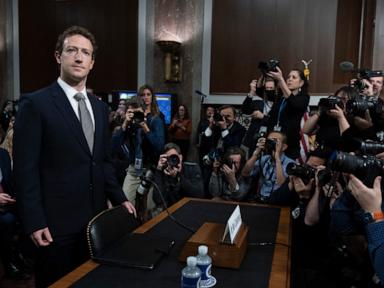
Washington loves a good circus, especially when tech CEOs are the main attraction. Once again, politicians are hauling executives in front of cameras to lecture them about the psychological destruction of America's youth. The script is predictable. Senators read alarming headlines, CEOs sweat in their custom suits, and everyone pretends that a new piece of legislation will magically fix childhood anxiety.
It is a comforting theater. It is also entirely wrong. Meanwhile, you can explore similar events here: The Teenage Drone Myth and the Real Crisis in Underwater Sensing.
The lazy consensus dominating the halls of Congress is simple: social media algorithms are uniquely malicious, they are the sole driver of the youth mental health crisis, and top-down regulation can build a digital playground that is perfectly safe. This narrative is tidy, politically lucrative, and completely detached from how either technology or human psychology actually operates.
After fifteen years of building, analyzing, and consulting on consumer software platforms, I have watched public officials chase the wrong villain while ignoring the actual rot in the system. The systemic issues plaguing modern teenagers will not be solved by adding an age-verification gate or forcing tech companies to design "friendlier" feeds. To understand why these hearings are an exercise in futility, we have to look at the data Congress chooses to ignore. To explore the bigger picture, check out the recent report by TechCrunch.
The Myth of the Algorithm as a Absolute Weapon
The foundational premise of every congressional hearing is that tech companies possess an irresistible, mind-controlling algorithm that hypnotizes perfectly healthy children into depression.
This view misunderstands data science. An algorithm does not create desire; it mirrors it. Algorithms are optimization loops designed to predict what a user wants to see next based on past behavior. If a teenager spends hours consuming toxic content, the system feeds them more of it. It is a mirror held up to a fractured cultural reality.
When Jonathan Haidt published The Anxious Generation, the tech-panic crowd found its bible. The book rightly pointed out a correlation between the rise of the smartphone and the spike in youth depression. But correlation is a clumsy tool. If you look closer at the meta-analyses from institutions like the Oxford Internet Institute, the actual variance in adolescent well-being explained by digital technology use is between 0.4% and 1%. To put that in perspective, regularly eating potatoes or wearing eyeglasses has a similar statistical correlation with negative mental health outcomes.
By focusing entirely on the delivery mechanism, politicians avoid dealing with the systemic stressors that make reality so unappealing to teenagers in the first place. High-stakes testing, the collapse of unstructured physical play, economic anxiety, and hyper-vigilant parenting have turned the physical world into an optimization prison. Teenagers did not abandon the real world because social media was a perfect utopia; they fled to the digital world because the physical world was locked down and sanitized.
Why Age Verification Is a Disaster in Waiting
The most popular proposed fix in Washington is mandated age verification. The logic sounds straightforward: if you are under sixteen, you cannot have an account without explicit parental consent.
Let us look at how that actually plays out in production. To verify a user’s age with absolute certainty, a platform must collect government-issued identification, biometric data, or third-party credit verification. Think about the irony. To protect children’s privacy from big tech, the government wants to force every citizen to upload their driver’s license or face scan to a centralized database.
I have seen companies attempt to implement these systems. They fail. Every security engineer knows that centralized identity databases are prime targets for state-sponsored hackers and cybercriminals. We would be trading a vague psychological risk for an immediate, tangible data security catastrophe.
Furthermore, age verification assumes teenagers are stupid. The moment these laws pass, downloads for Virtual Private Networks (VPNs) skyrocket. A twelve-year-old with a basic understanding of Google can bypass a regional geofence in ninety seconds. Age gates do not protect kids; they create a black market for unmonitored digital access, leaving the most vulnerable children exposed to actual harm without even the basic guardrails that mainstream platforms currently provide.
The Broken Premise of Safe Mode
Politicians frequently demand that tech companies create a "safe mode" for minors—a version of the internet stripped of infinite scroll, push notifications, and public like counts.
This brings us to a harsh truth that product designers know but rarely admit in public: a social network without engagement mechanics is not a social network; it is a ghost town. Humans are deeply social, status-seeking creatures. Teenagers do not use social apps because the algorithm forces them to; they use them because their peers are there.
If you force platforms to strip out the features that make them engaging, users do not transition to reading classic literature. They migrate to unmoderated, decentralized alternative platforms based in jurisdictions that do not care about congressional subpoenas. We saw this clear as day when mainstream platforms cracked down on specific subcultures; users simply migrated to Discord servers, Telegram channels, and anonymous message boards where content moderation is non-existent and the risk of radicalization or grooming is exponentially higher.
The Real Casualties of the Tech Panic
The true danger of the current political obsession with social media is opportunity cost. Every hour spent debating online age gates is an hour not spent fixing the structural decline of physical communities.
Consider what actually keeps children healthy:
- Unsupervised, risky outdoor play where they learn emotional regulation and risk management.
- Third spaces—places that are neither home nor school—where they can socialize without adult surveillance.
- Strong local communities and extended family networks.
Modern society has systematically dismantled all three. We have criminalized parents who let their nine-year-olds walk to the park alone. We have designed suburbs where you cannot go anywhere without a car. We have filled every waking hour with organized sports or resume-building extracurriculars. Then, when teenagers use the only tool available to them to find peer connection, we blame the silicon chips.
A Blueprint for Digital Autonomy
If the goal is genuinely to raise resilient human beings rather than scoring political points, the playbook needs to change completely. Stop asking tech companies to act as surrogate parents. They cannot do it, and you do not want them to have that power anyway.
First, shift the focus from the software to the hardware. The problem isn't necessarily Instagram; it is the fact that a child has a portal to the entire world in their pocket at 2:00 AM. The solution is friction at the device level, managed by parents, not a federal identity mandate. Dumbphones—devices that only text and call—should be the standard for anyone under fourteen. This keeps the physical peer connection alive without handing over data to a third-party verifier.
Second, schools must ban phones entirely during the day. Not "keep them in your bag." Put them in Yondr pouches or lockers at the front door. The data on phone-free schools is unambiguous: academic performance goes up, bullying goes down, and kids actually talk to each other at lunch. This requires zero new federal agencies or complex identity tracking. It just requires courage from local school boards.
Finally, we must accept a fundamental truth about human development: you cannot protect children from every negative emotion. Social comparison, peer rejection, and status anxiety existed long before the first line of code was written for a newsfeed. Trying to engineer a world where a teenager never feels left out is a psychological dead end. Resilience is built by experiencing discomfort and learning to navigate it, not by asking a tech company to scrub the internet clean.
Congress will continue its hearings. The cameras will roll, the soundbites will populate your feeds, and nothing will change. The politicians get their clips for reelection, the tech companies agree to vague self-regulation, and parents continue to feel helpless.
The system is not broken; it is performing exactly as intended for everyone except the kids. Stop waiting for Washington to fix the feed. Put down the phone, open the front door, and give your kids their world back.