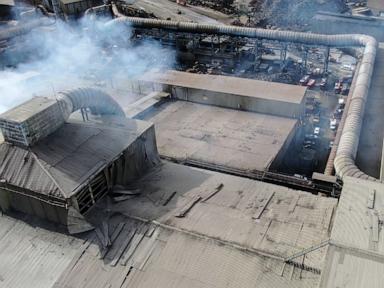
When a man uses an excavator to destroy a Chinese government building, the viral video usually captures thirty seconds of splintering glass, sheared rebar, and stunned onlookers before censors scrub the footage from domestic social media. Beneath the spectacle of heavy machinery tearing into municipal facades lies a recurring pattern of grassroots desperation in rural and peri-urban China, typically triggered by unresolved land requisitions, unpaid construction wages, or arbitrary demolitions where local administrative remedies have completely collapsed.
To understand why these incidents happen—and why they rarely make the evening news inside mainland China—you have to look past the sensationalism of the machinery itself. Heavy equipment is ubiquitous across the country's massive infrastructure and real estate sectors. Millions of operators sit behind the controls of hydraulic excavators every day, building high-speed rail lines, clearing farmland for industrial parks, and erecting apartment towers. When the economic engine stalls or local officials overstep, the very tools of state-led development become instruments of public retaliation.
The Anatomy of a Viral Wreckage
The mechanics of these confrontations follow a remarkably consistent script. An operator, often a subcontractor or a local resident who owns or rents earthmoving equipment, drives a tracked excavator directly to the front gates of a township government compound, a village committee office, or a local urban management headquarters.
Steel buckets smash through security barriers. Glass curtain walls collapse inward. Parked official vehicles are crushed into scrap metal while bystanders film on smartphones from across the street.
Unlike mass protests, which require coordination, messaging apps, and physical assembly—all of which trigger immediate intervention by China's domestic security apparatus—a single operator inside a reinforced steel cab needs no accomplices. An excavator weighs anywhere from twenty to fifty metric tons. Local police armed with standard patrol gear, batons, and light vehicles have almost no immediate way to stop a machine designed to tear through reinforced concrete. By the time specialized tactical units arrive or the operator runs out of fuel, the structural damage is already done, and the footage has already crossed the Great Firewall onto international platforms.
Consider a hypothetical scenario that mirrors documented cases across provinces like Hebei, Henan, and Sichuan. A local earthmoving contractor is hired by a township-level shell company to clear land for a new commercial zone. The contractor pays out of pocket for diesel, equipment maintenance, and crew wages, operating on a verbal promise that settlement will come once the local government sells the land-use rights to a private developer. Six months pass. The land sale stalls due to a sluggish property market. The local officials who signed off on the project refuse to answer phone calls, and the courts decline to accept the lawsuit because the contract lacks an official red-ink seal. Facing ruin from loan sharks and angry workers, the contractor climbs into the cab of his primary asset and drives straight toward the municipal office building.
Follow the Money Behind Local Debt
Surface-level coverage treats these episodes as isolated outbursts of irrational anger. That framing misses the structural pressure cooker sitting beneath China's local government finance system.
For nearly three decades, municipal and county governments relied heavily on land-transfer fees to fund public services, infrastructure, and bureaucratic payrolls. Under Chinese law, urban land is owned by the state, while rural land is collectively owned by villages. Local officials hold the exclusive authority to reclassify agricultural land for commercial or residential use, buying it from farmers at compensation rates tied to agricultural output and auctioning it to developers at exponentially higher market prices.
That model functioned smoothly as long as property values climbed. When the real estate sector entered a prolonged contraction, land sales plummeted. Local government financing vehicles—off-balance-sheet entities created to borrow money for public works—found themselves drowning in debt.
When municipal coffers run dry, the people at the very bottom of the contracting pyramid absorb the shock.
- Tier-one state-owned enterprises secure initial government contracts and take their management cut off the top.
- Mid-level private construction firms absorb delays in progress payments, passing the liquidity crunch downward.
- Independent equipment operators and migrant laborers work without formal written contracts, leaving them with zero legal standing when the money evaporates.
In a functioning legal environment, a defaulted contractor files a mechanic's lien or sues for breach of contract. In rural and county-level China, local courts answer directly to the same local party committees that oversee the indebted government agencies. Judges routinely refuse to docket sensitive administrative or debt disputes against local authorities, leaving plaintiffs trapped in a bureaucratic maze with no exit.
Why the Petition System Fails
China maintains an ancient institutional pressure valve known as xinfang, or the letters-and-visits petition system. Citizens wronged by local officials can travel to provincial capitals or Beijing to submit formal complaints to higher authorities, operating under the traditional belief that distant emperors are just while local magistrates are corrupt.
In practice, the petition system often accelerates radicalization rather than preventing it.
Local officials are evaluated heavily on stability maintenance metrics. If a resident from a rural county successfully registers a petition in Beijing, the local party secretary faces career penalties, lost bonuses, or outright dismissal. Consequently, county governments spend vast sums hiring private security contractors—often called interceptors—to track petitioners at train stations, detain them in unofficial holding facilities, and haul them back home before they can file their paperwork.
When a citizen realizes that the local government stole their land or withheld their wages, the local court won't hear their case, and traveling to Beijing results in illegal detention, the calculus shifts. Violence against property becomes a form of forced communication. Destroying a government building guarantees that provincial inspectors—officials outside the local patronage network—will descend on the county to investigate what went wrong. For the person in the excavator cab, prison is a certainty, yet it represents the only remaining mechanism to break the local information blockade.
The Role of Chengguan and Everyday Friction
Not every heavy-machinery incident stems from multi-million-yuan construction defaults. Many trace back to the daily friction between working-class citizens and urban management officers, universally known as chengguan.
Established to enforce municipal bylaws, sanitation codes, and zoning rules without overburdening regular police forces, chengguan units operate in a notoriously murky legal gray zone. They are tasked with clearing unlicensed street vendors, demolishing unapproved rural structures, and enforcing aesthetic mandates ordered by city planners.
Because their enforcement methods frequently involve confiscating goods, overturning stalls, or physically roughing up residents, resentment toward chengguan runs deep across working-class communities. When a family's sole livelihood—a street-side repair shop, a small restaurant, or a self-built farmhouse—is summarily flattened by a municipal demolition crew, the psychological impact is immediate and devastating.
If the victim happens to work in the construction or transport trades, the tools for symmetrical retaliation are sitting right in their yard. Driving an excavator through the facade of a local enforcement office is a literal mirror of what the state just did to their home or business.
How Beijing Manages the Information Fallout
The speed with which these videos disappear from Chinese platforms like Douyin, Weibo, and WeChat reveals how seriously the central government treats copycat risks.
Within minutes of a clip gaining traction, automated image-recognition algorithms and human content moderators begin purging uploads, blocking associated hashtags, and shadow-banning accounts that share the footage. Local police departments typically issue a terse, standardized statement hours later. The official narrative almost always follows a strict template:
- The suspect suffered from a sudden mental health episode or acted under the influence of alcohol.
- The incident resulted in zero casualties among government staff and bystanders.
- The suspect was swiftly subdued and placed under criminal detention, with an investigation underway.
By framing the act as isolated madness rather than a predictable outcome of systemic governance failures, authorities strip the event of political or economic meaning. Even when observers recognize the pattern, the total absence of follow-up reporting ensures the public never learns whether the underlying wage dispute or land grievance was ever resolved.
The Limits of Surveillance and Deterrence
China operates the most sophisticated domestic surveillance network in the world. Facial recognition cameras blanket urban intersections, digital payments track financial movements in real time, and real-name registration ties every SIM card and social media account to a national identity number.
Yet high-tech monitoring excels at predicting and disrupting collective organization, not solitary desperation.
Algorithms can flag a group chat discussing a labor strike at a factory gate. They cannot read the mind of a forty-five-year-old excavator operator sitting alone in his cab at six in the morning, staring at an overdue bank notice while warming up a diesel engine. There are no encrypted messages to intercept, no flyers printed, and no rallies scheduled. The transition from compliant worker to fugitive happens in the span of a single gear shift.
Some municipalities have quietly attempted physical hardening measures. New county government complexes are increasingly built far outside town centers, surrounded by wide plazas, reinforced concrete bollards, and deep decorative moats that double as anti-vehicle barriers. Yet hardening administrative buildings does nothing to resolve the underlying economic friction; it merely pushes the point of impact toward softer targets, such as local enforcement stations, developer sales offices, or state-owned bank branches.
What Western Coverage Often Gets Wrong
When clips of an excavator demolishing a Chinese municipal building go viral on Western social media, commentators frequently project broad ideological narratives onto the wreckage. Some frame the footage as evidence of an imminent nationwide uprising against Communist Party rule. Others dismiss it entirely as random criminal chaos.
Both interpretations miss the mark.
The men behind the controls of these machines are rarely ideological dissidents seeking to overthrow the national government. In fact, many explicitly appeal to central authorities, viewing their actions as a desperate attempt to expose corrupt local officials who are violating Beijing's own laws against wage theft and illegal land seizures. Their grievance is hyper-local, deeply personal, and rooted in basic survival.
At the same time, dismissing these incidents as meaningless anomalies ignores the structural warning lights flashing across China's interior provinces. When local governments cannot pay their contractors, when courts refuse to enforce basic property rights, and when administrative appeal channels are sealed shut, social stability relies entirely on fear rather than legitimacy.
A fifty-ton excavator tearing through a concrete facade is not the start of a revolution, nor is it an isolated fluke—it is the physical receipt for a broken local contract coming due in broad daylight.