In the Pingfang district of Harbin, northeastern China, bulldozers and surveying crews have spent years reshaping the earth around the sprawling ruins of Unit 731. While municipal planners frame the ongoing infrastructure push as an economic lifeline for Heilongjiang province, historians and forensic archaeologists warn that aggressive urban and aviation expansion is physically encroaching on one of the twentieth century's darkest crime scenes. Concrete is pouring over ground that still holds unexcavated mass graves, shattered ceramic plague bombs, and subterranean detention cells from the Imperial Japanese Army's covert biological warfare program.
The stakes extend far beyond regional transit efficiency. Every meter of soil disturbed without rigorous archaeological oversight risks erasing the physical proof of state-sponsored human experimentation conducted between 1935 and 1945.
The Anatomy of an Erasure
To understand why modern construction around Harbin triggers such visceral alarm among war crimes researchers, you have to look at what Unit 731 actually left behind. When Soviet forces swept into Manchuria in August 1945, the unit's commander, General Shiro Ishii, ordered his troops to dynamite the main compound and burn all paper records. They succeeded in destroying the central administrative buildings and the infamous prison blocks where thousands of Chinese, Soviet, Mongolian, and Korean captives—referred to clinically by their captors as maruta, or logs—were subjected to vivisection, frostbite testing, and intentional infection with plague, anthrax, and cholera.
Yet the retreat was chaotic. Explosives collapsed roofs and walls, burying entire subterranean laboratories, drainage systems, and incinerator chutes beneath tons of rubble. Over the subsequent eight decades, the surrounding landscape of Pingfang quietly absorbed the perimeter of the facility. Outlying testing grounds, horse stables used for serum production, and clandestine burial pits sat undisturbed beneath farmland, aging industrial zones, and older residential blocks.
Modern infrastructure changes that equation permanently. Deep-piling foundations for terminal expansions, new access highways, and logistics hubs do not merely scrape the surface; they drive steel and cement dozens of feet into the water table. Once an airport apron or a multi-lane expressway is laid down, the archaeological record beneath it is sealed off for generations, if not destroyed outright by excavation machinery.
What Lies Beneath the Perimeter
The official museum complex in Pingfang covers the core boiler room and administrative headquarters, yet historians have long pointed out that the operational footprint of Unit 731 was vastly larger than the protected tourist zone.
- Subterranean Drainage and Boiler Tunnels where biological waste and human remains were disposed of during peak operational months.
- Perimeter Burial Trenches hastily dug in the final days of the war to hide the bodies of surviving prisoners executed to prevent witness testimony.
- Field Testing Zones located several kilometers from the main compound, where tied-down prisoners were exposed to aerial bombs packed with plague-infected fleas.
In 2014 and 2015, Chinese archaeologists conducted major excavations that uncovered the foundations of the bacteriological laboratory and thousands of artifacts, including glass ampoules, surgical instruments, and ceramic shell fragments. Those digs proved that the soil still possessed immense forensic value. Extending transit corridors and aviation buffers directly adjacent to these zones puts unmapped satellite sites directly in the path of heavy machinery.
The Economics of Amnesia
Why does construction keep pressing inward on a site of immense historical sensitivity? The answer lies in the relentless pressure of regional economic survival. Heilongjiang sits in China's traditional rust belt, an industrial heartland that has struggled for decades with population decline, aging state-owned enterprises, and sluggish GDP growth compared to coastal provinces.
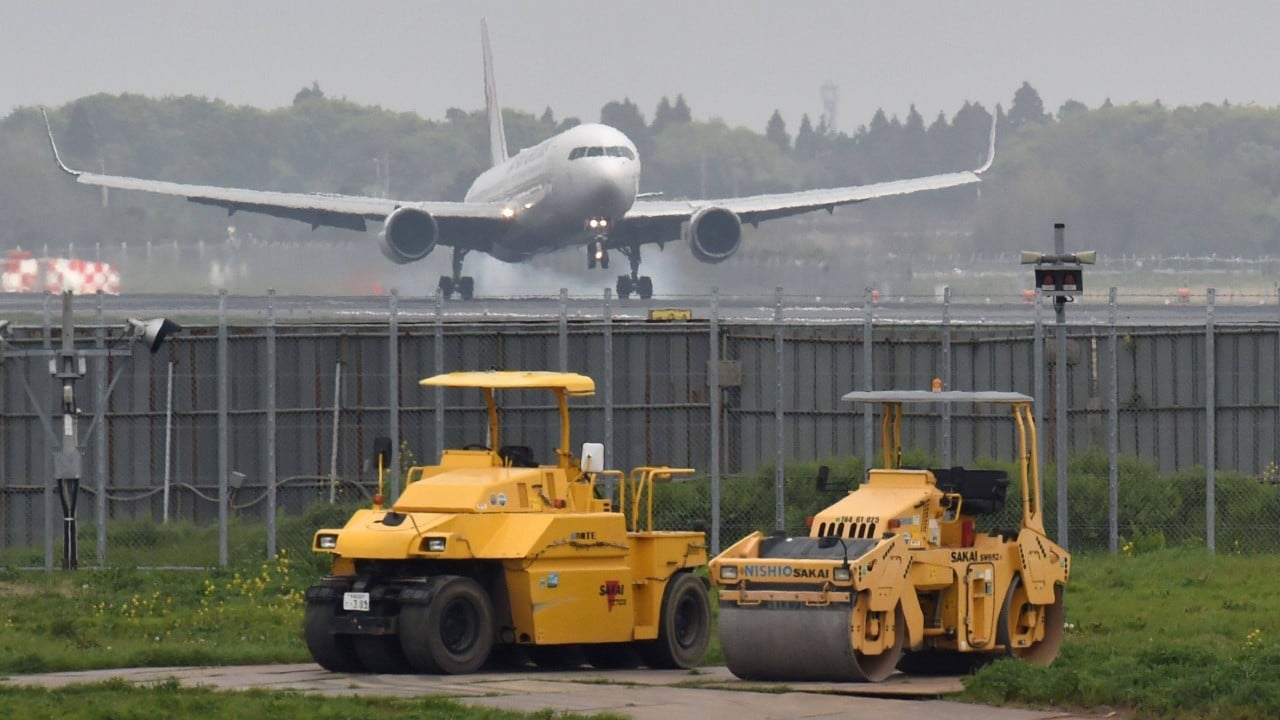
For local officials in Harbin, expanding aviation capacity and surrounding logistics networks is not an abstract policy choice. It is a desperate bid to position the city as a premier Northeast Asian trade and tourism hub. Harbin Taiping International Airport, located roughly twenty-five kilometers west of the Pingfang site, has undergone massive multi-phase expansions to handle tens of millions of passengers annually, alongside rapid transit links and satellite industrial parks designed to connect the airport zone directly to Harbin's urban districts.
Infrastructure budgets run on strict timelines and return-on-investment metrics. Archaeological surveys, by contrast, are slow, expensive, and unpredictable. When a construction crew strikes an unmapped brick foundation or a cache of rusted metal canisters, work halts. Forensic teams must be brought in, soil samples tested for lingering pathogens like Bacillus anthracis, and heritage boundaries redrawn. For municipal planners under pressure to deliver growth targets, historical preservation often registers as an operational bottleneck rather than a moral imperative.
"You cannot treat a biological warfare proving ground like an ordinary construction site. The earth itself is both a crime scene and a biohazard archive."
This tension between urban modernization and historical stewardship is hardly unique to northern China, yet the geopolitical weight of Unit 731 makes every bulldozer pass uniquely fraught.
The Geopolitical Battle Over Memory
The physical preservation of the Pingfang site is inextricably tied to an ongoing diplomatic war over historical memory in East Asia. For nearly eighty years, the true scale of Unit 731's atrocities was obscured by a Cold War bargain. In the late 1940s, United States occupation authorities granted Shiro Ishii and his senior researchers secret immunity from prosecution at the Tokyo War Crimes Trials in exchange for their human experimentation data.
Because those perpetrators never stood in the dock alongside Nazi doctors at Nuremberg, the documentary record remained fractured for decades. Japanese revisionist politicians and nationalist commentators have repeatedly exploited the lack of Western tribunal verdicts to cast doubt on the scale of the crimes, demanding physical proof whenever survivors or historians speak out.
This makes the dirt in Harbin uniquely consequential. When a revisionist claims that reports of frostbite experiments or plague bombs are exaggerated, archaeologists point to the physical artifacts pulled from the Pingfang soil—the specialized ceramic casings designed to shatter at low altitudes without killing the infected fleas inside, the autopsy tables, and the bone fragments bearing saw marks.
If urban sprawl and transit expansion pave over the remaining unexcavated sectors of the Pingfang complex, the physical evidence shrinks. Every square kilometer lost to commercial development or airport logistics corridors hands an indirect victory to those who argue the history is unproven or overstated.
The Biohazard Reality Nobody Likes to Mention
Beyond politics and heritage, there is a stark scientific reality complicating any digging around Harbin. Unit 731 was not merely a prison; it was an industrial-scale pathogen factory capable of producing hundreds of kilograms of plague, typhoid, and anthrax bacteria every month.
Anthrax spores are notoriously resilient. Unlike fragile viruses that die quickly outside a host, Bacillus anthracis forms dormant spores that can survive in soil for decades, waiting for mechanical disturbance to bring them back to the surface. Historical records from the unit's retreat indicate that thousands of infected animals—rats, horses, and guinea pigs—were released or hastily buried around the perimeter when the Japanese garrison fled.
Standard civil engineering protocols are entirely unequipped for this environment. When contractors clear land for roads, utility lines, or aviation support facilities near former testing ranges, they risk more than destroying artifacts. Without specialized biological containment teams screening the topsoil ahead of the excavators, construction crews are effectively digging blind in a former bioweapons facility.
The Paradox of Heritage Tourism
Ironically, the very economic push threatening the site's perimeter is partially fueled by the success of the Unit 731 Museum itself. Since the opening of a massive, modern exhibition hall in 2015, visitor numbers have surged into the millions annually. Domestic tourists, school groups, and international researchers flock to Pingfang, turning the district into a major focal point of historical education.
More visitors require wider roads, better transit links to the airport, expanded parking lots, and nearby hotels. In trying to make the memorial accessible to the world, urban planners have encircled it with the exact kind of modern infrastructure that eats away at its archaeological buffer zones.
The museum's main exhibition hall, designed to resemble a black box splitting open the earth, stands as a powerful architectural statement. Yet step a few hundred yards beyond the manicured perimeter fence, and the landscape rapidly dissolves into active construction sites, freight corridors, and dense urban sprawl. The boundary between protected monument and commercial real estate is perilously thin.
What Proper Preservation Actually Requires
Protecting what remains of Unit 731 does not mean freezing Harbin's economy in amber. Cities grow, airports expand, and infrastructure must modernize. However, treating a site of industrial mass murder like standard municipal zoning land is a catastrophic failure of governance.
To prevent permanent historical erasure, several concrete measures are non-negotiable before another shovel hits the dirt in Pingfang.
- Mandatory Ground-Penetrating Radar Surveys across all proposed transit, aviation, and commercial buffer zones within a ten-kilometer radius of the original compound prior to issuing construction permits.
- Independent Archaeological Veto Power granting provincial heritage institutes the legal authority to halt state-backed infrastructure projects immediately upon discovering subterranean structures or human remains.
- Biosafety Screening Protocols requiring specialized pathogen-testing teams to clear soil layers before heavy excavation begins near known animal-testing and waste-disposal sectors.
- International UNESCO World Heritage Nomination backed by transparent, peer-reviewed archaeological mapping that locks the entire historical footprint—not just the central tourist buildings—into permanent protected status.
Beijing has periodically floated the idea of seeking UNESCO World Heritage listing for the Unit 731 ruins, similar to the listing granted to Auschwitz-Birkenau in Poland. Yet UNESCO demands strict buffer-zone integrity. You cannot win international heritage protection for a site while actively paving over its outlying mass graves for logistics parks and transit corridors.
The Cost of Paving Over Proof
History rarely vanishes in a single dramatic bonfire. More often, it disappears slowly beneath asphalt, rebar, and municipal zoning variances. The men, women, and children murdered inside Unit 731 were stripped of their names, reduced to numbers on clinical charts, and denied justice by postwar geopolitical expediency.
Burying the last physical traces of their suffering beneath airport access roads and commercial concrete would finish the job Shiro Ishii started with dynamite in August 1945. Once the pilings are driven and the tarmac sets, no amount of museum curation will ever bring back what lies underneath.