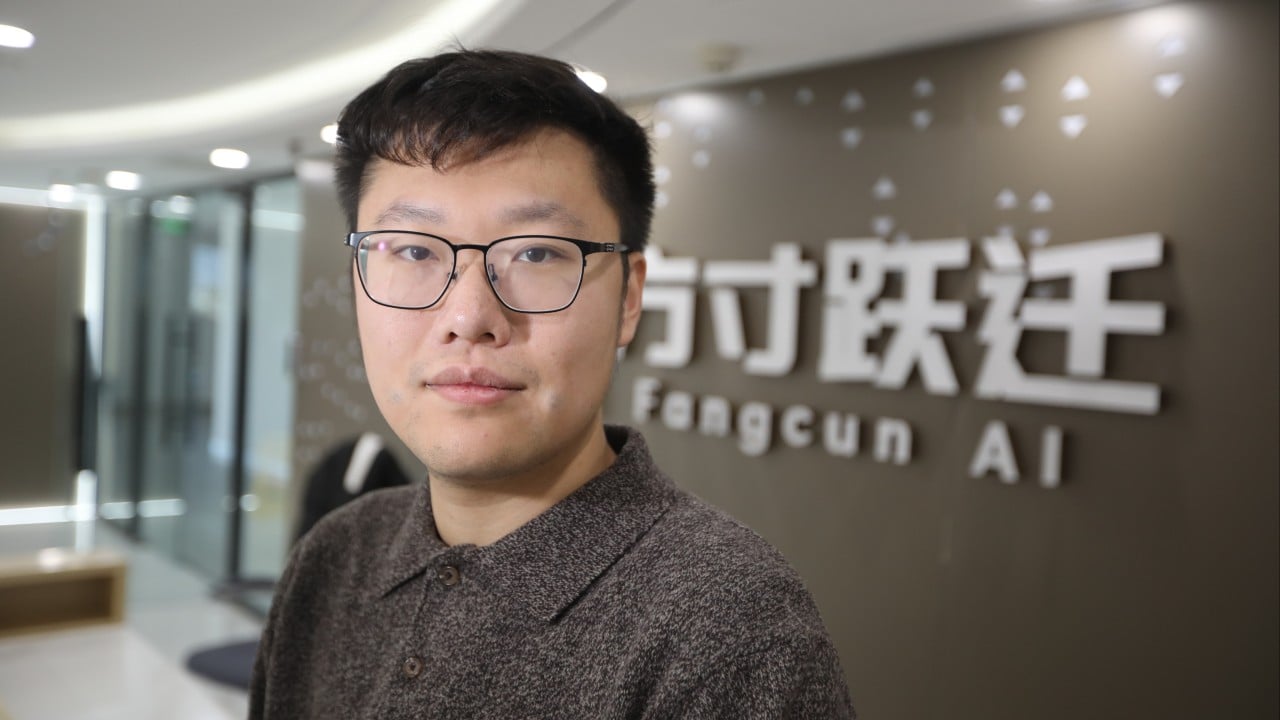
China’s artificial intelligence sector operates under a strict regulatory bottleneck: no generative model reaches public deployment without passing state security assessments, creating a captive enterprise market for third-party compliance auditing. While Western AI safety firms rely on voluntary corporate commitments, reputational risk management, and speculative long-term alignment contracts, China’s first commercial AI safety watchdog—spun out of Tsinghua University—monetizes mandatory statutory clearance. This structural divergence transforms safety engineering from an internal cost center into an externalized tollbooth. Understanding how an academic research group converted regulatory friction into a scalable business-to-business enterprise requires examining the intersection of state enforcement mechanisms, academic intellectual property transfer, and the technical economics of large language model (LLM) red-teaming.
The Structural Genesis of Regulatory Arbitrage
The emergence of commercial AI safety vendors in China is not an organic market response to consumer demand; it is a direct consequence of administrative law. Between 2022 and 2024, the Cyberspace Administration of China (CAC) enacted three foundational statutes governing algorithmic systems: the Internet Information Service Algorithmic Recommendation Management Provisions, the Deep Synthesis Management Provisions, and the Interim Measures for the Management of Generative Artificial Intelligence Services.
These regulations establish a pre-market licensing regime. Before an enterprise can expose a public-facing generative AI model to domestic users, it must submit the system for an algorithmic filing and a security assessment. The compliance threshold is binary and unforgiving. Regulators evaluate models across two distinct risk vectors:
- Content and Ideological Alignment: The model must refuse to generate outputs that violate core socialist values, subvert state power, or infringe upon national security definitions. Under technical standards issued by the National Information Security Standardization Technical Committee (TC260), a model’s refusal rate on adversarial political prompts must exceed 95 percent, while its false-refusal rate on benign queries must remain low enough to preserve commercial utility.
- Data and Architectural Security: The developer must prove the provenance and legality of training corpora, demonstrate resilience against prompt injection and data extraction attacks, and verify personal information protection mechanisms.
This regulatory framework created an immediate supply-demand imbalance. Thousands of enterprises—ranging from hyperscale cloud providers to vertical software vendors—needed to clear CAC audits to launch products, yet lacked the internal adversarial testing infrastructure to pass on the first attempt. A failed audit delays product launch by months, burning capital and ceding market share.
A research team originating from Tsinghua University’s Department of Computer Science and Technology—specifically tied to the university’s Institute for Artificial Intelligence and machine learning security laboratories—identified this bottleneck early. Rather than competing in the capital-intensive race to train foundation models, the spin-out positioned itself as an automated pre-audit verification layer. By translating qualitative regulatory statutes into quantitative red-teaming benchmarks, the firm established a classic regulatory arbitrage model: selling the exact diagnostic tools required to satisfy state examiners.
The Academic Spin-Out Mechanism and Institutional Moats
In China’s deep-tech ecosystem, university spin-outs operate differently from their Silicon Valley counterparts. Tsinghua University functions not merely as an educational institution, but as a primary node in state-backed industrial policy. Transitioning an academic lab into a commercial entity provides three distinct structural advantages that private startups cannot easily replicate.
First is standard-setting proximity. Leading Tsinghua faculty routinely sit on the working groups of TC260 and advise ministries on technical feasibility. When the state drafts evaluation criteria for generative AI safety—such as the Basic Security Requirements for Generative Artificial Intelligence Service—academic researchers involved in the drafting process possess immediate clarity on how abstract legal clauses translate into concrete test suites. While the commercial spin-out operates as an independent legal entity, its foundational methodologies inherit the exact taxonomy used by state testing centers.
Second is talent density in adversarial machine learning. Effective AI safety auditing requires specialized knowledge in gradient-based attacks, jailbreak synthesis, and automated vulnerability discovery. Tsinghua’s computer science program consistently produces the highest concentration of published research in adversarial robustness and neural network verification within mainland China. By spinning out directly from these laboratories, the company bypassed the talent acquisition war that inflates operating expenses for commercial AI startups, securing PhD-level engineers who had spent years breaking neural architectures before enterprise demand existed.
Third is institutional trust in high-security procurement. State-owned enterprises (SOEs), financial institutions, and municipal governments represent the highest-margin buyers of AI infrastructure in China. These entities face severe political penalties if a deployed AI system generates a rogue output. Consequently, SOE procurement officers exhibit extreme risk aversion toward unproven private vendors. A Tsinghua pedigree acts as an implicit state endorsement, lowering customer acquisition costs (CAC) and shortening enterprise sales cycles from quarters to weeks.
The Technical Architecture of Commercial Watchdogging
To operate as a commercial watchdog rather than a manual consulting shop, an AI safety vendor must solve a fundamental scaling problem: human red-teaming is linear, slow, and expensive, whereas model updates are continuous and stochastic. The Tsinghua spin-out’s core intellectual property lies in automating the adversarial attack lifecycle through a closed-loop evaluation pipeline.
1. Dynamic Adversarial Corpus Generation
Static benchmark datasets decay rapidly because model developers inevitably overfit their systems to known test questions—a phenomenon known as data contamination. To counter this, the commercial watchdog deploys mutated prompt generation engines. Starting from seed ontologies mapped to Chinese regulatory categories (such as political sensitivity, violence, discrimination, and intellectual property infringement), the system applies automated linguistic transformations:
- Syntactic Obfuscation: Encoding sensitive queries using base64, cipher substitutions, homophones, and classical Chinese idioms to bypass keyword filters.
- Contextual Framing: Wrapping prohibited requests inside hypothetical scenarios, roleplay personas, or multi-turn conversational escalations designed to erode the model’s safety guardrails over several context windows.
- Cross-Lingual Transfer: Translating restricted prompts into low-resource languages or regional dialects where safety alignment training data is sparse, forcing the model to process the semantic intent without triggering English- or Mandarin-centric refusal classifiers.
2. Automated Grading and Judge Models
Executing 100,000 adversarial probes against a target LLM is trivial; evaluating 100,000 responses accurately without human bottlenecks is the actual engineering hurdle. Relying on simple keyword matching yields unacceptable false-positive rates—flagging a model as unsafe simply because it repeated a sensitive word while refusing the prompt.
The spin-out utilizes fine-tuned "judge models"—smaller, specialized LLMs trained exclusively on regulatory compliance rubrics. These judge models score target outputs across a multi-dimensional matrix:
- Explicit Compliance: Did the model directly fulfill the harmful request?
- Implicit Endorsement: Did the model subtly validate a prohibited premise while attempting to remain neutral?
- Refusal Quality: Did the model decline the request without lecturing the user or leaking system prompt instructions?
3. Real-Time Firewalling and Guardrail Injection
Audit reports identify vulnerabilities, but enterprise clients demand remediation. The commercialization strategy expands from periodic diagnostic auditing to continuous runtime protection. By deploying a lightweight proxy layer—an AI firewall—between the end user and the foundation model, the watchdog intercepts inputs and outputs in real time.
This architecture relies on low-latency classifier ensembles that inspect incoming prompts for jailbreak signatures before they reach the expensive foundation model, saving compute costs. Simultaneously, a streaming output monitor evaluates generated tokens as they are produced, terminating the stream and substituting a canned refusal if the generation drifts toward a compliance violation. This shifts the vendor’s revenue model from one-off pre-launch consulting fees to recurring, usage-based SaaS contracts tied to API call volume.
The Economic Unit Economics of Compliance vs. Alignment
Comparing the Tsinghua spin-out to Western AI safety organizations—such as METR, Apollo Research, or the commercial divisions of Anthropic and OpenAI—exposes two incompatible economic models.
In the United States and Europe, AI safety is largely bifurcated into two tracks: frontier capability risk (evaluating existential, CBRN, or autonomous replication threats) and brand-safety moderation. Because Western regulations like the EU AI Act enforce phased, risk-tiered compliance rather than universal pre-market content censorship, Western startups struggle to sell standalone safety tooling to mid-market enterprises. Most companies rely on the safety guardrails natively baked into APIs provided by OpenAI, Anthropic, or Google, viewing third-party safety wrappers as redundant latency taxes.
In China, the economic calculus is inverted due to liability localization. Under CAC rules, the entity deploying the AI application bears direct legal and operational responsibility for its outputs, regardless of whether it trained the underlying foundation model. If a retail bank fine-tunes an open-source model like Qwen or Llama and deploys it for customer service, the bank cannot blame the upstream model creator if the bot generates a politically sensitive hallucination.
This creates a high willingness to pay for external verification. For a Chinese enterprise, purchasing a safety suite from a Tsinghua-backed watchdog functions as an insurance policy. Should a regulatory incident occur, demonstrating that the system passed third-party testing certified against TC260 standards mitigates executive liability.
Furthermore, the unit economics of Chinese AI safety firms benefit from lower engineering labor costs combined with high enterprise stickiness. Once an AI firewall is integrated into a client’s inference pipeline and calibrated to their specific domain taxonomy, ripping it out requires re-validating the entire application stack against regulatory thresholds. Churn rates remain exceptionally low because switching vendors reintroduces compliance risk.
Inherent Limitations and Structural Vulnerabilities
Despite its entrenched market position, the commercial watchdog model faces three severe operational and technical constraints that cap its long-term scalability and global reach.
The Latency-Accuracy Trade-Off
Every guardrail layer added to an inference pipeline introduces computational overhead. In real-time consumer applications—such as voice assistants, live customer support, or interactive gaming—adding 150 to 300 milliseconds of latency to run input/output safety classifiers degrades the user experience. As foundation models grow faster and cheaper, the relative cost and latency penalty of external safety wrappers becomes increasingly conspicuous. Clients constantly pressure vendors to compress judge models, which inevitably degrades detection accuracy on complex, multi-turn jailbreaks.
The Obsolescence Risk of Native Alignment
Foundation model providers are aggressively internalizing safety capabilities. Major Chinese tech firms—including Alibaba, Baidu, ByteDance, and Zhipu AI—invest heavily in Reinforcement Learning from Human Feedback (RLHF) and Constitutional AI techniques during post-training. As base models become natively resilient to standard adversarial attacks and come pre-certified with CAC filings, the value proposition of third-party auditing shrinks for standard API consumers. The watchdog’s addressable market becomes increasingly restricted to organizations building heavily customized, fine-tuned models on open-weights architectures, or those operating in hyper-regulated verticals like finance, healthcare, and defense.
Geopolitical Containment and Export Friction
An AI safety platform engineered specifically around Chinese statutory definitions of security cannot easily export its core product to Western markets. While the underlying adversarial testing methodologies—such as gradient-based prompt optimization and automated red-teaming—are universal, the company’s datasets, judge models, and compliance rubrics are deeply encoded with domestic ideological constraints. Western enterprises conducting due diligence will reject a compliance vendor whose core taxonomy reflects CAC censorship directives, fearing backdoors, data exfiltration, or ideological bias. Consequently, the firm’s total addressable market (TAM) is effectively capped by domestic borders and allied digital-infrastructure initiatives.
The Strategic Trajectory for Enterprise AI Governance
The success of Tsinghua’s commercial spin-out proves that AI safety only scales as a standalone B2B industry when backed by enforceable statutory penalties and clear technical standards. Without hard regulatory gates, safety remains a discretionary expense that enterprises compress during margin pressure.
For technology leaders and investors analyzing the global AI governance sector, the divergence between Chinese and Western markets dictates two distinct strategic plays:
- In China, back infrastructure that automates statutory compliance across the model lifecycle. As the CAC shifts enforcement from initial model registration to continuous post-deployment monitoring and deepfake watermarking, standalone red-teaming tools will commoditize. Winners in the domestic market will consolidate into full-stack governance platforms that integrate training-data provenance auditing, runtime inference firewalling, and automated regulatory reporting into a single compliance pipeline.
- In Western markets, avoid pure-play content moderation and target deterministic architectural security. Because Western enterprises will not pay a premium for third-party ideological or brand-safety filters over native provider guardrails, commercial safety startups must focus on hard engineering vulnerabilities: preventing prompt-injection-driven data exfiltration in agentic workflows, enforcing role-based access control (RBAC) on retrieval-augmented generation (RAG) pipelines, and providing cryptographic verification of model outputs for regulated industries like healthcare and financial services.