A teaspoon rattles against the porcelain edge of a cup. Outside, the Moscow winter of 2026 presses its gray weight against the double-paned window, but inside the kitchen, the air is thick with a different kind of frost. Mikhail, a retired engineer who still remembers the triumph of Soviet space flights, looks past his grandson. He does not see Ilya. He sees a stranger. He sees someone who reads the wrong websites, speaks with the wrong inflections, and harbors the wrong loyalties.
Across the formica table, Ilya, twenty-four, looks back at the man who taught him how to fish on the Volga. He sees a ghost. He sees a mind colonized by state television, echoing slogans that demand the sacrifice of Ilya’s entire generation for the sake of a map.
Neither speaks. The silence is loud. It is the sound of a country cracking in half down the dinner table.
This is the real war. It does not have front lines marked by razor wire or smoking craters, though its origin lies precisely there. It is a latent civil war, a quiet, corrosive friction humming between the Russian people and the absolute power that claims to represent them—and, increasingly, between the people themselves.
The Prophet in Exile
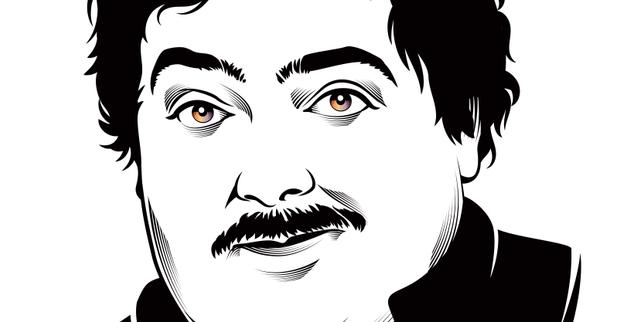
When Dmitry Bykov speaks about this fracture, he does not speak as an academic analyzing data from a safe distance. He speaks as a man who nearly died for his words. In 2019, the poet and satirist was poisoned on a domestic flight in Siberia, falling into a coma that mirrored the exact methodology the state would later use on Alexei Navalny. Bykov survived, carried his heavy frame across borders, and now teaches literature in the United States. He is a large man with a booming voice and a mind like an encyclopedia on fire, designated by his homeland as a "foreign agent." His books are banned from Russian libraries; his name is scrubbed from playbills.
Yet, his gaze remains fixed on the territory he left behind.
To understand Russia today, one must understand that the state has achieved something terrifying: it has made neutrality impossible. For decades, the implicit social contract under Vladimir Putin was simple. You stay out of politics, and we leave your private life alone. The shops were full of imported cheese, the high-speed trains ran on time between Moscow and St. Petersburg, and the internet was mostly free. It was a comfortable numbness.
That contract is dead.
The current regime demands total, active participation in the myth. It is no longer enough to look away; you must applaud. When a state reaches this level of domestic pressure, it creates an invisible, domestic battlefield. Bykov calls it a latent civil war. It is an internal conflict where the state behaves like an occupying force, extracting compliance from a population that has learned, through centuries of survival, that the safest place to live is behind a mask.
The Illusion of the Monolith
Look at the surface of Russia from the outside, and you see an iron monolith. The election percentages are predictably astronomical. The state rallies are packed. The dissent seems minimal, confined to sporadic bursts or the quiet courage of individuals who lay flowers at monuments before being hustled into unmarked vans by masked police.
But the monolith is a stage set.
Consider what happens when a society is forced to lie to itself every morning just to go to work. It creates a profound psychological sickness. An analogy helps here: imagine a house where the foundation is shifting violently, but the landlord insists that anyone who mentions the cracks is a traitor. So, the tenants paint over the plaster. They pretend the tilt is normal. They adjust their gait to walk on a sloping floor.
The split in Russia is not merely between liberals and conservatives, or the young and the old. It is a deep, structural divide between those who believe the state is the ultimate purpose of human life, and those who simply want to live human lives.
The state has weaponized history to fight this war. It has dug up the corpses of the Soviet past, dusted off the icons of imperial greatness, and presented them as the only viable future. To oppose the regime is no longer treated as a political disagreement; it is treated as a metaphysical betrayal. This is why the punishments are so grotesque—seven years in prison for a poet or a journalist who substitutes price tags in a supermarket with anti-war messages. The severity of the reaction reveals the fragility of the illusion. If the regime were truly secure in the absolute unity of its people, it would not need to treat a poem like a bomb.
The Two Russias
There are two countries occupying the same geographic space.
The first is the Russia of the television screen. It is loud, aggressive, and frozen in a perpetual state of defensive righteous anger. It believes that the world is a hostile wilderness where only the brutal survive, and that the leader is the only shield against total annihilation. This Russia is populated not just by the elderly, but by those who find comfort in submission, because submission removes the terrifying burden of personal responsibility.
The second is the Russia of the whispers. It exists in encrypted chat groups, in the crowded kitchens where old friends look at each other’s eyes before speaking, and in the classroom where a student stays silent while the teacher reads the mandatory patriotic lesson, because both know that a single word could ruin a life.
This second Russia is not an organized resistance. It has no central committee, no treasury, no clear manifesto. It is a loose diaspora of consciousness. Its members are waiters, tech workers, doctors, and students. They are exhausted. They feel abandoned by the West and hunted by their own government.
The tragic irony of this internal cold war is that it destroys the very fabric of society that any future Russia will need to rebuild. Trust is the first casualty. When a neighbor can report you for a stray comment in an elevator, the social fabric turns to ash. You stop looking people in the eye. You withdraw into the smallest possible unit of survival: yourself.
The Poetry of Survival
Bykov, who made his name writing razor-sharp satirical verses that were read by millions on YouTube, understands that in Russia, literature has always been more than entertainment. It is the only court that stays open when the real courts are bought and paid for. A poet in Russia is traditionally viewed as a prophet, an alternative source of authority. That is why the state fears them.
But can poetry stop a tank? Can a metaphor repair a broken country?
Probably not in the short term. But what narrative and art can do is preserve the language of truth for the day after the fever breaks. When the current regime eventually dissolves—and history suggests that all regimes built on absolute fear eventually collapse under their own rigid weight—the people will have to learn how to speak to each other again without lying. They will have to look across the kitchen table, past the ghosts and the propaganda, and find the human being on the other side.
Until then, the latent war continues. It is fought every day in small, unnoticed choices. It is fought when a teacher refuses to report a rebellious student. It is fought when a father decides not to argue with his son, choosing the fragile bond of blood over the harsh dictates of the state. It is fought when an exile keeps writing in his native tongue, refusing to let the autocrats own the definition of what it means to be Russian.
The kettle on Mikhail's stove begins to whistle, a sharp, piercing sound that cuts through the silence of the kitchen. Ilya reaches out and turns off the burner. The noise dies down. Mikhail looks at his grandson’s hand—the same hand he used to hold when they walked through the birch woods years ago. For a brief second, the political mask slips, and there is only an old man and a boy, trapped in a historic storm they did not choose, waiting for the air to clear.
For a deeper look into how contemporary literature and satire navigate the current internal landscape of Russia, Dmitry Bykov's perspectives on the crisis of statehood provides an illuminating breakdown of the country's social fractures and what might follow the current political era.