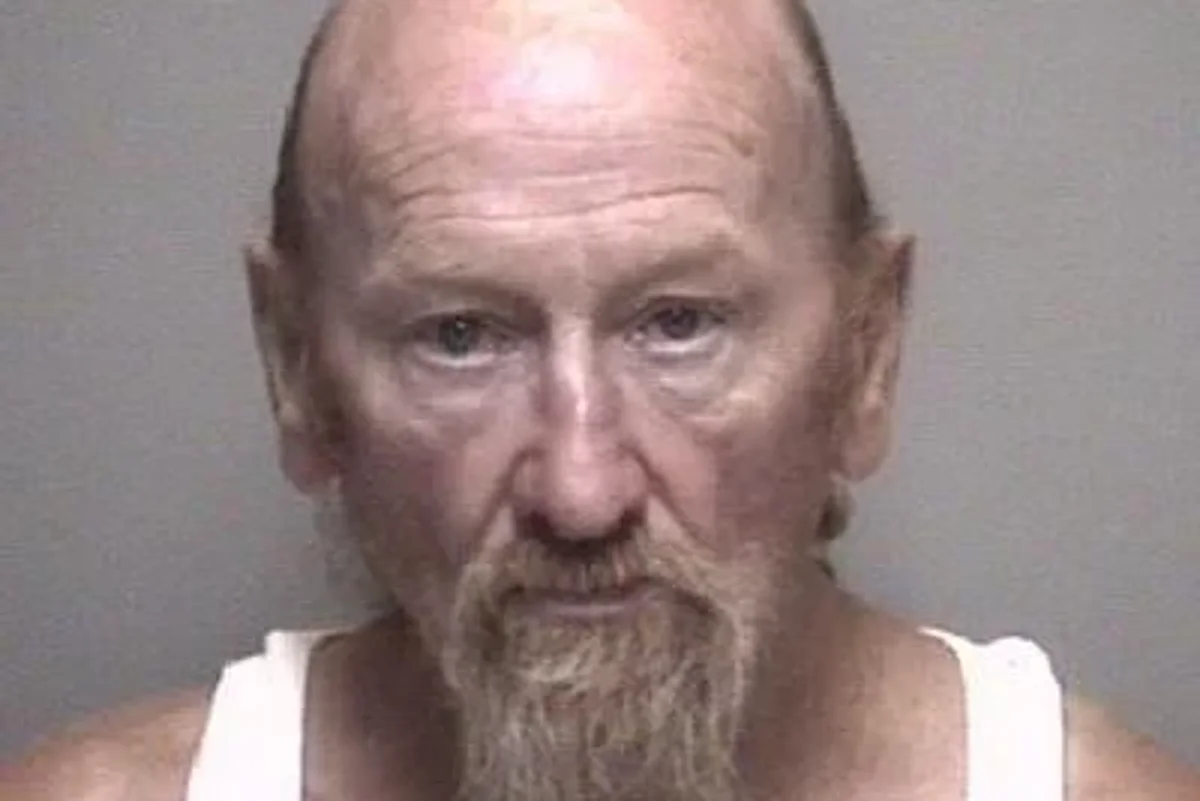
The recent conviction and twenty-year maximum sentence handed to James Dolphs Elmore Jr. for the 1986 manslaughter of sixteen-year-old Laura Miller marks the first legal accountability tied directly to any of the four bodies recovered from the Calder Road field in League City. Decades of systemic inertia, fragmented municipal jurisdiction, and evidentiary decay defined the corridor along Interstate 45 southeast of Houston, where the remains of more than thirty women and girls have been discovered since the 1970s.
Deconstructing the mechanics of this judicial milestone reveals structural deficiencies in how multi-jurisdictional serial homicides were processed during the late twentieth century, and how private intelligence gathering ultimately bridged the investigative gap.
The Operational Mechanics of an Investigative Vacuum
The geographic corridor spanning Galveston County and Harris County operated as an institutional blind spot. The territory's vulnerability stemmed from three distinct variables: rapid suburban sprawl juxtaposed with isolated industrial tracts, jurisdictional seams between municipal police departments and county sheriff offices, and the absence of unified data-sharing protocols during the 1980s and 1990s.
When bodies are dumped across porous boundaries, investigative friction multiplies. Law enforcement agencies routinely suffered from information silos, where local departments treated missing persons reports as isolated local events rather than nodes in a broader spatial pattern. The Calder Road field itself—a desolate stretch off a dirt road twenty-eight miles southeast of Houston—functioned as an unmonitored repository because surveillance technology was primitive and municipal patrols were spread thin over expansive rural-urban interfaces.
This structural fragmentation created a high-entropy evidentiary environment. Physical evidence degraded rapidly in the humid subtropical climate, and witness testimony became unreliable as decades passed. The state’s case against Elmore did not rely on preserved forensic material from the mid-1980s crime scene, but rather on modern investigative persistence driven outside traditional police channels.
The Economics of Private Resource Allocation
Institutional failure prompted an unprecedented pivot toward private sector operational resources. Following the disappearance of his daughter Laura in 1984, Tim Miller bypassed stalled municipal bureaucracies by establishing Texas EquuSearch in 2000, shifting search and recovery logistics from reactive public funding to a specialized, privately mobilized framework.
The breakthrough that led to Elmore's conviction illustrates an alternative investigative economy. Over a four-year period, private financial engagement and direct civilian outreach substituted for cold case squad bandwidth. Elmore approached Miller voluntarily in 2022, initiating a series of recorded interactions that mapped the operational reality of the crime. According to trial evidence, Elmore admitted to preparing the vial of cocaine that his longtime friend Clyde Hedrick administered to Laura Miller, and subsequently assisting in the transport of her body to the Calder Road site.
This dynamic highlights a fundamental structural limitation in legacy policing: cold case units frequently lack the sustained, unallocated human hours required to cultivate long-term civilian informants who operate outside standard criminal networks. By funding and sustaining direct engagement, private advocacy built the evidentiary bridge that the Galveston County District Attorney's office—under newly prioritized prosecutorial directives—ultimately translated into a grand jury indictment and conviction.
Evidentiary Cascades and Co-Defendant Vulnerability
The legal mechanics of the trial expose the fragility of prosecuting multi-perpetrator historical crimes when primary actors evade direct trial. Clyde Hedrick, long suspected by investigators of being the central architect behind the Calder Road homicides, had previously been convicted of manslaughter in 2014 for the 1984 death of Ellen Beason, serving eight years before his release on parole in 2022. When prosecutors signaled intent to seek indictments against Hedrick for the Calder Road cases in March, Hedrick died by suicide prior to formal grand jury presentation.
Hedrick's death created a legal vacuum, leaving Elmore as the sole defendant standing trial. The defense strategy hinged on isolating Elmore from the lethal act, framing him as a peripheral witness rather than an active participant. However, the legal threshold for manslaughter via precursor actions—preparing the lethal dose—proved sufficient for the jury to establish culpable agency. The rapid one-hour jury deliberation on guilt, followed by a thirty-minute sentencing consensus for the statutory maximum of twenty years, signals a zero-tolerance judicial appetite for historical complicity once prosecutorial momentum is achieved.
Despite this milestone, the broader portfolio of Interstate 45 homicides remains largely unresolved. High-profile resolutions, such as Oklahoma death row inmate William Reece pleading guilty in 2022 to the murders of Laura Smither, Jessica Cain, and Kelli Cox, demonstrate that historical clearance requires the convergence of DNA databases, cross-state offender profiling, and targeted prosecutorial focus.
Future containment of cold case backlogs depends on institutionalizing cross-jurisdictional task forces equipped with mandatory federal data integration, replacing reliance on ad-hoc civilian intervention with automated pattern recognition across regional medical examiner records.
Tim Miller reacts to maximum sentence in Texas Killing Fields case
This video provides direct footage of Tim Miller reacting outside the courthouse following the maximum sentence verdict, capturing the immediate emotional and personal conclusion to decades of advocacy.