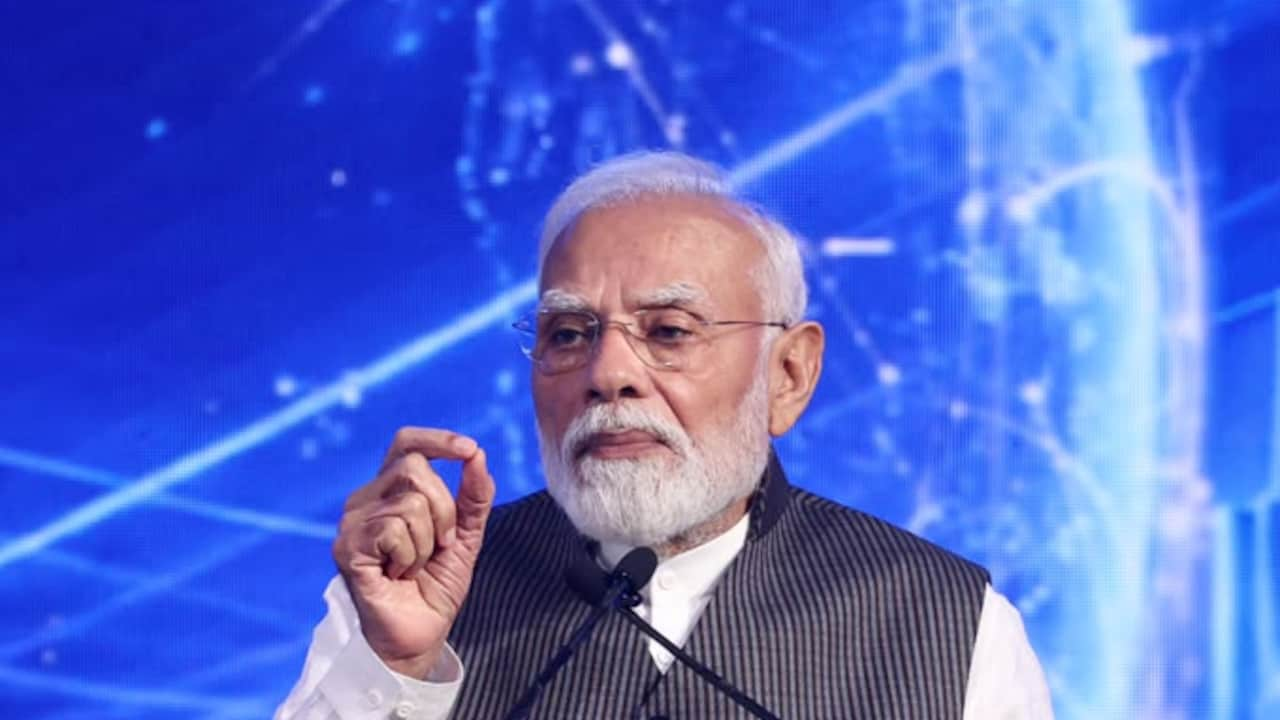
External Affairs Minister S. Jaishankar's October 2026 remarks at the NDTV World Summit boil down to a hard strategic premise: bilateral normalization with Pakistan is subordinate to halting cross-border terrorism, and external powers will not absorb security costs that New Delhi refuses to impose itself. The NDTV coverage presents these points as a sequence of firm declarations—wanting good neighborly ties, refusing to overlook terror, recalling the post-26/11 turning point, and warning that inaction invites external maneuvering. A short news report summarizes quotes; it does not model the underlying incentive structure, signaling mechanics, or institutional trade-offs that govern whether that doctrine holds under pressure.
Treating diplomatic statements at face value misses how asymmetric deterrence actually operates in South Asia. When a state signals that it will not sacrifice security for diplomatic calm, credibility does not come from rhetorical repetition alone. Credibility comes from raising the expected cost of proxy violence while keeping the escalatory ladder legible enough that third parties cannot easily dictate terms or trade away the victim's core security interests. Learn more on a similar subject: this related article.
Deconstructing the Competitor's Logic
The NDTV piece organizes Jaishankar's comments around four claims: India desires good relations with all neighbors including Pakistan; terrorism cannot be overlooked to achieve those relations; the 2008 Mumbai attacks shifted domestic consensus away from unconditional engagement; and visible retaliation forces the international system to take notice whereas passivity invites outside "games".
What the news summary leaves unexamined is the causal chain linking domestic political memory, third-party diplomatic behavior, and sub-conventional conflict. Reporting quotes a policy shift as an accomplished fact, yet policy shifts in protracted rivalries face a continuous test: adversaries probe whether stated red lines carry material penalties or merely diplomatic protests. Moreover, the article treats "the world" as a single observer that simply reacts to Indian resolve, overlooking how major powers balance competing regional interests—such as counterterrorism cooperation, transit access, or alliance management—against South Asian stability. Further reporting by Al Jazeera delves into comparable perspectives on the subject.
To turn a soundbite into an analytical model, those four claims map onto three structural components:
- The Conditionality Rule: Bilateral engagement is gated by verifiable reductions in cross-border militant activity rather than treated as a confidence-building engine that might reform behavior over time.
- The Domestic Consensus Ratchet: A severe shock—here, 26/11—permanently narrows the political space for unilateral concessions, raising the domestic audience cost for any government perceived as soft.
- The Third-Party Attribution Effect: External capitals calibrate their diplomatic posture based on how decisively the targeted state enforces its own boundaries, rather than acting as neutral referees on behalf of a hesitant target.
The Cost Function of Asymmetric Escalation
Cross-border terrorism functions as a low-cost, deniable instrument of coercion used by a weaker conventional actor against a larger neighbor. In game-theoretic terms, the sponsor seeks political or territorial leverage while keeping escalation below the threshold of total war. If the targeted state responds only with diplomatic demarches or multilateral dossiers, the sponsor's marginal cost per attack remains low relative to the political disruption inflicted.
Raising that cost requires altering the sponsor's expected utility calculation across multiple dimensions:
- Direct Kinetic or Retaliatory Cost: Imposing targeted military or strike costs shifts the burden of escalation management onto the instigator rather than leaving the defender to absorb casualties quietly.
- Diplomatic and Institutional Friction: Pressuring multilateral bodies, financial watchdogs, and bilateral partners to treat state-backed proxies as liabilities rather than routine regional disputes raises external isolation costs.
- Reputational and Domestic Squeeze: When a state's security apparatus overextends on proxy fronts while facing domestic economic or governance strain, external pressure compounds internal resource competition.
Here lies a critical cause-and-effect relationship that surface reporting often glosses over. Retaliation is not a one-time switch that permanently cures asymmetric coercion; it alters the equilibrium temporarily and invites adaptation. Militant networks and their sponsors adjust tactics—shifting routes, timing, or operational deniability—precisely because their core strategic incentives do not vanish after a single punitive episode.
Why Third-Party Mediation Fails Without Self-Enforced Red Lines
A central tension in Jaishankar's argument is the gap between external rhetoric on counterterrorism and external behavior during crises. Major powers routinely condemn terrorism in principle while prioritizing crisis de-escalation, regional balances, or broader strategic bargains in practice. When a targeted state relies on diplomatic appeals or outside capitals to restrain an adversary, external actors gain leverage to urge restraint on both sides—often equating the victim's response with the initial provocation to keep the regional lid on.
Consider how two contrasting postures change third-party bargaining dynamics. If State A absorbs a major attack without direct response and asks Partner B to lean on the perpetrator, Partner B may offer sympathetic language while counseling calm to avoid broader instability—effectively pricing State A's restraint cheaply. Conversely, if State A acts first on its own terms and communicates clear thresholds, Partner B faces a fait accompli and must adjust its diplomacy to an altered reality rather than lecturing State A into passivity.
This mechanism is a matter of observable diplomatic behavior, not a guaranteed law of international politics. Major powers still attempt to manage crises, spin narratives around pauses or de-escalation, and protect their own equities. Acting decisively reduces the likelihood that outside powers treat a target's inaction as permission to stall, though it never eliminates third-party opportunism entirely.
How Domestic Consensus Shapes Diplomatic Bargaining Power
The shift described around 26/11 illustrates a classic two-level game in international relations, where leaders bargain simultaneously at the international table and before a domestic constituency. When domestic public opinion hardens against unconditional talks, a negotiator's "win-set"—the range of agreements that can survive domestic scrutiny—shrinks dramatically.
A narrowed win-set has two opposing strategic effects:
- Bargaining Leverage: A government can credibly tell external interlocutors or the adversary that domestic politics foreclose premature concessions unless concrete security conditions are met.
- Strategic Rigidity: The same domestic consensus can penalize tactical flexibility if a government ever wants to test whether de-escalation is genuine, locking leaders into rigid postures even when circumstances shift.
In India's case, the hardening of public and elite consensus after 2008 made "talks and terror cannot go together" less a slogan of a single administration and more a structural constraint on any Indian government. Any leader who reverses that sequencing faces immediate domestic legitimacy costs.
Operational Trade-Offs and Limits of a Zero-Tolerance Posture
No deterrence doctrine is cost-free, and a strategy built on refusing to overlook terrorism carries real operational constraints that a rigorous assessment must weigh alongside its advantages.
First, definitional and evidentiary friction creates delays. Proving state sponsorship or attribution to the satisfaction of skeptical foreign capitals takes intelligence verification and diplomatic legwork, whereas adversaries exploit ambiguity and counter-narratives in real time.
Second, escalation control is inherently uncertain. Punitive responses intended to deter future attacks risk triggering counter-responses, border friction, or broader crisis spirals that pull attention and military resources away from other strategic priorities—such as long-term economic growth or contested frontiers elsewhere.
Third, diplomatic isolation cuts both ways. Maintaining a hard freeze on normal ties prevents normalization from rewarding bad behavior, yet it also reduces direct channels for crisis communication or tactical conflict management when miscalculation threatens to spiral.
Strategic Play for Sustaining Credible Deterrence
To operationalize this posture without falling into reactive drift, policymakers should pair firm conditionality with disciplined crisis architecture:
- Tie every diplomatic or confidence-building opening to verifiable, time-bound security benchmarks rather than goodwill pledges, ensuring normalization follows—never precedes—sustained reductions in cross-border violence.
- Maintain pre-calibrated response options and clear escalation boundaries so any punitive action serves a defined strategic objective rather than ad-hoc domestic pressure, while preserving technical military channels to prevent unintended spirals.
- Pair unilateral security resolve with targeted diplomatic proof-building among key partner capitals immediately after incidents, shaping external assessments before rival narratives set the frame.