Simultaneous kinetic military strikes and diplomatic settlement announcements represent a deliberate strategy of coercive diplomacy rather than contradictory statecraft. When the United States executes precision strikes against targets on Iran’s Qeshm Island while the White House signals an imminent diplomatic agreement, Washington is operationalizing Thomas Schelling’s framework of compellence—using calibrated, visible force to alter an adversary's cost-benefit calculus at the exact moment final terms are negotiated. Because the competitor reference provides only the headline without underlying text or verified casualty and damage figures, this analysis breaks down the verifiable geopolitical, geographic, and game-theoretic mechanisms driving a simultaneous strike-and-negotiate posture in the Persian Gulf.
The Strategic Geography of Qeshm Island
To understand why Qeshm Island serves as a high-value coercive lever, analysts must isolate its physical and operational characteristics within the maritime battlespace. Qeshm is the largest island in the Persian Gulf, stretching roughly 135 kilometers along the northern shore of the Strait of Hormuz, separated from the Iranian mainland by the narrow Clarence Strait.
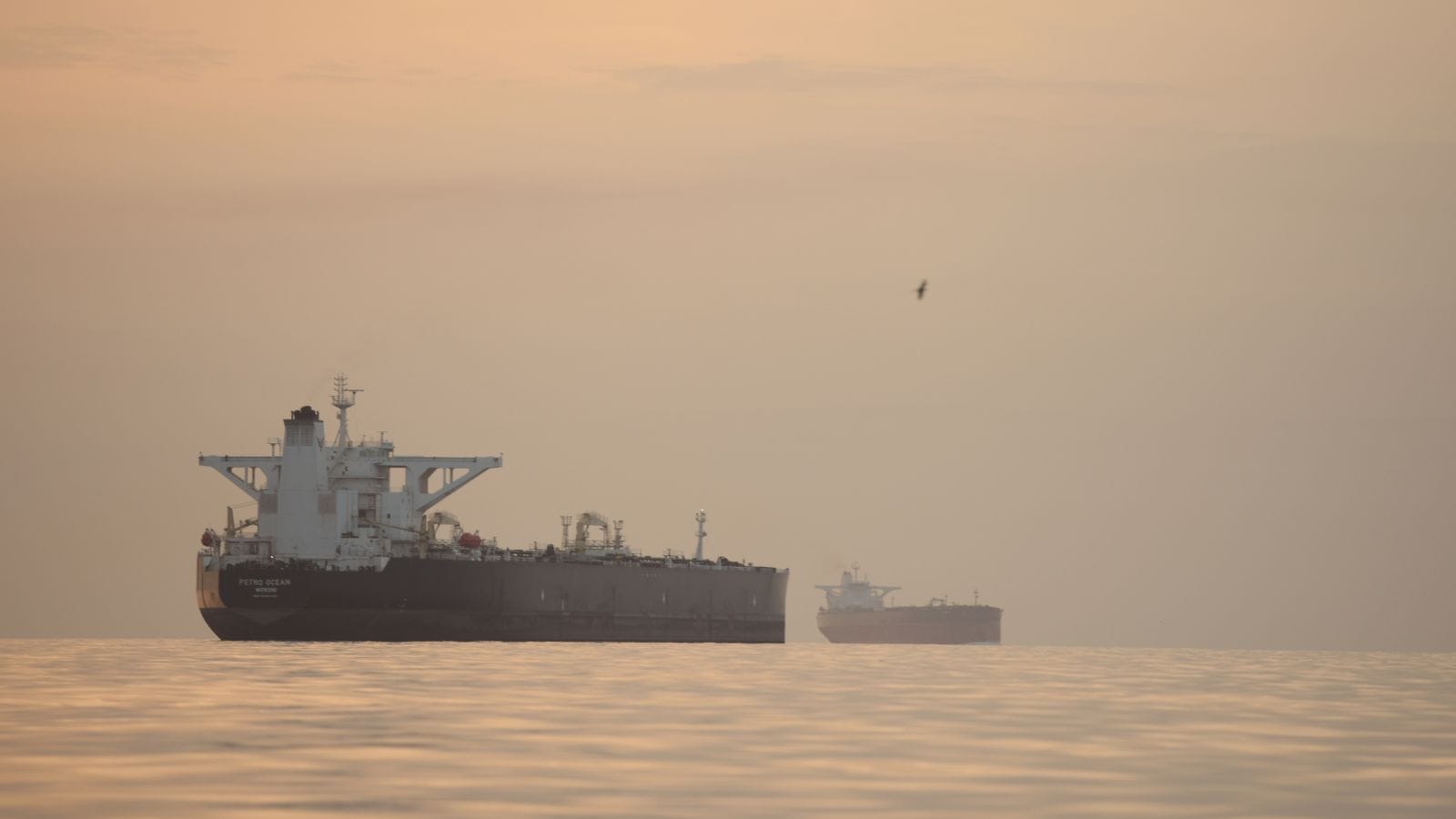
- Chokepoint Proximity and Sea Denial: Situated directly adjacent to the deep-water shipping lanes of the Strait of Hormuz, Qeshm provides an unsinkable forward operating base for asymmetric naval warfare. Roughly one-fifth of global petroleum liquids consumption transits these waters daily. Military infrastructure on the island—including coastal defense cruise missile batteries, fast-attack craft pens operated by the Islamic Revolutionary Guard Corps Navy (IRGCN), radar installations, and drone launch facilities—directly threatens commercial maritime transit and coalition naval assets.
- Dual-Use Economic Insulation: Unlike purely military atolls, Qeshm is a designated Free Trade Zone containing civilian population centers, port infrastructure, and energy storage facilities. This dual-use profile complicates target selection. Precision strikes on Qeshm require strict adherence to proportionality and target discrimination to degrade IRGCN anti-access/area denial (A2/AD) capabilities without triggering an uncontrollable humanitarian crisis or a total shutdown of regional energy exports.
- Escalation Dominance Thresholds: Striking Qeshm occupies a distinct rung on the escalation ladder. It is an attack on sovereign Iranian territory—crossing a threshold that proxy engagements in Iraq, Syria, or Yemen do not—yet it remains geographically separated from mainland industrial hubs, nuclear enrichment sites like Natanz or Fordow, and major population centers like Tehran or Isfahan. This geographic separation allows Washington to demonstrate reach and resolve while offering Tehran an off-ramp to characterize the event as a localized peripheral incident rather than an existential attack on the mainland.
The Dual-Track Compellence Framework
Conventional reporting often frames simultaneous military action and peace talks as diplomatic incoherence or internal administration friction. In strategic theory, the two tracks function as interdependent variables within a single bargaining model.
The Mechanism of Escalate-to-De-escalate
In high-stakes bilateral negotiations, an adversary frequently delays final concessions to extract marginal gains or to project domestic strength. Kinetic action immediately preceding or running parallel to an agreement announcement performs three specific functions:
- Eliminating the Costless Delay Option: Without active military pressure, the status quo favors the party stalling negotiations. A targeted strike imposes immediate, tangible degradation on military assets, shifting the baseline from "negotiating under stalemate" to "negotiating under active attrition."
- Establishing Credible Enforcement: A diplomatic framework is only as durable as the perceived willingness of the guarantor to punish non-compliance. Executing a strike while finalizing text signals that the transition to a diplomatic track does not equate to operational stand-down or risk aversion.
- Shaping Domestic Political Narratives: For a U.S. administration announcing an agreement with Tehran, domestic political vulnerability centers on accusations of appeasement. Kinetic strikes neutralize this critique by providing visual and operational proof of maximum pressure immediately prior to unveiling diplomatic terms.
Information Asymmetry and Signaling
Effective coercive diplomacy relies on clear signaling to prevent miscalculation. When a head of state publicly announces that a deal is "coming together" at the exact moment military assets strike sovereign territory, the messaging splits into two distinct channels aimed at different audiences.
The kinetic strike communicates directly to the adversary’s military command structure—specifically the IRGC—demonstrating intelligence penetration and tactical superiority over hardened or strategically vital coastal positions. Concurrently, the diplomatic announcement communicates to the adversary’s political leadership—the Supreme National Security Council and the executive branch—that the window for a face-saving exit remains open, provided no massive retaliatory spiral is initiated.
Market Pricing and Energy Risk Transmission
Financial and commodity markets process geopolitical shocks through probability-weighted supply disruption models rather than headline sentiment. When military strikes occur in the Strait of Hormuz alongside diplomatic optimism, crude oil and maritime insurance markets must price two competing forces simultaneously.
The first force is the Immediate Supply Disruption Premium. Any kinetic event on Qeshm Island raises the statistical probability of retaliatory mining in the Strait of Hormuz, seizure of commercial tankers, or missile strikes against regional processing facilities in neighboring Gulf Cooperation Council (GCC) states. Under normal conditions, this triggers sharp upward volatility in Brent crude futures and immediate spikes in war-risk insurance premiums for vessels transiting the Persian Gulf.
The second force is the Forward Supply Expansion Discount. A credible U.S.-Iran diplomatic deal implies the potential easing of secondary sanctions on Iranian crude exports, reintroducing hundreds of thousands of barrels per day into global supply chains while permanently lowering the baseline geopolitical risk premium for the Middle East.
When both events occur simultaneously, market liquidity fragments. Short-term algorithmic trading reacts to kinetic headlines with upward price spikes, while institutional macro desks sell into those rallies based on the forward deflationary impact of a diplomatic settlement. The net result is heightened intraday volatility accompanied by compressed long-term implied volatility—a structural divergence that penalizes unhedged directional traders on both sides of the trade.
Operational Limitations and Failure Modes
While dual-track compellence offers high strategic utility in theory, its execution in the Persian Gulf carries severe structural failure modes. Strategy consultants and defense planners must account for three primary constraints where this model breaks down.
The Retaliatory Trap and Domestic Legitimacy
Coercive diplomacy assumes the target state behaves as a unified, rational actor capable of absorbing a kinetic blow silently to preserve a diplomatic deal. In Iran’s bifurcated power structure, the civilian government and the IRGC operate with distinct institutional incentives. An overt strike on sovereign territory like Qeshm Island creates immense internal pressure on the IRGC to retaliate visibly to maintain deterrence credibility with its domestic base and regional proxy network. If Tehran launches a symmetric response—such as ballistic missile strikes against U.S. regional bases or naval interdiction in the Strait—Washington faces a binary choice: absorb the strike and undermine its own deterrence, or retaliate further and collapse the diplomatic track entirely.
Signal Misinterpretation Under Compressed Timelines
Diplomacy moves at the speed of legal drafting and bureaucratic clearance; modern precision strike warfare moves at the speed of satellite telemetry and supersonic flight. When both tracks run concurrently without real-time backchannel deconfliction, tactical events can outpace diplomatic framing. If an operational strike on Qeshm inadvertently causes higher-than-anticipated casualties or damages critical civilian infrastructure due to secondary explosions, Tehran may interpret the strike not as calibrated compellence, but as a premeditated sabotage of the talks. Once an adversary concludes that negotiations are a cover for military decapitation, diplomatic channels freeze immediately.
Alliance Cohesion and Regional Spillover
Gulf states hosting U.S. military assets—including Qatar, Bahrain, the United Arab Emirates, and Saudi Arabia—bear the immediate physical risk of Iranian retaliation. Executing unilateral strikes on Iranian territory while negotiating a bilateral deal introduces acute friction with regional partners if those partners are excluded from the targeting or diplomatic loop. Regional capitals have spent years pursuing tactical de-escalation with Tehran to protect economic diversification projects. Uncoordinated kinetic escalation risks alienating host nations, potentially restricting overflight rights or basing access precisely when deterrence posture requires maximum regional alignment.
Distinguishing Verified Facts from Analytical Hypotheses
Rigorous strategic assessment requires strict separation between established operational realities and unverified extrapolations, particularly when working from incomplete initial reporting.
- Established Baseline Facts: Qeshm Island sits at the strategic choke point of the Strait of Hormuz and hosts documented IRGCN asymmetric naval infrastructure alongside commercial free-trade facilities. U.S. military doctrine routinely pairs forward force projection with diplomatic negotiation tracks. Global energy markets remain structurally sensitive to security incidents within the Clarence Strait and adjacent shipping lanes.
- Conditional Hypotheses Requiring Verification: Without primary battle damage assessments (BDA), official Pentagon briefings, or published diplomatic text, the exact target set on Qeshm—whether radar arrays, drone depots, or naval vessels—remains unconfirmed. Similarly, whether the White House statement regarding an impending deal reflects finalized, binding terms or a tactical framing device to manage market panic and international backlash cannot be verified until formal diplomatic instruments are released.
Strategic Execution Protocol for Decision-Makers
Organizations, sovereign wealth funds, and corporate risk teams exposed to Middle Eastern geopolitical volatility or global energy supply chains must avoid reactive decision-making driven by breaking headlines. Execute the following three-step protocol to manage exposure during dual-track coercive episodes:
- Monitor Maritime AIS and War-Risk Rates Over Diplomatic Statements: Ignore rhetorical fluctuations from Washington and Tehran. Track Automatic Identification System (AIS) transponders for commercial tankers queuing outside the Strait of Hormuz and monitor daily adjustments in Lloyd’s Joint War Committee listed area premiums. Physical rerouting and insurance pricing provide real-time, unvarnished verification of actual threat levels.
- Hedge Tail-Risk Volatility Without Abandoning Base-Case Supply Models: Treat kinetic strikes paired with diplomatic announcements as high-variance noise around a mean-reverting trend until an actual blockade or multi-day retaliatory exchange occurs. Utilize out-of-the-money call options on Brent crude to protect against a catastrophic failure mode in the Strait, while maintaining baseline procurement contracts priced for stable or expanding global supply.
- Audit Supply Chain Chokepoint Dependencies: Map tier-two and tier-three supplier reliance on petrochemical feedstocks, liquefied natural gas (LNG), and containerized freight transiting the Persian Gulf and Red Sea corridors. Establish pre-negotiated alternative routing through overland GCC rail/pipeline networks (such as the Habshan-Fujairah pipeline) to bypass the Strait of Hormuz entirely if coercive signaling degrades into sustained regional conflict.