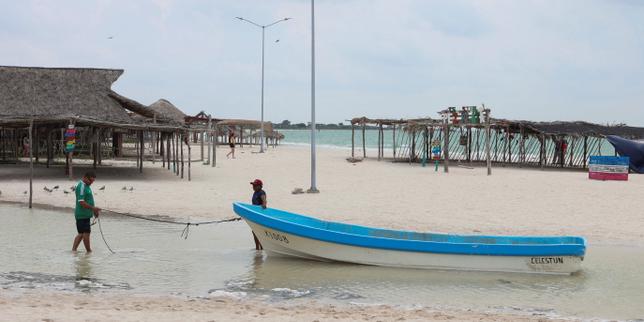
Shutting down six lakes in the Yucatan after detecting Naegleria fowleri treats a low-frequency, high-severity biological hazard with a blunt administrative instrument that ignores how exposure actually occurs. The core analytical problem behind headline closures is conflating environmental presence with human infection probability. To evaluate whether closing six freshwater bodies in the Yucatan makes epidemiological and economic sense, we must examine the organism's thermal ecology, the transmission mechanics of primary amoebic meningoencephalitis (PAM), the trade-offs of sudden recreational bans, and the operational limits of water monitoring.
The Ecological Mechanism Behind Amoeba Detection
Naegleria fowleri is a free-living thermophilic amoeba rather than a rare imported pathogen. It naturally inhabits warm freshwater environments worldwide, thriving in shallow, stagnant, or slow-moving bodies of water where temperatures climb above 25°C and peak between 30°C and 46°C. Warm climates, high solar irradiance, and sediment-rich shorelines create conditions where amoebic populations proliferate without requiring human carriers.
In a region like the Yucatan, water systems sit within a karstic limestone landscape characterized by porous rock, subterranean aquifers, cenotes, and surface lakes. While exact lake-by-lake sampling counts, thermal profiles, and laboratory confirmation dates are not established from a headline alone, the biological mechanism is clear: positive detection indicates that the organism is present in the sampled water or sediment at the time of testing, not that an outbreak is underway or that every cubic meter carries an infectious dose.
Standard coverage of such closures often treats detection as binary—safe or unsafe—when microbiological risk is continuous and spatially uneven. Amoebae concentrate near warm, disturbed shallows and bottom sediments rather than dispersing uniformly across an entire lake basin.
Why Presence Does Not Equal Infection
A critical error in public alarm over "brain-eating amoeba" headlines is assuming that swimming in water where Naegleria fowleri lives routinely leads to illness. Epidemiologically, primary amoebic meningoencephalitis is exceptionally rare relative to the millions of water-contact hours logged globally each year, though its case-fatality rate remains above 95 percent once clinical symptoms advance.
The transmission bottleneck is narrow and mechanical:
- Nasal entry is required: The amoeba does not infect people through swallowing water, nor does it spread from person to person. Risk arises when water containing the organism is forced high into the nasal cavity, allowing trophozoites to cross the cribriform plate along the olfactory nerve and reach the brain.
- Hydrodynamic force matters: Activities that drive water up the nose—diving, jumping from heights, water skiing, wakeboarding, or rough horseplay in shallow water—carry higher mechanical risk than calm, upright wading where the nose stays clear of forceful water entry.
- Host and dose dynamics vary: Water temperature, organic load, amoebic concentration, and individual nasal exposure all shape whether colonization occurs, though exact infectious thresholds in open natural waters remain difficult to pinpoint in real time.
Distinguishing between known biological facts and educated hypotheses keeps risk analysis grounded. It is a known fact that Naegleria fowleri is a thermophilic free-living amoeba capable of causing PAM via nasal exposure. When a news report announces six lake closures without publishing water temperatures, sampling depths, or clinical case counts, any claim of imminent mass infection is an educated hypothesis at best and sensationalism at worst.
The Cost Function of Blanket Lake Closures
Closing six lakes at once imposes immediate, concentrated costs on local economies while producing uncertain risk reduction. In tourism-dependent regions like the Yucatan, freshwater sites anchor day trips, guided tours, equipment rentals, food vendors, and local transport. A sudden shutdown hits small operators with zero revenue while fixed costs—wages, loan payments, maintenance, and permits—continue running.
From a systems perspective, blanket closures create three downstream distortions:
- Displacement to unmonitored sites: When popular, regulated lakes close abruptly, visitors looking for heat relief or recreation may shift toward informal swimming holes, cenotes, or river stretches that lack signage, lifeguards, or water-quality advisories. Moving swimmers to unmonitored water can trade a known, regulated hazard for worse drowning or injury risks.
- Credibility erosion over time: If authorities close lakes after routine or low-level detections and reopen them quietly without transparent criteria, residents and operators can grow skeptical of future warnings. When real high-risk conditions arrive—such as extreme heatwaves paired with low water levels—public compliance may weaken.
- Misallocated enforcement capacity: Patrolling six separate lakes requires personnel and administrative bandwidth. Without clear reopening thresholds, enforcement can become inconsistent, leaving some visitors confused about which areas are restricted and why.
The first limitation of this economic framing is that local tourism revenue, municipal budgets, and informal vendor dependence vary sharply from lake to lake. A remote lagoon used mostly by locals has a very different cost structure than a high-traffic destination tied to tour packages.
Why Water Testing Alone Cannot Guarantee Zero Risk
Public health officials and travelers often look to water testing as a definitive stamp of safety, yet microbiological sampling in open lakes has hard operational limits. Naegleria fowleri is not evenly mixed like a dissolved chemical. A sample taken at one point and depth may miss a pocket near warm, stirred-up sediment ten meters away, or test positive on a day when conditions shift quickly.
Laboratory identification also takes time. Culture methods and molecular assays such as polymerase chain reaction (PCR) require proper collection, transport, and processing, meaning test results reflect past conditions rather than real-time water status. By the time a result comes back, water temperatures, wind mixing, or visitor density may have already changed.
Even more importantly, testing does not measure human behavior. Two lakes with similar amoeba counts can pose different practical risks if one is a quiet, deep body of water and the other is a shallow, sun-baked spot crowded with people kicking up silt and diving.
A Four-Pillar Risk Management Model for Warm-Water Recreation
Rather than relying solely on reactive shutdowns after a single detection wave, authorities and operators can manage thermophilic amoeba risk through four structured pillars:
- Risk-tiered advisories over binary bans: Reserve full closures for confirmed clinical cases, extreme thermal anomalies, or high-hazard shallow zones, while using tiered advisories—such as warnings against diving or forceful nasal entry in warm shallows—when environmental detections occur without illness.
- Activity-specific behavioral guidance: Focus public messaging on mechanics rather than fear. Advising swimmers to hold their nose, use nose clips, or avoid jumping and stirring up bottom sediment in warm freshwater directly targets the route of entry.
- Transparent sampling and reopening rules: Publish where samples were taken, what method was used, and what exact criteria must be met before a closed lake reopens. Predictable rules reduce rumor and protect institutional trust.
- Substitute-site and safety alignment: Coordinate closures across nearby water bodies so visitors are guided toward safer alternatives with clear signage and basic water safety controls rather than scattering blindly.
A second limitation of any advisory model is compliance friction. Travelers on short vacations often ignore nuance when they see alarming headlines, and local businesses may push back hard against any restriction that trims foot traffic. There is no silver bullet that eliminates Naegleria fowleri from warm natural waters without draining or chemically treating them, which is ecologically destructive and practically impossible across six lakes.
Strategic Play for Authorities and Operators
Treat the six-lake shutdown as an immediate communications and governance reset rather than a permanent operating standard: publish the exact environmental basis for the closures within 48 hours, pair every restriction with concrete nose-entry prevention guidance, and establish objective water-temperature and re-sampling triggers that govern reopening before local tourism confidence erodes further.