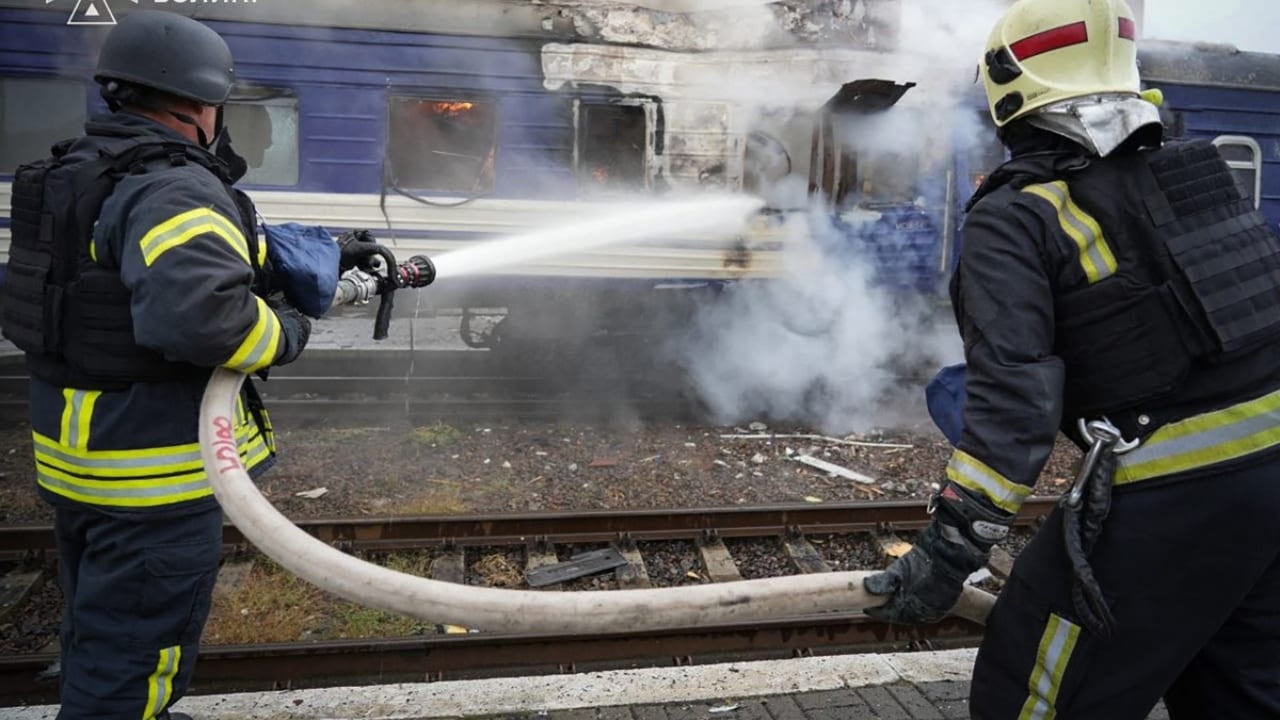
Air raid sirens in wartime Ukraine are part of the daily rhythm, but a strike near the Polish border changes the math completely. When a Russian drone slammed into railway infrastructure at Yahodyn just minutes after a train carrying former British Prime Minister Boris Johnson cleared the area, it stopped being just another regional skirmish. It felt like a deliberate message carved in smoke and shrapnel.
The incident throws a harsh spotlight on the extreme vulnerability of Ukraine’s remaining transport arteries. While international media focused heavily on the high-profile passengers onboard the preceding transport, the reality on the ground is far grimmer for everyday citizens who rely on these trains to survive. Let's break down what actually happened, why the rail network has become a primary target, and what this means for European security moving forward.
The Timeline of the Yahodyn Station Strike
The sequence of events left little room for comfort. Boris Johnson, alongside other international figures returning from a security conference in Kyiv, had transited through the Yahodyn railway station near the border with Poland. Their transport experienced strict evacuation alerts and tight security protocols, slipping across the frontier before the strike hit.
Minutes later, a Russian drone—identified as an Iranian-designed Shahed-type loitering munition—struck the area. Ukrainian state railway operator Ukrzaliznytsia confirmed that the explosion damaged infrastructure and rolling stock just a couple of miles from European Union and NATO territory.
Was Boris Johnson personally targeted? Ukrainian officials and security analysts have argued that the timing is too precise to write off as a random coincidence. Russia routinely monitors high-level diplomatic visits, and tracking high-value delegations through electronic intelligence or local spotters is a core competency of modern military intelligence. Even if the strike missed its window by a hair, the psychological impact was immediate. It was a direct warning shot fired straight at the doorstep of the West.
Why Ukraine's Railways Are Putin's Primary Target
Commercial aviation in Ukraine has been grounded since the full-scale invasion began. That leaves the national railway system as the absolute lifeline of the country. It moves millions of refugees, transports grain, carries foreign dignitaries, and shuttles vital industrial supplies.
Because roads are clogged, dangerous, and prone to artillery fire, Ukrzaliznytsia functions as the beating heart of Ukrainian logistics. Russia knows this better than anyone.
Early in the conflict, Moscow targeted fixed assets like electrical sub-stations and marshalling yards. But military analysts note a dangerous tactical shift. Russian forces have increasingly hunted moving passenger trains and locomotives directly. Striking a locomotive hauling civilians or fuel creates instant chaos, terrorizes the civilian population, and tries to break the collective will of a nation that refuses to stop moving.
When a drone hits a rail line a mile from Poland, it sends a very deliberate signal to Warsaw, Berlin, and Brussels. It says that international borders offer no absolute immunity, and that the spillover risk is real.
The Broader Fallout for Western Support
High-profile close calls have a way of shifting political willpower overnight. In the wake of the Yahodyn attack, Ukrainian officials renewed their urgent appeals for advanced air defense systems and decisive action on frozen Russian assets sitting idle in Western financial institutions.
For months, politicians in London and Washington have debated the finer points of escalation management. They worry that supplying specific long-range capabilities or transferring frozen funds from accounts in places like Belgium and London will provoke an unpredictable response from the Kremlin. But incidents near the NATO border dismantle the illusion that caution equals safety. Inaction doesn't prevent escalation; it invites it.
Foreign Minister Andrii Sybiha didn't mince words after the strike, calling it Putin's terror knocking directly on the gates of Europe. When a former British prime minister nearly intersects with a kamikaze drone, the abstract nature of the war vanishes. It forces a hard conversation in Western capitals about whether current defensive shields are enough to protect even the most basic transit corridors near the frontier.
What Happens When the Lines Go Dark
The attack near the Polish border is a stark reminder that modern warfare respects no neat geographical boundaries. As long as Ukraine's trains keep running, they will remain in the crosshairs of a frustrated military strategy that relies heavily on infrastructure destruction.
Protecting these networks requires more than temporary panic and hurried evacuations. It demands a massive injection of mobile air defense units, electronic jamming gear, and unyielding political backing. The rails in western Ukraine are more than tracks of steel. They are the fragile tether keeping a sovereign nation connected to the rest of the free world, and guarding them is non-negotiable.