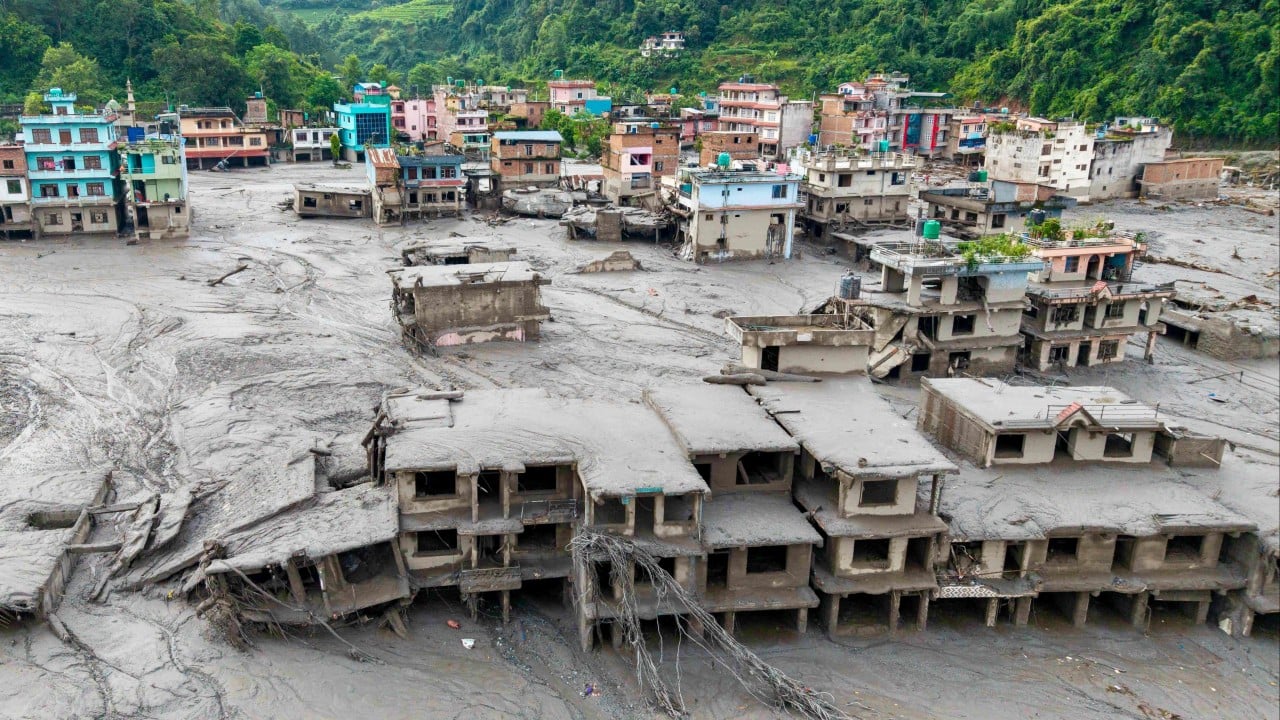
The rain doesn't just fall in Nepal anymore. It pounds. It destroys. When monsoon rivers swell past their banks and swallow entire neighborhoods overnight, the immediate crisis is physical: rescue boats, muddy shelters, and missing persons. But once the floodwaters recede and the headlines fade, a quieter, more insidious emergency takes hold. Young Nepalis are carrying a heavy psychological burden. They are waking up to a reality where the future feels entirely unstable.
Climate dread isn't some abstract academic concept debated in air-conditioned conference rooms in Kathmandu. For a twenty-year-old living near the Bagmati River, in the vulnerable foothill districts, or across the flood-ravaged plains of the Tarai, it is a constant, low-level panic. You watch the monsoon clouds roll in and your stomach tightens. You wonder if your home will still be standing tomorrow. You wonder if your degree or your job prospects matter when the next flash flood wipes out the local infrastructure, cutting off roads and isolating entire communities for weeks.
Understanding this crisis requires looking past standard disaster reports. Governments count houses destroyed and bridges washed out. They tally economic losses in millions of rupees. Yet, they almost entirely ignore the internal collapse happening inside the minds of the generation expected to rebuild the country. Climate trauma leaves no visible scars, but it fundamentally alters how young people perceive safety, stability, and belonging.
The Geography of Fear and Fragility
Nepal sits at ground zero of severe climate vulnerability. The Himalayan nation's topography makes it uniquely fragile. Glacial lakes are expanding rapidly due to rising global temperatures, threatening catastrophic outbursts known as glacial lake outburst floods, or GLOFs. At the same time, monsoon rains have become erratic and violently intense, dumping months of water in a matter of days. When the Melamchi River flooded violently a few summers ago, sweeping away bridges, homes, and entire tourist outposts in minutes, it didn't just ruin local lives. It shattered the illusion of safety for anyone living downstream across the country.
Young people bear the brunt of this shifting environment. Many grew up hearing stories of predictable weather patterns from their grandparents—monsoons that arrived on schedule and nourished crops without turning into destructive torrents. Those stories are entirely useless now. Every June brings a new wave of collective anxiety. You cannot plan a career, build a small business, or invest in long-term goals when your entire physical surroundings feel completely temporary.
This constant exposure to trauma rewires how youth view their home country. Migration rates from Nepal are already staggering, with thousands leaving daily for better economic horizons abroad in the Middle East, Europe, or Australia. But for many young Nepalis, climate dread adds an entirely new push factor. Staying behind feels like playing Russian roulette with extreme weather. Why plant roots in soil that might wash away next monsoon? The brain drain isn't just about economics anymore; it is an escape from ecological despair.
Eco-Anxiety Without a Medical Manual
In wealthier Western nations, eco-anxiety is frequently discussed alongside therapy apps, mindfulness workshops, and specialized counseling. In Nepal, the reality is starkly different. Mental health care remains heavily stigmatized and desperately underfunded. Outside of major urban centers like Kathmandu or Pokhara, professional psychological support is basically non-existent.
When a young person in a rural district experiences severe panic attacks, flashbacks, or chronic dread after surviving a landslide or a flash flood, people around them often tell them to be strong, pray, or simply move on. There is no widespread cultural language for clinical depression caused by ecological collapse. Instead, climate dread manifests as physical exhaustion, chronic insomnia, digestive issues, and a profound, paralyzing sense of fatalism.
You feel guilty for worrying about university exams or daily trivialities when friends in neighboring districts have lost everything. At the same time, you feel completely overwhelmed by the sheer scale of the crisis. Global carbon emissions keep rising. International climate funds pledged at high-profile summits rarely trickle down to grassroots communities in meaningful ways. The industrialized global north causes the vast majority of historical emissions, but Nepali youth pay the price with their peace of mind and their homes.
The Media Cycle Versus Daily Survival
International media crews descend on Nepal only when disaster strikes at scale. Cameras capture dramatic footage of swollen rivers carrying away houses in Kathmandu or massive landslides blocking the Prithvi Highway. Once the cameras pack up and leave, the survivors are left to fend for themselves in the mud.
For young people living through the aftermath, this media cycle creates a secondary trauma. They watch their pain broadcast globally as a brief spectacle, only to be forgotten the moment a new disaster hits another country. This superficial attention deepens the sense of isolation and hopelessness among youth who know that systemic change is desperately needed long after the cameras turn away. The daily reality of rebuilding a shattered community is never glamorous enough to hold global attention, leaving locals to carry the weight alone.
Breaking the Silence and Finding Community
For a long time, talking about fear was seen as a sign of weakness. Young Nepalis were expected to endure hardships quietly, just as previous generations had done without complaint. That rigid cultural script is finally starting to crack under the sheer weight of recurring disasters.
Peer-to-peer networks are stepping up where formal medical and state systems fail. Grassroots youth organizations in Kathmandu and regional hubs are creating informal support spaces. They talk openly about eco-grief. They share strategies for coping with climate trauma. Realizing that you aren't the only one lying awake at night listening to the rain batter the tin roof changes everything. It turns isolated panic into shared solidarity.
Activism has also become a powerful antidote to despair. Sitting back and watching the world burn is psychologically torturous. Standing up, organizing protests, demanding better watershed management, and pushing for local climate adaptation policies gives young people a sense of agency. Even when local politicians ignore them or bureaucracy stalls progress, the act of fighting back helps push the dread into the background. Action replaces helplessness.
The Reality of Adaptation on the Ground
Adapting to a hotter, wetter world requires more than emotional resilience and peer support. It requires practical, boots-on-the-ground changes that local communities can actually control and sustain.
Young engineers, scientists, and community leaders across Nepal are rejecting top-down solutions that fail to address local conditions. They are mapping landslide-prone zones using open-source tools and smartphones. They are setting up early-warning text alert systems between upstream villages and downstream settlements. They are reviving indigenous farming techniques and planting deep-rooted native vegetation that holds soil together far better than modern monocultures or concrete embankments that easily wash away.
These grassroots efforts won't stop global temperature hikes overnight. But they give young Nepalis something vital: a sense of control over their immediate environment. When you are actively working to protect your village or city ward, you have less time to sit paralyzed by existential dread.
The emotional toll of climate change on Nepal's youth is an unfolding crisis that demands urgent attention. It is not just about rebuilding washed-out bridges, repairing broken roads, or distributing emergency rice rations. It is about healing a generation whose trust in the earth beneath their feet has been broken. Until the mental health crisis accompanying these natural disasters is recognized and addressed with real resources, Nepal's recovery will remain painfully incomplete.