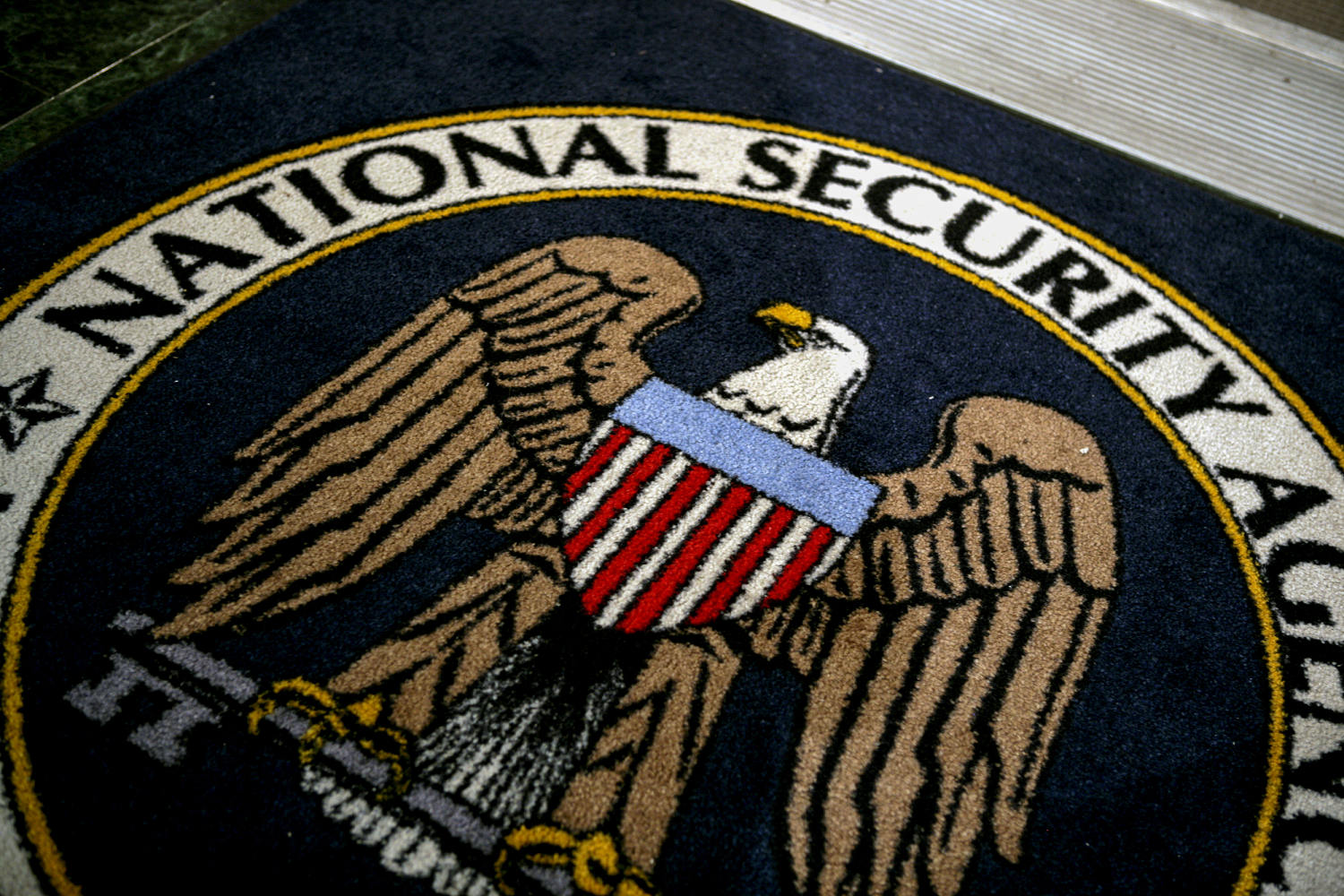
Everyone in Washington is panicking because a classified NSA network went dark and sent intelligence analysts home to twiddle their thumbs.
Mainstream tech reporters are treating this like a catastrophic operational failure. They see empty desks at Fort Meade, unmonitored data streams, and federal employees stuck on their couches, and they immediately scream vulnerability. They assume that if the world’s premier signals intelligence agency cannot log into its Top Secret infrastructure, the nation is flying blind.
That reaction exposes a total ignorance of how high-side security actually works.
If you have spent any time architecting air-gapped networks or managing Sensitive Compartmented Information Facilities (SCIFs), you know the uncomfortable truth. A multi-day outage on a classified network isn't an embarrassment. It is a sign that the defense-in-depth protocols are doing their exact job. When a high-side system goes down and stays down, it usually means someone pulled the plug intentionally to preserve integrity, or a cryptographic boundary failed closed rather than failing open.
The lazy consensus is that uptime equals security. In the commercial cloud world, five nines of availability—99.999% uptime—is the gold standard. If AWS or Microsoft Azure goes down for four hours, heads roll and stocks tank. Commentators are applying that exact same Silicon Valley metric to the National Security Agency.
They are asking the wrong question. They want to know why the network isn't back up yet. They should be asking what kind of catastrophic compromise would happen if the NSA prioritized speed over absolute certainty.
The Myth of the Unbreakable High-Side Network
Let’s clear up a massive misconception about what a "classified network" actually is.
To the average reader, it sounds like a magic, hyper-secure version of the regular internet. In reality, networks like JWICS (Joint Worldwide Intelligence Communications System) or NSANet are sprawling, temperamental beasts. They are held together by custom cryptographic hardware, strict cross-domain solutions, and layers of legacy code that would make a modern software engineer weep.
When you build a system designed to stop nation-state adversaries like Russia’s SVR or China’s Unit 61398, you sacrifice convenience at every single turn. Every packet is inspected. Every identity is verified through hardware tokens and public key infrastructure (PKI). Every bridge between classification levels—say, moving data from Secret to Top Secret/SCI—requires physical or strictly controlled diode-based guards.
I have sat in war rooms with enterprise architects who blew millions of dollars trying to make air-gapped environments behave like commercial SaaS platforms. Every time they tried to introduce automated failovers and rapid self-healing scripts into a high-assurance network, they created a massive security hole. Automation at that level requires trust. Zero-trust architecture, by definition, refuses to grant it.
When a critical component fails in a commercial data center, an automated script reroutes traffic in milliseconds. When a Type 1 encryption device or a cross-domain guard throws an unverified error on an NSA network, the system doesn't reroute. It locks the doors, swallows the key, and waits for a human with a Top Secret clearance and a physical screwdriver to verify every single bit of state before turning it back on.
That is why staff are sitting at home. You cannot remote into a SCIF. You cannot spin up a temporary Slack channel to discuss signals intelligence. The friction isn't a bug in the system. The friction is the entire point.
Fail-Closed vs. Fail-Open Architecture
To understand why this outage is a triumph of engineering discipline rather than a failure, you have to understand the difference between fail-open and fail-closed systems.
- Fail-Open: If a security control breaks, the system defaults to allowing access so business operations can continue. This is how most corporate networks operate. Revenue stops when the network stops, so engineers design around availability.
- Fail-Closed: If a security control breaks, the system defaults to blocking all access, severing connections, and halting operations completely. Confidentiality and integrity take absolute precedence over availability.
In the CIA triad of information security—Confidentiality, Integrity, and Availability—commercial enterprises worship Availability. Intelligence agencies worship Confidentiality and Integrity.
Imagine a scenario where a routine firmware update on a core router inside Fort Meade introduces a subtle memory leak. On a commercial network, the router reboots, maybe drops a few packets, and keeps pushing traffic while engineers investigate. On a classified intelligence network, an unverified state change in a core routing device looks identical to an active supply-chain implant or a memory-corruption exploit.
If the NSA’s network engineers rushed to bring the system back online just to stop bad press and get analysts back to their desks, they would have to bypass validation checks. They would have to trust unverified hardware states. That is exactly how adversaries slip persistent threats into secure enclaves—during the chaotic scramble of incident recovery.
By keeping the network down and sending staff home, leadership is demonstrating a level of operational restraint that the private sector completely lacks. They are absorbing the political heat of a visible outage to guarantee that when the switches flip back on, the cryptographic integrity of the network is 100% mathematically sound.
What Everyone Gets Wrong About "Working From Home"
The headlines love the detail about NSA staffers "working from home." It paints a picture of spies lounging in sweatpants, locked out of their computers, billing the taxpayer for nothing.
Again, this misunderstands how the intelligence community actually functions.
While high-side networks hold the raw, compartmented intelligence, the vast majority of an analyst’s administrative, training, and unclassified open-source intelligence (OSINT) work happens on low-side systems. When a classified network goes dark, analysts don't just stare at a blank wall. They pivot to unclassified research, mandatory compliance training, methodology reviews, and administrative backlogs that usually get ignored during normal operational tempo.
More importantly, sending non-essential cleared personnel home clears the physical floor space inside the SCIFs.
When a major infrastructure outage hits a secure facility, the last thing incident response teams and network engineers need is thousands of analysts crowding the hallways, repeatedly trying to log into dead terminals, and flooding the internal help desks with tickets. Every failed login attempt generates logs. Every frantic call to the network operations center (NOC) distracts engineers from root-cause analysis.
Clearing the building reduces the noise. It isolates the system. It turns a chaotic, live-fire production environment into a clean laboratory where engineers can trace the fault without the pressure of thousands of users hammering the authentication servers.
The Hidden Fragility of Modern Cyber Infrastructure
None of this means the NSA gets a free pass. There is a massive, uncomfortable downside to this rigid, fail-closed philosophy, and pretending otherwise would be dishonest.
When you build networks so complex and tightly coupled that a single point of failure forces a multi-day blackout, you create a different kind of vulnerability: operational paralysis.
During a genuine geopolitical crisis—say, a sudden escalation in the Taiwan Strait or a coordinated cyberattack on the U.S. power grid—the NSA cannot afford to tell the President, "Sorry, our cryptographic gateways are still running diagnostics, check back on Tuesday."
The intelligence community has spent the last decade trying to modernize its infrastructure, notably through initiatives like the Commercial Cloud Enterprise (C2E) and various ICITE (Intelligence Community Information Technology Enterprise) programs. The goal was to bring cloud elasticity and resilience to classified environments.
Yet, outages like this prove that the underlying plumbing is still dangerously brittle. You can put a sleek, modern cloud interface on top of government infrastructure, but if the underlying cross-domain guards and legacy transport layers still rely on monolithic architectures, you haven't solved the resilience problem. You have just hidden it behind a prettier login screen.
Furthermore, every time a classified network goes down for days, it triggers a shadow IT crisis. Analysts and operators still have deadlines. Commanders still demand briefings. When official channels die, human beings naturally look for workarounds. They start printing documents they shouldn't print, moving data via physical media, or having conversations on unclassified phones that skirt dangerously close to operational security violations.
Security purists hate admitting this, but absolute security that prevents people from doing their jobs eventually degrades security. If you lock the front door too tightly, people will climb out the window.
Why Competitors and Critics Are Missing the Real Story
If you look at the commentary surrounding this outage, it falls into two predictable camps.
The first camp claims this proves the NSA is incompetent and outmatched by modern cyber threats. They point to past breaches—Snowden, the Shadow Brokers—and argue the agency still can't manage its own house. This is lazy punditry. Incompetence looks like leaving an S3 bucket open to the public internet or failing to patch a known vulnerability for six months. Taking a network offline and keeping it offline until every diagnostic clears is the exact opposite of incompetence. It is bureaucratic courage.
The second camp treats it as a non-story, dismissing it as a routine IT glitch that happens to every large organization. That is equally wrong. An outage of this duration at an agency with an effectively unlimited budget and the deepest technical talent pool on earth is never "routine." It signals a fundamental architectural friction—a collision between legacy security models and the demands of modern, real-time intelligence operations.
What Actually Happens Inside a High-Side Outage
When a network like this goes dark, a very specific, grueling sequence of events unfolds behind the scenes—one that bears zero resemblance to corporate IT troubleshooting:
- Immediate Isolation: Automated tripwires or manual overrides sever external gateways to ensure whatever caused the fault cannot propagate to connected partner networks (like Five Eyes allies or DoD systems).
- Cryptographic Verification: Engineers must manually verify the integrity of the High Assurance Internet Protocol Encryptor (HAIPE) devices. If a key state is corrupted, devices must be zeroized and manually re-keyed using physical key loaders.
- Forensic Triage: Before assuming a hardware failure or software bug, cyber defense teams must prove a negative—they have to verify with absolute certainty that the outage wasn't caused by an adversary's denial-of-service or wiper attack.
- Sequential Restoration: You cannot just flip the main breaker. Core routing comes up first, followed by identity providers, then database clusters, and finally end-user virtual desktop infrastructure (VDI). Each step requires sign-off from senior security officials.
This process takes days because skipping a single step invalidates the entire security model.
The Hard Lesson for Enterprise Tech Leaders
Every Chief Information Security Officer (CISO) in the Fortune 500 should be paying close attention to what is happening at Fort Meade right now, because it exposes a lie at the heart of corporate cybersecurity.
Corporate boards love to tell themselves they have "military-grade security." They buy the most expensive zero-trust platforms, hire former intelligence officers, and boast about their resilience.
Yet, the moment a critical system goes down, those same executives scream at their IT directors to "just get it back up" before the forensic team has even finished imaging the affected servers. They choose quarterly revenue over structural integrity every single time. They treat downtime as a fireable offense and silent data corruption as a problem for next quarter.
The NSA is currently demonstrating what it actually looks like to prioritize security over convenience. It looks ugly. It looks frustrating. It results in embarrassing headlines about cleared analysts sitting at home unable to check their classified email.
Stop measuring the strength of a security posture by how rarely it breaks. Start measuring it by how disciplined the organization remains when it does.
If your network never goes down, it isn't because your engineers are geniuses. It is because you haven't set your tripwires sensitive enough to catch what is actually happening inside your wires.