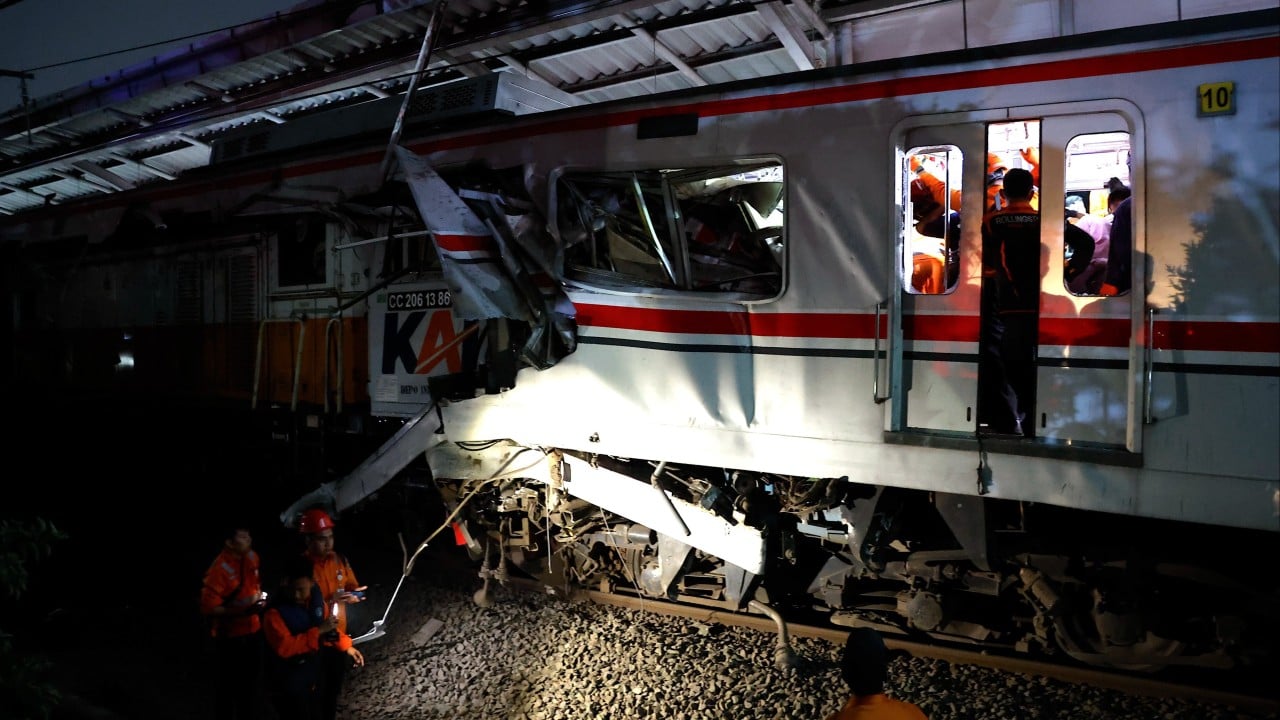
Friday morning commutes in Indonesia aren't usually life-threatening. But on January 5, 2024, the routine shattered for hundreds of passengers near Bandung. Two trains—the Turangga express and a local Commuter Line Bandung Raya—slammed into each other on a single track. It happened in Cicalengka, West Java. The impact was violent enough to lift carriages off the rails and twist them into scrap metal. Four people died. Dozens more went to the hospital.
When you look at the photos of the wreckage, it’s hard to believe more people didn't die. The front cars were crushed. One was pushed nearly vertical. It’s a miracle of physics that the passenger death toll stayed at zero, with the fatalities being crew members. But "miracles" aren't a safety strategy. This crash reveals the deep, systemic cracks in how Indonesia manages its rail infrastructure. It's a wake-up call that should've happened years ago.
What actually happened on that Cicalengka track
The facts are straightforward but terrifying. The Turangga train was traveling from Surabaya to Bandung. The local commuter train was headed in the opposite direction. They met on a single-track stretch between Cicalengka and Haurpugur stations. In a modern rail system, this is mathematically impossible. Signal systems are supposed to prevent two objects from occupying the same space.
Yet, there they were.
The victims weren't the passengers. They were the people running the trains. Julian Dwi Setiyono, the driver of the Turangga, died at the scene. His assistant, Ponisan, and a steward named Aradiansyah also lost their lives. An internal security guard was the fourth victim. These were professionals doing their jobs on a stretch of track that failed them. Emergency crews spent hours trying to cut through the metal to reach those trapped. It was a slow, grueling process that paralyzed the main southern rail link for days.
The single track problem nobody wants to fix fast enough
If you've traveled through West Java, you know the terrain is beautiful but treacherous for engineers. Mountains, narrow passes, and deep valleys make building double tracks expensive. But expense shouldn't be an excuse for death. Most of Indonesia’s busiest routes have moved to double-track systems, yet significant gaps remain.
Single-track operations rely on absolute precision. One train must wait at a station for the other to pass. If a signal fails, or if a human makes a split-second error in communication, you get a head-on collision. There’s no margin for error. In Cicalengka, that margin disappeared.
I’ve seen this pattern before in Indonesian infrastructure. We wait for a tragedy to happen before we accelerate the "strategic projects." After this crash, the government suddenly found the urgency to talk about completing the double-track project in that specific area. Why does it take four dead bodies to find the budget for a second set of rails? It’s frustrating because the technology to prevent this exists and has existed for decades.
Why automatic signaling isn't a luxury
The National Transportation Safety Committee (KNKT) started digging into the black boxes and signal logs almost immediately. The early chatter points toward a signaling anomaly. In simple terms, the system might have told both trains the track was clear.
Indonesia uses a mix of old and new systems. Some areas have advanced electronic signaling. Others still rely on manual blocks or older electric relays that can glitch. When you have a "human-in-the-loop" system, you’re asking for trouble during peak hours or when delays happen. If the signal was green for both, the system is broken. If one driver ignored a red signal, the training is broken. Either way, the blood is on the hands of the operators.
Reliable rail travel isn't just about fast trains or fancy stations. It’s about the invisible stuff. The cables, the sensors, and the fail-safes that stop a train automatically if a collision is imminent. We’re building high-speed rail elsewhere, yet the backbone of our local transport still uses tech that feels like it’s from the last century. It’s an embarrassing contrast.
The impact on the Bandung transport hub
Bandung is a massive hub. When the Cicalengka line went down, it didn't just affect those two trains. It strangled the entire southern corridor. PT Kereta Api Indonesia (KAI) had to reroute everything through the northern line. This added hours to travel times. Passengers were stranded. Refunds were issued.
But the economic cost is secondary to the psychological one. For many Indonesians, the train is the "safe" alternative to the chaos of the roads. We see bus crashes every week on the news. The train was supposed to be the one place where you could close your eyes and trust the system. Events like this burn that trust. You can’t tell people to use public transport and then show them images of a locomotive pancaked by another train.
What needs to change right now
We don't need another committee or a vague promise of "evaluation." We need three concrete things.
First, the Cicalengka-Haurpugur double-tracking must be finished. No excuses about terrain or land acquisition. If the government can build a high-speed rail through the mountains, they can lay a second track for the people of Bandung.
Second, KAI needs to audit every single-track bottleneck in the country. If a stretch doesn't have an automated train protection (ATP) system that can override a driver and apply brakes, that stretch is a ticking time bomb.
Third, there has to be real accountability for the signaling maintenance. If the KNKT finds that a known glitch was ignored or that maintenance was deferred to save money, someone needs to face more than just an administrative "reprimand."
Your safety when traveling by rail in Indonesia
Don't stop taking the train, but stay informed. Most of Indonesia's rail network is significantly safer than it was twenty years ago. The frequency of these major accidents has dropped. However, the southern route through West Java remains one of the most challenging.
If you're planning a trip, check the route. Stick to the major expresses which often get priority, but even then, you're at the mercy of the infrastructure. Pressure your local representatives about transport safety. It’s the only way the budget moves from "vanity projects" to "life-saving tracks."
The wreckage in Cicalengka is gone now. The tracks are repaired. The trains are running again. But for the families of Julian, Ponisan, Aradiansyah, and Enjang, nothing is back to normal. We owe it to them to demand a system where a morning commute doesn't end in a funeral. Stop settling for "good enough" in our infrastructure. It’s time to demand the safety that was promised.
Check your travel apps for the latest updates on West Java rail schedules, as maintenance work is currently more frequent following the investigation. If you see something that looks wrong—a broken gate, a flickering signal, or a close call—report it. Public pressure is the only thing that moves the needle in this industry.