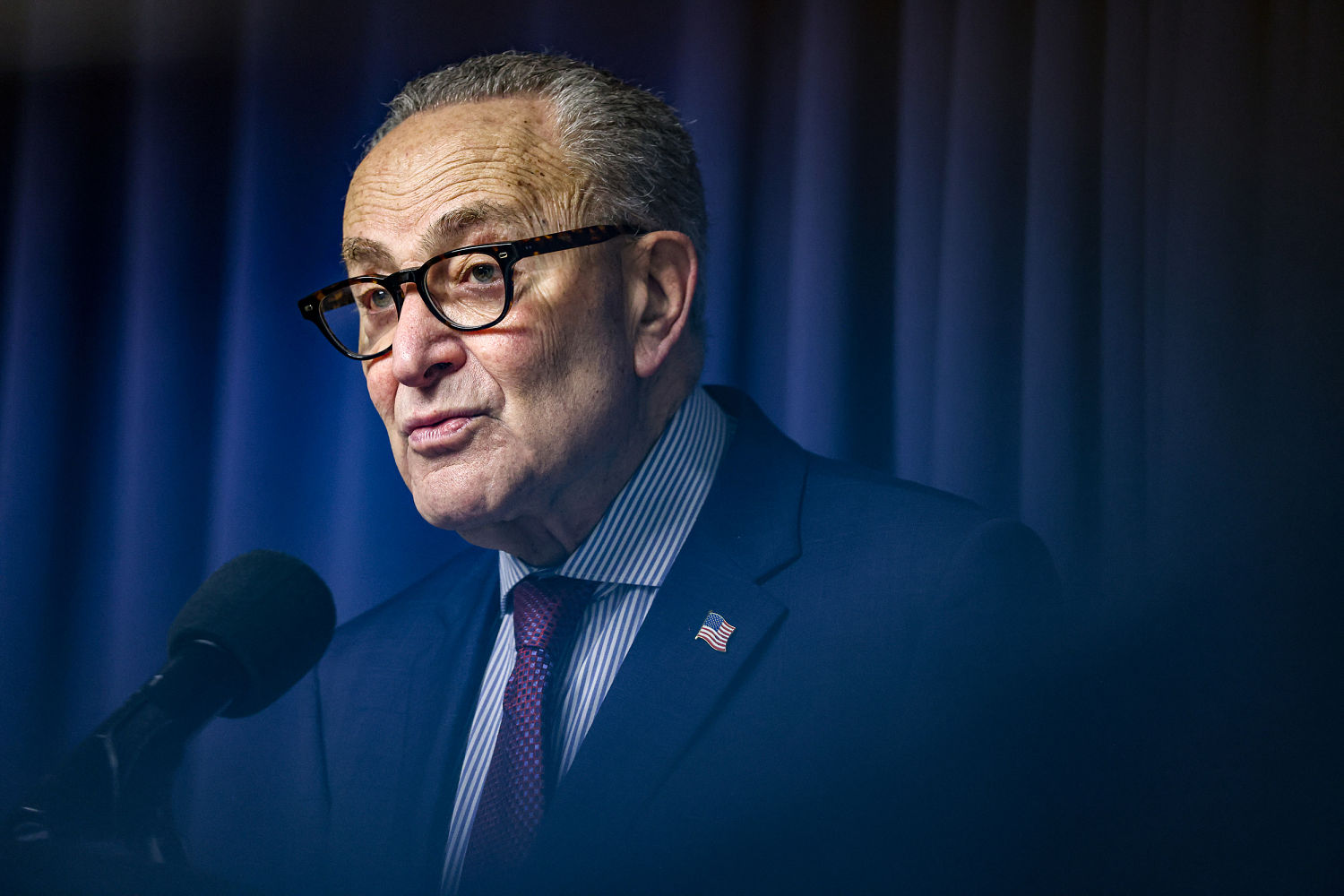
Chuck Schumer wants you to believe that a minority leader armed with a stack of floor amendments can stop the executive branch from spending $1.776 billion. His "Dear Colleague" letter outlines a grand strategy to choke the Trump administration’s newly minted Anti-Weaponization Fund on the Senate floor. He promises no escape hatches, no backroom deals, and total accountability.
It is a beautiful piece of political theater. It is also completely irrelevant.
The lazy consensus across mainstream media is that the fate of this multi-billion-dollar fund hangs on the upcoming budget reconciliation package or legislative maneuvers like the "Drain the Slush Fund Act" introduced by Senators Adam Schiff, Mark Kelly, and Elissa Slotkin. The narrative is comforting to partisans: Congress holds the power of the purse, so Congress can stop the payout.
Having spent years watching the federal government manipulate fiscal mechanisms from inside the beltway, I know the reality is far more depressing. Schumer is bringing a legislative knife to an administrative gunfight. The money for this fund is not waiting for a vote on the Senate floor. It has already left the building.
The Secret Weapon of Executive Settlements
To understand why Schumer is powerless here, you have to look past the political posturing and focus on the plumbing of federal finance. The $1.776 billion allocated for the Anti-Weaponization Fund does not depend on a new appropriation from Congress. It is drawn directly from the Judgment Fund.
The Judgment Fund is a permanent, indefinite appropriation administered by the Department of the Treasury. It was created by Congress decades ago to automatically pay out settlements and court judgments against the United States. It requires no annual reauthorization. It has no cap. It is a financial black box.
When the Justice Department settled the Donald J. Trump v. Internal Revenue Service lawsuit over the leaking of the president's tax returns, Acting Attorney General Todd Blanche executed a legally binding settlement. In exchange for the Trump family dropping their claims regarding the IRS leak, the Mar-a-Lago raid, and the Crossfire Hurricane investigation, the DOJ agreed to establish this fund.
Schumer’s threat to defund this via appropriations is a fundamental misunderstanding of how the Judgment Fund operates. You cannot defund a statutory mechanism that already has a perpetual green light to spend.
Imagine a scenario where a corporate board tries to stop a CEO from paying a legal settlement by voting to cut the company's marketing budget. The settlement is a legal obligation of the corporation; the board's grandstanding on other line items does not void the contract. The executive branch used its constitutional authority to settle a lawsuit, and the Treasury is legally obligated to cut the check.
The Obama Precedent Democrats Cannot Erase
The loudest outcry from the left is that using a settlement to create a broad compensation fund for third parties—namely, political allies or individuals claiming targeted prosecution—is unprecedented and illegal.
It isn't. The Justice Department is relying on established precedent, specifically from the Obama administration.
Consider the Keepseagle v. Vilsack case. That decade-long litigation involved Native American farmers suing the Department of Agriculture over loan discrimination. When the Obama administration settled the case, they established a massive $680 million compensation fund. Crucially, a significant portion of that money ended up being distributed to third-party non-profit organizations that had absolutely nothing to do with the original plaintiffs, through a mechanism known as cy près distribution.
The Trump Justice Department is using the exact same structural logic. They settled a specific case (Trump v. IRS) and structured the remedy as a generalized fund administered by five commissioners to address the broader systemic issue alleged in the lawsuit: government weaponization.
The downside to this approach is obvious. It stretches the boundaries of executive discretion to their absolute limit. It turns legal settlements into programmatic policy engines. But the Democrats cannot call it a lawless, unprecedented usurpation of power when they built the structural blueprint for it during the Obama era.
The Court Illusion
The current silver lining for opponents of the fund is a temporary injunction issued by a federal judge, alongside high-profile lawsuits filed by Capitol Police officers seeking to block the payouts. The media treats these legal challenges as the ultimate firewall.
They are a speed bump.
The Justice Department’s legal authority to settle cases is one of the most fiercely guarded prerogatives of the executive branch. Historically, federal courts are deeply allergic to interfering with executive settlement discretion. Unless a plaintiff can prove explicit statutory violations, courts routinely defer to the Attorney General's power to resolve litigation in the "best interest of the United States."
While a district judge might pause the implementation to review the administrative record, the appellate tracks favor the executive. The administration does not need to win the public relations war; they only need to win the technical statutory argument that the Judgment Fund allows for the resolution of these claims.
The Republican Dilemma
Schumer’s strategy relies entirely on fracturing Republican unity. He notes that senators like Thom Tillis have expressed deep reservations about the fund, fearing that taxpayer dollars could flow to individuals convicted of violent offenses on January 6th. Schumer thinks he can force a vote, embarrass GOP leadership, and collapse the consensus.
This strategy assumes that legislative discomfort translates into executive paralysis. It does not.
Majority Leader John Thune and Senate Republicans are currently trying to pass a $72 billion immigration and border enforcement package. While GOP senators are annoyed that the administration’s $1.776 billion fund has complicated their legislative push, they are ultimately not the ones controlling the fund.
Even if Schumer successfully attaches an amendment to a reconciliation bill that purports to bar funds from being used for this purpose, the administrative apparatus can pivot. The fund is scheduled to operate until December 1, 2028. It is insulated by five appointed commissioners. The money is already legally severed from the standard appropriations pipeline.
The Real Power Shift
The hard truth that Congress refuses to face is that the legislative branch has spent the last fifty years voluntarily surrendering its authority to the administrative state.
Every time Congress passes an open-ended statute, creates a permanent fund, or leaves a legal loophole wide open for executive interpretation, it erodes its own leverage. Schumer is screaming at the tide for coming in, ignoring the fact that his own party helped dismantle the seawall.
The Anti-Weaponization Fund is a symptom of a much deeper reality: the modern presidency is no longer just an executive office; it is a self-funding policy factory. By the time a congressional leader realizes what has happened, the ink on the settlement is dry, the commissioners are appointed, and the Treasury is already processing the transactions.
Schumer can force all the floor votes he wants. He can deliver passionate speeches to empty chambers. He can write letters that dominate the morning news cycle. But the machinery of the executive settlement state is already in motion, and it does not answer to the Senate minority leader.