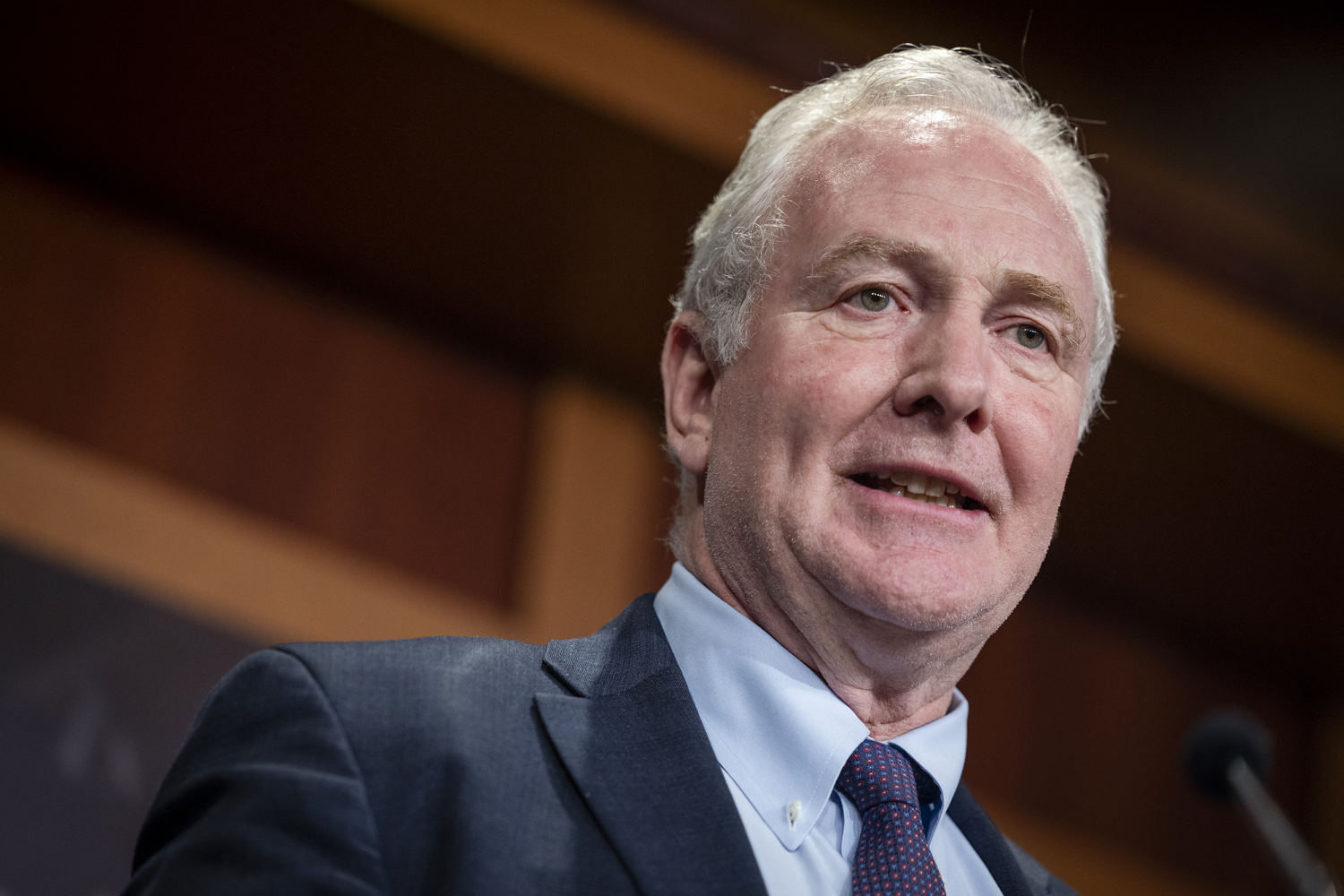
Senator Chris Van Hollen recently argued that the Democratic Party cannot regain the trust of American voters simply by returning to "business as usual." On the surface, that sounds like a bold diagnosis of political stagnation. It captures a widespread frustration shared by voters across the ideological spectrum who feel that traditional institutions have failed to deliver tangible economic and social progress.
Yet the political debate surrounding this statement reveals a deeper conflict over what "business as usual" actually means, and why voter trust has eroded in the first place. While Van Hollen and aligned progressives contend that incrementalism and corporate-friendly policies alienate working-class voters, centrist Democrats, independent analysts, and conservative critics offer sharply competing explanations for the party's credibility gap.
The Progressive Case Against Institutional Inertia
According to statements made by Senator Chris Van Hollen and echoed by progressive advocacy groups, the core problem facing Democrats is a perceived gap between campaign rhetoric and governing outcomes. In Van Hollen’s view, voters punish political parties when they promise structural reform—such as lowering healthcare costs, addressing wealth inequality, or overhauling campaign finance—only to settle for modest compromises once in office.
From this perspective, "business as usual" refers to:
- Incremental Legislative Compromises: Passing watered-down bills that preserve existing corporate structures rather than fundamentally altering economic incentives.
- Donor-Driven Priorities: Relying heavily on traditional fundraising networks, which progressive critics argue blurs the distinction between Democratic and Republican economic policies in the eyes of working-class Americans.
- Defensive Messaging: Framing elections primarily around opposing Republican policies rather than articulating an ambitious, affirmative economic agenda.
Supporters of this analysis point to public opinion polling from organizations like the Pew Research Center, which consistently shows historically low levels of public trust in the federal government—hovering near 20 percent in recent years. Proponents of a sharper break from orthodoxy argue that when trust in institutions is already near rock bottom, defending institutional norms or incremental governance reads to skeptical voters as protecting a broken status quo.
The Centrist Counterargument: Competence Over Disruption
A competing school of thought within the Democratic Party—represented by moderate lawmakers, policy think tanks such as the Third Way, and data analysts like David Shor—interprets the trust deficit differently. Rather than seeing "business as usual" as a failure to move far enough to the left, centrists argue that voters lose trust when parties embrace ideological disruption at the expense of visible, everyday competence.
In this framing, what voters actually crave is predictable, effective governance—a functional version of business as usual. Proponents of this view highlight several counterpoints to the progressive critique:
- Cost-of-Living Sensitivities: Surveys consistently rank inflation, housing affordability, and healthcare expenses as top voter concerns. Moderate analysts argue that sweeping structural proposals often trigger voter skepticism about tax increases and government overreach, whereas targeted, pragmatic interventions build credibility.
- Cultural and Rhetoric Disconnects: Centrist strategists contend that progressive rhetoric on social and regulatory issues can alienate swing voters in battleground states, creating the impression that the party is out of touch with mainstream priorities.
- Execution Failures: Critics of big-government expansion point to high-profile implementation bottlenecks—such as delays in broadband deployment or infrastructure permitting—as proof that passing ambitious laws means little if the public does not see rapid, concrete improvements in their daily lives.
From this vantage point, abandoning traditional coalition-building and incremental policymaking risks deepening voter alienation rather than curing it.
What Independent Analysts Say About the Trust Deficit
Political scientists and nonpartisan researchers studying democratic backsliding and institutional trust suggest that both internal Democratic factions may be overlooking structural drivers that transcend party strategy.
Research from institutions such as the Brookings Institution and the American Enterprise Institute indicates that declining trust in political parties is closely tied to broader societal shifts:
- Asymmetric Information Ecosystems: Voters increasingly consume news through fragmented, partisan media channels. As a result, legislative achievements—whether incremental or transformative—frequently fail to register with audiences outside a party's core base.
- Hyper-Polarization and Gridlock: Under the U.S. constitutional system, narrow congressional majorities make sweeping legislative overhauls mathematically difficult. Political scientists note that when politicians promise transformational change under conditions of divided government, they inadvertently set expectations that cannot be met, guaranteeing subsequent voter disillusionment.
- Economic Geography: The divergence between thriving metropolitan knowledge economies and struggling industrial or rural regions has created distinct voter expectations. A policy platform designed to resonate in urban centers often provokes skepticism in rural counties, regardless of whether it is labeled "populist" or "moderate."
The Conservative Critique
Conservative commentators and Republican strategists view Van Hollen’s warning through an entirely different lens. From their perspective, the Democratic Party's trust problem stems not from a failure to break with "business as usual," but from policies that expanded federal spending, regulatory oversight, and executive authority during the Biden administration.
Republican critics argue that:
- Federal stimulus and spending packages contributed to inflationary pressures that eroded real wages for working families.
- Energy and environmental regulations increased compliance costs for domestic industries.
- Voters are seeking a return to fiscal restraint, deregulation, and localized decision-making rather than a new wave of federal intervention.
In the conservative framing, the solution to public distrust is reducing the scope of federal governance altogether, rather than rebranding Democratic populism.
Evaluating the Trade-Offs of Political Disruption
Whether a political party benefits from rejecting "business as usual" depends largely on how voters define the alternative. History demonstrates that political movements built on anti-establishment disruption carry inherent risks alongside potential rewards.
| Strategic Approach | Primary Argument | Core Risk |
|---|---|---|
| Populist Disruption | Signals urgency, challenges entrenched interests, and energizes disengaged working-class voters. | Can alienate moderate swing voters, heighten expectations beyond legislative reality, and provoke unified opposition. |
| Institutional Pragmatism | Emphasizes stability, bipartisan durability, and measurable administrative competence. | Can appear overly cautious, uninspiring to base voters, and inadequate during periods of acute economic anxiety. |
Ultimately, the debate sparked by Senator Van Hollen’s remarks underscores a central dilemma in modern American politics. Voters routinely express dissatisfaction with traditional politics in opinion polls, yet they remain deeply divided over what should replace it. Bridging that divide requires more than rhetorical rejection of the status quo; it demands demonstrating that governing institutions can solve tangible problems in ways voters can actually feel.