The steel hull of a massive crude carrier creaks under the weight of two million barrels of oil. On the bridge, the captain watches the radar screen. The water below is flat, shimmering under a blistering desert sun that pushes temperatures past 110 degrees Fahrenheit. To the left lies the coast of Iran; to the right, Oman. This is the Strait of Hormuz. At its narrowest point, the shipping lanes are just two miles wide. It is a fragile geographic throat through which one-fifth of the world’s petroleum passes every single day.
For decades, the global economy operated on a comfortable assumption. The assumption was that no matter how loud the political rhetoric grew, the strait would remain open. It was a shared understanding, a unspoken agreement that keeping the energy flowing was in everyone's best interest.
That illusion is gone.
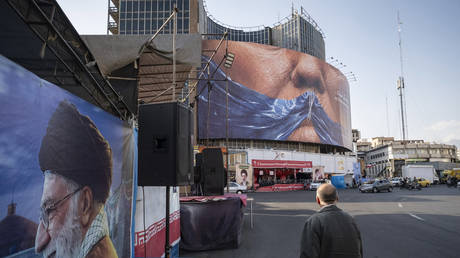
Iran’s top diplomat recently made it undeniable. The old rules are dead. There will be no return to the pre-war status quo in these waters. What happens in this narrow strip of blue affects more than just regional powers. It dictates the price of a gallon of gas in Ohio, the cost of manufacturing a microchip in Taiwan, and the stability of electrical grids across Europe.
The Ghost in the Machine of Global Trade
To understand how we arrived at this fracture point, consider a hypothetical logistics manager named Sarah. She sits in an office in Rotterdam, staring at supply chain spreadsheets. Sarah does not study naval strategy. She does not track ballistic missile inventories. But when a drone strikes a vessel thousands of miles away, her screen lights up in red.
The immediate result of instability is not always a stopped ship. It is an expensive ship.
When the threat level in the strait rises, maritime insurance underwriters adjust their algorithms. War risk premiums skyrocket overnight. Shipping companies are forced to make a brutal calculation. Do they risk the passage through Hormuz, paying exorbitant insurance fees and praying their crew stays safe? Or do they reroute their vessels around the Cape of Good Hope, adding ten to fourteen days to the journey and burning millions of dollars in extra fuel?
Either choice triggers a domino effect. Container ships get delayed. Supply schedules fracture.
This is how geopolitical friction transforms into domestic inflation. The average consumer assumes price hikes at the grocery store are driven by corporate greed or local economic policy. Often, the root cause is much further away. It is found in the anxiety of a captain navigating a chokepoint, wondering if the fast boat approaching on the horizon is a routine patrol or something far more dangerous.
Anatomy of a Chokepoint
Why is this specific stretch of water so uniquely volatile? Geography is destiny, and the geography of Hormuz is a strategist's nightmare.
[Iran Coastline]
      |
      v  <-- 2-Mile Inbound Lane
============ SHIPPING LANES ============
      ^  <-- 2-Mile Outbound Lane
      |
[Oman / UAE Coastline]
The shipping channels pass directly through the territorial waters of Oman and Iran. Under international law, specifically the United Nations Convention on the Law of the Sea, vessels enjoy the right of transit passage. This means ships can move through the strait solely for the purpose of continuous, expeditious transit.
But international law is only as strong as the willingness of nations to enforce it. Or respect it.
Iran commands the entire northern northern border of the strait. Over decades, its military forces have developed a highly sophisticated asymmetric warfare strategy. They do not need an expensive fleet of aircraft carriers to project power. Instead, they rely on a swarm mentality.
- Fast Attack Craft: Small, highly maneuverable boats armed with anti-ship missiles or explosives that can quickly harass large commercial vessels.
- Naval Mines: Inexpensive, easily deployed weapons that can render a shipping lane unusable until meticulously cleared.
- Land-Based Anti-Ship Missiles: Hidden along the rugged coastline, capable of targeting ships anywhere within the narrow strait.
- Unmanned Aerial Vehicles: Low-cost loitering munitions that can bypass traditional shipboard radar defenses.
This architecture of denial means that controlling the strait does not require matching the military budget of Western superpowers. It simply requires the willingness to disrupt the flow. When Iran's leadership signals that the pre-war status quo is finished, they are acknowledging that this leverage is now permanently active. It is no longer a deterrent kept in reserve. It is an operational tool of statecraft.
The Human Cost on the High Seas
Amid the talk of energy security, oil benchmarks, and geopolitical leverage, the human element is frequently obscured. Ships do not sail themselves. They are manned by crews of merchant mariners, often from developing nations like the Philippines, India, and Ukraine. These sailors sign up to move cargo, not to occupy a front-line combat zone.
Imagine being a twenty-two-year-old third mate. You are standing watch in the middle of the night. The radio crackles with a voice claiming to be a regional authority, ordering your 100,000-ton vessel to alter course into foreign waters. If you comply, your ship might be seized, and your crew held as political pawns for months. If you ignore the command, you risk a missile strike.
The psychological toll on these mariners is immense. They operate in a state of hyper-vigilance. They scan the water for floating debris that might be a mine. They watch the sky for the low, buzzing drone of an uncrewed aircraft.
When the maritime industry faces chronic labor shortages, this is why. The romantic allure of the sea vanishes when the trade routes turn into geopolitical minefields. If the crews refuse to sail, the global economy grinds to a halt just as effectively as if the strait were physically blocked by a wall of concrete.
The Illusion of Energy Independence
A common misconception persists in countries that have increased their domestic energy production. The argument goes: we produce our own oil now, so what happens in the Middle East cannot hurt us.
This view misunderstands the fundamental nature of the global commodities market. Oil is fungible. It flows to the highest bidder on a single global exchange.
If twenty percent of the world’s supply is suddenly constrained or delayed at Hormuz, the global price of crude spikes instantly. It does not matter if a refinery in Texas gets its oil from a well down the road. The price that refinery pays for that local oil is still tied to the global benchmark.
[Hormuz Disruption]
       │
       ▼
[Global Supply Contracts]
       │
       ▼
[Global Crude Prices Spike]
       │
       ▼
[Refinery Costs Increase Worldwide]
       │
       ▼
[Higher Prices at Local Gas Pumps]
Furthermore, the strait is not just an oil corridor. It is increasingly vital for the transport of Liquefied Natural Gas (LNG), particularly from producers like Qatar. As major economies shift away from coal and seek transition fuels, their vulnerability to disruptions in LNG shipping grows. A prolonged crisis in the strait means cold winters in Asian cities and shuttered factories in European industrial hubs. There is no insulation from a shock of this magnitude.
The Architecture of a New Era
The declaration that there will be no return to the past signifies a permanent shift in how risk is priced. For years, Western naval coalitions, primarily led by the United States, maintained a persistent presence in the region to guarantee freedom of navigation. They escorted tankers, conducted anti-piracy operations, and acted as a stabilizing weight.
But the calculus has shifted. The proliferation of cheap, precise drone technology and anti-ship ballistic missiles means that even advanced warships must spend millions of dollars in defensive munitions to intercept threats costing a fraction of that amount. The economic asymmetry favors the disruptor.
We are seeing the emergence of a fragmented maritime order. Rather than a single, universally respected framework for international waters, access is becoming transactional.
Ships flying certain flags or belonging to specific nations may find safe passage through back-channel assurances, while others face intense scrutiny or outright hostility. This balkanization of the seas erodes the very foundation of modern globalization, which relies on the cheap, predictable movement of goods across unhindered oceans.
Companies are responding by attempting to rewire their supply chains entirely. There is a frantic search for alternative routes. Pipelines crossing Saudi Arabia or the United Arab Emirates to bypass the strait exist, but their capacity is limited. They cannot handle the sheer volume that the supertankers carry. Land-based rail corridors across Central Asia are expensive and logistically complex.
There is no easy escape from geography.
The sun begins to set over the strait, casting long, dark shadows across the water. On the bridge of the commercial carrier, the crew keeps their eyes on the instruments. They pass the narrowest point, heading out toward the open expanse of the Arabian Sea. For this voyage, the tension eases. The ship has made it through.
But behind them, the throat remains narrow. The waters are no longer just a transit lane; they are a political arena where the old rules have been discarded, and the new ones are being written in real-time by those who hold the shore. The global economy remains tethered to this two-mile channel, vulnerable to every shift in the wind, waiting to see how long the peace will hold.


