A light switch flips in a modest apartment in suburban Mumbai. It is 4:30 AM. Rajesh wakes up, switches on the electric kettle for his morning tea, and checks his phone. He does not think about the composition of the grid that powers his stove, nor does he consider the transit time of a supertanker cutting through the azure waters of the Middle East. He doesn't have to. The modern world is built on the beautiful, fragile illusion that energy is like air—invisible, infinite, and always there when you breathe.
But thousands of miles away, a steel hull slices through a stretch of water so narrow you can see land on both sides from the deck of a ship. Recently making news recently: The Macroeconomics of State Repression: Analyzing the Subsidization Crisis and Political Marginalization in Pakistan-Administered Kashmir.
This is the Strait of Hormuz. It is a geographical throat. If someone squeezes it, the entire global economy stops breathing. For India, a nation growing at a breakneck pace on a diet of imported oil, this thirty-mile-wide passage is not a abstract geopolitical chess square. It is the jugular.
When tensions flare between Iran and the West, or when naval drills turn into live-fire standoffs, the headlines tend to focus on military might and global oil prices. We see charts of Brent crude spiking. We see stock tickers turn red. What we fail to see are the millions of small kitchens across South Asia where the price of a cylinder of cooking gas dictates whether a family eats a full meal or cuts back. Additional insights regarding the matter are detailed by The Washington Post.
Understanding this vulnerability requires looking past the political theater and staring directly into the water.
The Thirty Mile Throat
To grasp the physics of this crisis, look at the palm of your hand. Cup it slightly. That tiny indentation represents the Persian Gulf, a basin containing some of the largest oil reserves on the planet. Now, look at the narrow gap between your thumb and index finger. That is Hormuz.
Every single day, roughly one-fifth of the world’s total petroleum consumption passes through this single gateway. It is the only exit ramp for oil from Saudi Arabia, the United Arab Emirates, Kuwait, Iraq, and Iran. You cannot bypass it with a simple detour. Shipping routes are dictated by geology, and geology is stubborn.
Tankers navigating the strait do not enjoy the open freedom of the high seas. Because of the shallow waters and treacherous islands, ships must stick to a strict transit system. The inbound lane is two miles wide. The outbound lane is two miles wide. Separating them is a two-mile buffer zone of empty water.
Imagine driving a vehicle the size of an skyscraper down a two-lane highway with no shoulders, knowing that a single miscalculation—or a single targeted strike—could block the entire road for everyone.
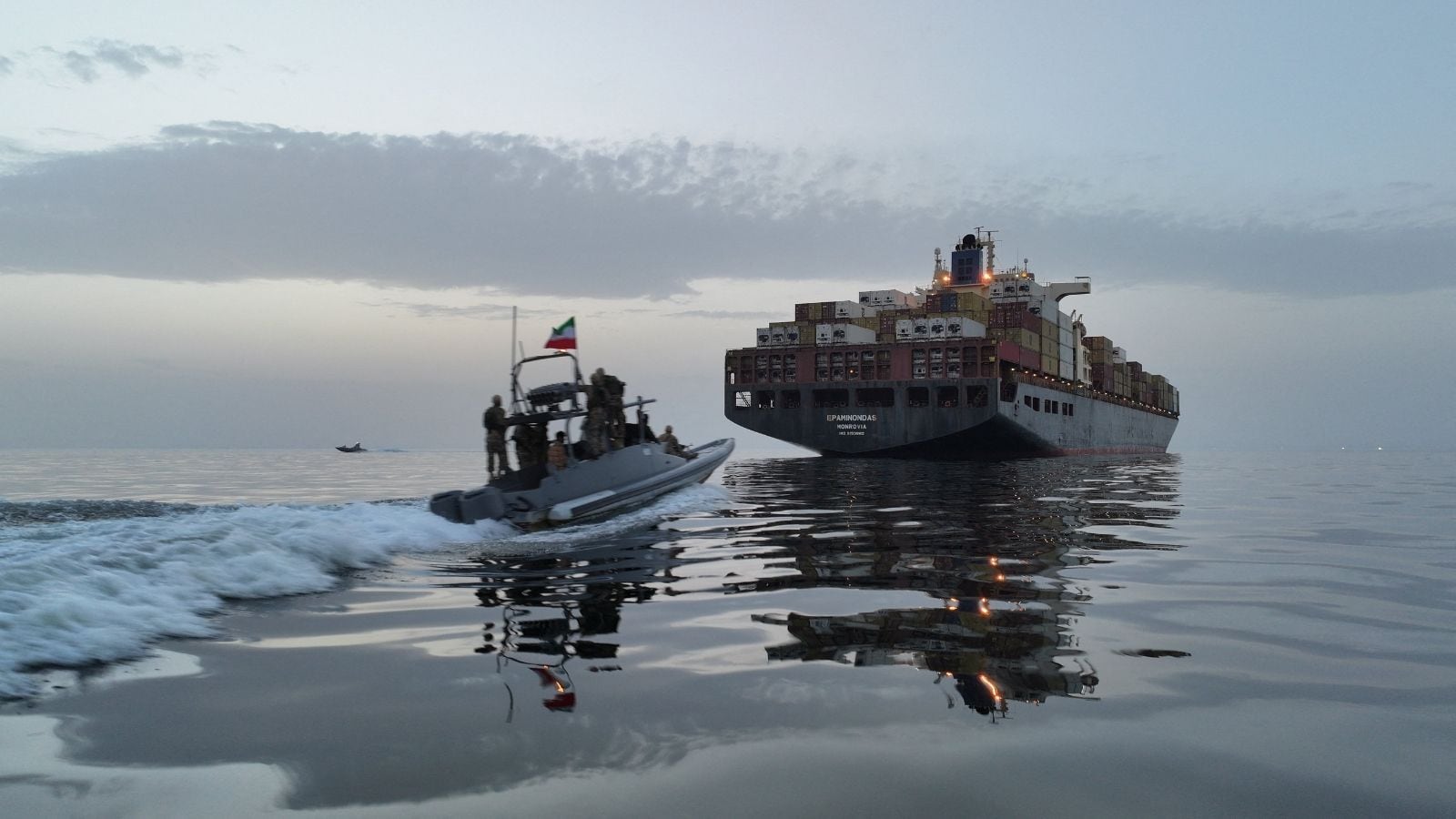
For decades, this stretch of water has been used as a geopolitical lever. When Iran feels cornered by economic sanctions, its leadership reminds the world of its physical reality. They hold the northern coast of the strait. Their fast-attack boats can swarm a container ship in minutes. Their anti-ship missiles sit tucked into the jagged limestone cliffs of the Zagros Mountains, aiming downward.
The threat is rarely an outright, permanent closure. That would be an act of war that invites total destruction. Instead, the strategy is one of friction. A seized tanker here. A limpet mine attached to a hull there. A sudden spike in maritime insurance premiums that makes shipping prohibitively expensive. This slow tightening of the knot is what keeps energy analysts awake at night.
The Long Journey to an Indian Kitchen
India imports nearly 85% of its crude oil. A massive portion of that ocean of fuel originates in the Persian Gulf and travels through Hormuz. When a tanker departs from Ras Tanura or Basra, its destination is often the massive refining complexes on India’s western coast, like Jamnagar.
Consider the journey of that oil. It is a logistical ballet performed at a massive scale. If the music stops in Hormuz, the ripples hit Indian shores within days.
The immediate reaction is psychological. Oil markets operate on anticipation. The moment a drone strikes a tanker in the gulf, algorithmic trading systems in New York and London buy up oil futures, driving the price per barrel upward long before any physical shortage occurs.
For a developing economy, a sustained ten-dollar increase in the price of a barrel of oil is not just a line item change on a corporate balance sheet. It alters the national budget. It drains foreign exchange reserves. It forces the government to make hard choices between subsidizing fuel to protect the poor or letting inflation run rampant.
When oil prices rise, everything else follows. The truck driver transporting tomatoes from Karnataka to Delhi pays more at the pump. To cover his costs, he charges the wholesaler more. The wholesaler passes the cost to the neighborhood vendor. By the time the consumer walks to the local market, the price of basic sustenance has climbed.
This is how a geopolitical standoff in the Middle East translates into a quiet crisis at an Indian dinner table. The connection is direct, visceral, and unforgiving.
The Strategic Illusion of Safety
New Delhi has not spent the last few decades blind to this vulnerability. To survive a sudden shutdown of the strait, India constructed a massive insurance policy: the Strategic Petroleum Reserves.
These are not giant metal tanks sitting above ground. They are engineering marvels—massive, subterranean rock caverns carved deep into the earth at Visakhapatnam, Mangalore, and Padur. They are kept under immense pressure, filled with millions of barrels of emergency crude oil, shielded from aerial attacks and natural disasters.
They are the ultimate rainy-day fund.
But a fund has a limit. If the Strait of Hormuz were to be completely blocked by a conflict, these underground caverns could sustain the country’s energy needs for roughly a week and a half. Combined with the commercial stock held by domestic oil companies, India might stretch its survival window to a little over two months.
Two months is a lifetime in a modern war, but it is a blink of an eye in a protracted geopolitical stalemate.
To make matters more complicated, the global oil market is an interconnected web. If Hormuz closes, European and Asian buyers will immediately scramble for the oil that remains available outside the gulf—from West Africa, the United States, and the North Sea. The competition will be fierce. Richer nations can afford to outbid developing economies, pricing India out of alternative markets even if the physical supply exists.
The assumption that emergency reserves solve the problem is an illusion. They buy time. They do not buy a solution.
Redrawing the Map Under Pressure
Faced with this geographic trap, India has been quietly trying to rewrite its energy destiny. The strategy is two-fold: find new routes and find new friends.
In recent years, Indian refiners have dramatically diversified their supplier list. Miles of pipeline and new shipping lanes now connect Indian ports to Russian oil fields, bypassing the volatile waters of the Middle East entirely. This shift was born out of cold, hard necessity. When cheap Russian crude became available, India grabbed it, despite Western diplomatic eyebrow-raising. It wasn't about taking political sides; it was about national self-preservation.
Simultaneously, India has invested heavily in alternative infrastructure. There are long-standing dreams of deep-water pipelines that bypass the strait, running from Oman directly across the Arabian Sea floor to the Indian coast. The engineering challenges are staggering—the pipe must descend into abyssal depths and withstand immense pressure—but the appeal of an oil route that completely avoids a combat zone is undeniable.
Yet, despite the growth of Russian imports and the rise of domestic renewable energy installations, the Middle East remains the gravity well of global energy. You cannot simply walk away from the Persian Gulf. Its oil is cheap to extract, its refineries are highly sophisticated, and its geographic proximity to India means transit times are short and transport costs are low.
Every long-term plan for India's economic expansion assumes that the tankers will keep coming through that narrow gate.
The Echo in the Engine Room
To understand the true weight of this situation, you have to leave the government offices in New Delhi and the trading floors of Mumbai. You have to go aboard the vessels themselves.
The crews navigating these tankers are predominantly from developing nations. Many of them are Indian merchant mariners. They are men and women who spend months at a time at sea, sending money home to build houses or pay for their children’s education.
When a transit through Hormuz becomes a high-risk operation, these sailors are the ones who stand on the bridge, watching the radar for oncoming fast-attack craft or scanning the water for floating mines. They wear helmets and body armor while navigating some of the hottest, most humid waters on earth. They know that if a missile strikes the ship's massive hull, the result is instantaneous catastrophe.
They are the human infrastructure holding the global economy together.
When we talk about the resilience of a nation, we are ultimately talking about the collective tolerance for risk exhibited by ordinary people. India can build underground caverns, sign diplomatic accords, and invest billions in solar farms, but its immediate economic stability still rests on the shoulders of sailors willing to sail into a potential bottleneck.
The light switch in Mumbai stays on. The tea boils. The city moves. But the security of that routine is borrowed on short-term lease, signed in a narrow strait where the mountains meet the sea, and where a single spark could rewrite the future of a continent.