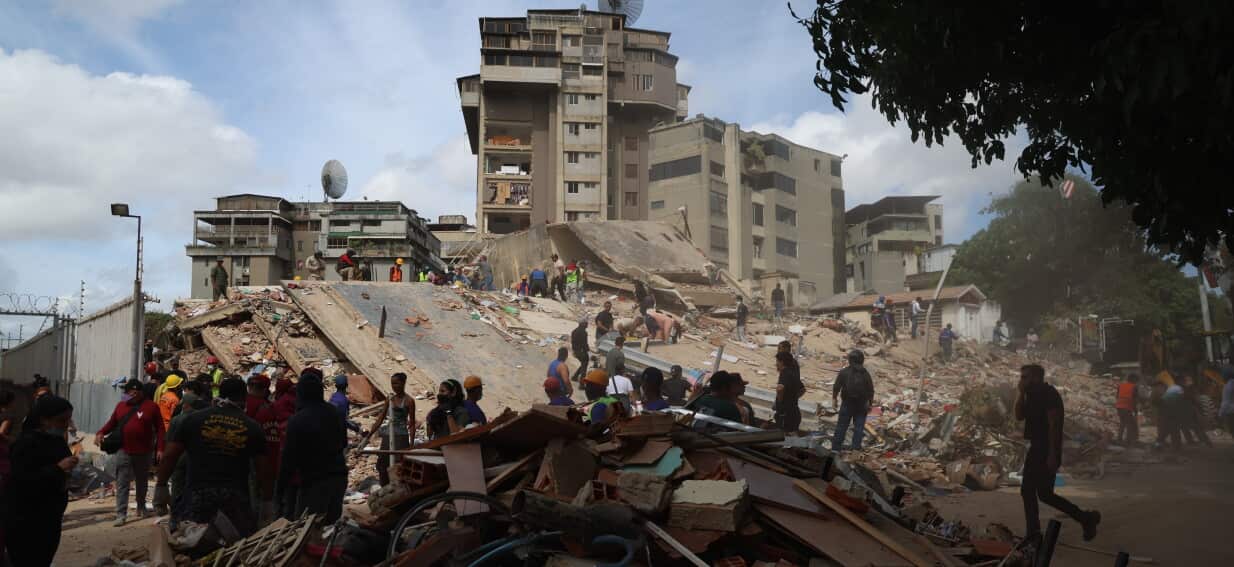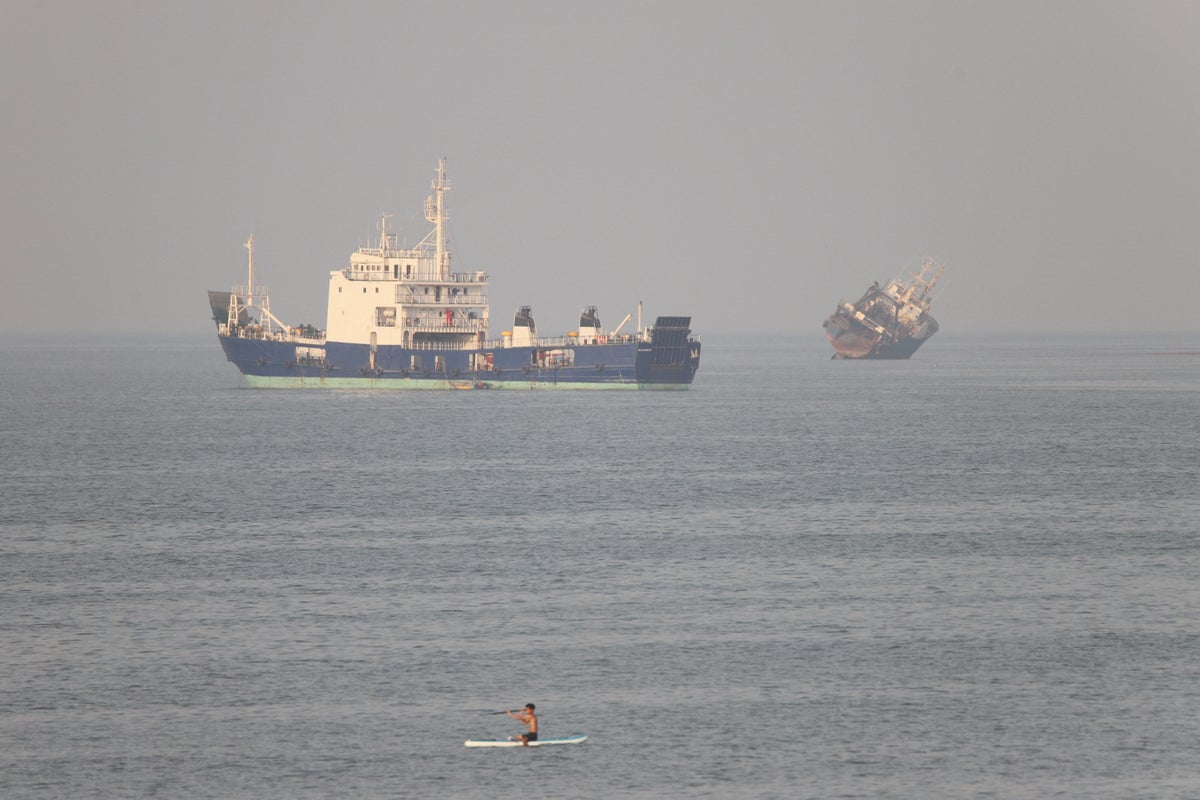
The kinetic targeting of commercial shipping within the Strait of Hormuz by Iranian forces is not merely a localized military provocation; it is a calculated disruption of global energy supply chains designed to exploit specific vulnerabilities in maritime logistics and international insurance frameworks. When a state actor strikes a vessel in this corridor, the immediate consequence is not the physical destruction of the ship, but the rapid reassessment of risk metrics by global underwriting syndicates. This analytical breakdown deconstructs the operational realities, economic feedback loops, and strategic implications of maritime conflict in the world's most critical energy transit corridor.
To understand the systemic impact of these kinetic actions, one must analyze the Strait of Hormuz through the lens of supply-chain elasticity and naval choke point mechanics. The strait functions as a geographic bottleneck where approximately one-fifth of the world's liquid petroleum consumption passes daily. Because global energy markets operate on marginal supply variations, a localized disruption here triggers a non-linear compounding effect on global spot prices.
The Triad of Maritime Risk: Insurance, Freight, and Escort Mechanics
When kinetic escalation occurs in a high-density shipping lane, the economic damage manifests through three distinct vectors:
- The War Risk Premium Surge: Merchant vessels operating in stable waters pay a baseline hull and machinery premium. Once a transit zone is designated a high-risk area by the Joint War Committee (JWC), underwriters implement a "War Risk Additional Premium" (WRAP). This surcharge is calculated as a percentage of the ship's total value—often escalating from 0.01% to over 0.5% per transit within 48 hours of an attack. For a Very Large Crude Carrier (VLCC) valued at $100 million, this represents an immediate $500,000 increase in operational cost per single voyage.
- The Freight Rate Feedback Loop: As the perceived physical risk increases, shipowners demand higher spot freight rates to compensate for crew hazard pay, increased fuel burn during high-speed transits, and potential structural loss. This reduces the available pool of tonnage willing to enter the Persian Gulf, constricting supply and driving up shipping costs globally as vessels are reassigned to safer, less efficient routes.
- The Escort Bottleneck: International efforts to reopen or secure the route rely on naval convoy systems. While naval escorts provide physical protection against anti-ship cruise missiles (ASCMs) and explosive uncrewed surface vessels (USVs), they introduce severe operational friction. Convoy assembly delays vessel turnaround times, reducing the velocity of global shipping capacity and effectively acting as a synthetic supply constraint.
The Asymmetric Cost Function of Chokepoint Interdiction
Iran’s strategic doctrine in the Strait of Hormuz relies on an asymmetric cost function. The state actor utilizes low-cost, deniable, or highly distributed assets—such as fast attack craft (FACS), naval mines, and loitering munitions—to force a disproportionately expensive defensive response from international coalitions.
A foundational concept here is the interceptor-to-target cost ratio. A single Iranian-manufactured delta-wing kamikaze drone or an unguided naval mine may cost between $20,000 and $50,000. To neutralize this threat, a defending naval destroyer routinely fires an SM-2 or Aster-30 air-defense missile costing between $1.5 million and $4 million per engagement. This creates a highly unsustainable economic burn rate for defending forces, turning prolonged maritime defense into a war of attrition where the defender's financial resources deplete faster than the aggressor's inventory.
Furthermore, the physical geography of the Strait of Hormuz amplifies this asymmetry. The shipping lanes within the strait are divided into inbound and outbound traffic separation schemes (TSS), each only two miles wide. These lanes lie entirely within the Iranian land-based anti-ship missile umbrella and the operational reach of the Islamic Revolutionary Guard Corps Navy (IRGCN). This proximity eliminates the tactical advantage of early warning systems, reducing reaction times for merchant vessels to mere seconds.
Systemic Mitigation and Alternative Transit Realities
International strategies to counter chokepoint interdiction focus heavily on diversifying transit infrastructure to bypass the bottleneck entirely. However, an examination of the structural alternatives reveals significant throughput limitations.
The East-West Pipeline across Saudi Arabia and the Habshan–Fujairah pipeline in the United Arab Emirates are the primary overland conduits designed to redirect crude oil to terminals outside the Persian Gulf. The structural limitation of this strategy lies in nameplate capacity versus actual operational elasticity. The combined maximum throughput of these pipelines handles less than 40% of the volume that typically moves through the Strait of Hormuz daily. The remaining 60% of the region's energy exports possess no viable overland alternative, meaning any total closure of the waterway creates an immediate structural deficit in global energy markets that cannot be mitigated by infrastructure redistribution.
The second limitation is the configuration of downstream refining infrastructure. Global refineries are calibrated for specific crude assays—primarily the sour crudes characteristic of the Persian Gulf. When a chokepoint disruption occurs, replacing this specific chemical profile with sweet crudes from West Africa or US shale requires complex refining adjustments, lowering total global refining efficiency and spiking the cost of refined products like diesel and jet fuel.
The Escalation Ladder and Strategic Projections
The operational objective of state-sponsored shipping attacks is rarely the total, permanent closure of the Strait of Hormuz, as such an action would trigger an overwhelming conventional military response and sever Iran's own economic lifelines. Instead, the strategy employs calibrated escalation—using controlled kinetic strikes to extract diplomatic or economic concessions.
The immediate strategic priority for international maritime coalitions is the deployment of distributed electronic warfare networks and directed energy weapons to invert the asymmetric cost function of air defense. Concurrently, energy-importing nations must execute targeted releases from Strategic Petroleum Reserves (SPR) not to solve the physical supply deficit, but to suppress speculative pricing in the futures markets and neutralize the psychological premium of the disruption. The long-term stabilization of the corridor depends on establishing a standardized international legal framework that treats non-state and state-sponsored maritime interdiction as piracy, triggering automatic economic sanctions against the port infrastructure supporting the aggressing vessels.