The grass under a soccer cleat feels the same in Tehran as it does in Sydney. It is cool, yielding, and smells of crushed green life. But for the women of the Khatoon Bam football club, the ground beneath their feet has never felt less stable.
One by one, the numbers changed. What began as a collective leap into the unknown—a group of elite Iranian athletes seeking asylum in Australia—has slowly unraveled into a series of quiet, agonizing reversals. Recently, the fifth member of that original group decided to step back from the edge. She withdrew her application for protection. She chose to go back.
To understand why a woman would walk away from the promise of a Western democracy and return to a country where her very presence on a pitch is a political act, you have to look past the headlines about visas and international law. You have to look at the weight of a suitcase.
The Weight of an Invisible Thread
When an athlete defects, the world sees a hero making a stand. We see the bravery of the departure. We rarely see the haunting gravity of the things left behind.
Think of a young woman sitting in a sterile room in Australia. Outside, the air is salt-tame and free. She has a jersey, a ball, and a future that belongs to her. But in her pocket, a phone vibrates. It is a message from a mother who cannot sleep. It is a video of a niece who is starting to forget her face. It is the realization that "asylum" is often a synonym for "severance."
The fifth player to withdraw her bid isn't just a statistic in a shifting geopolitical tally. She represents the breaking point of the human spirit when it is caught between the desire for personal liberty and the primal need for belonging.
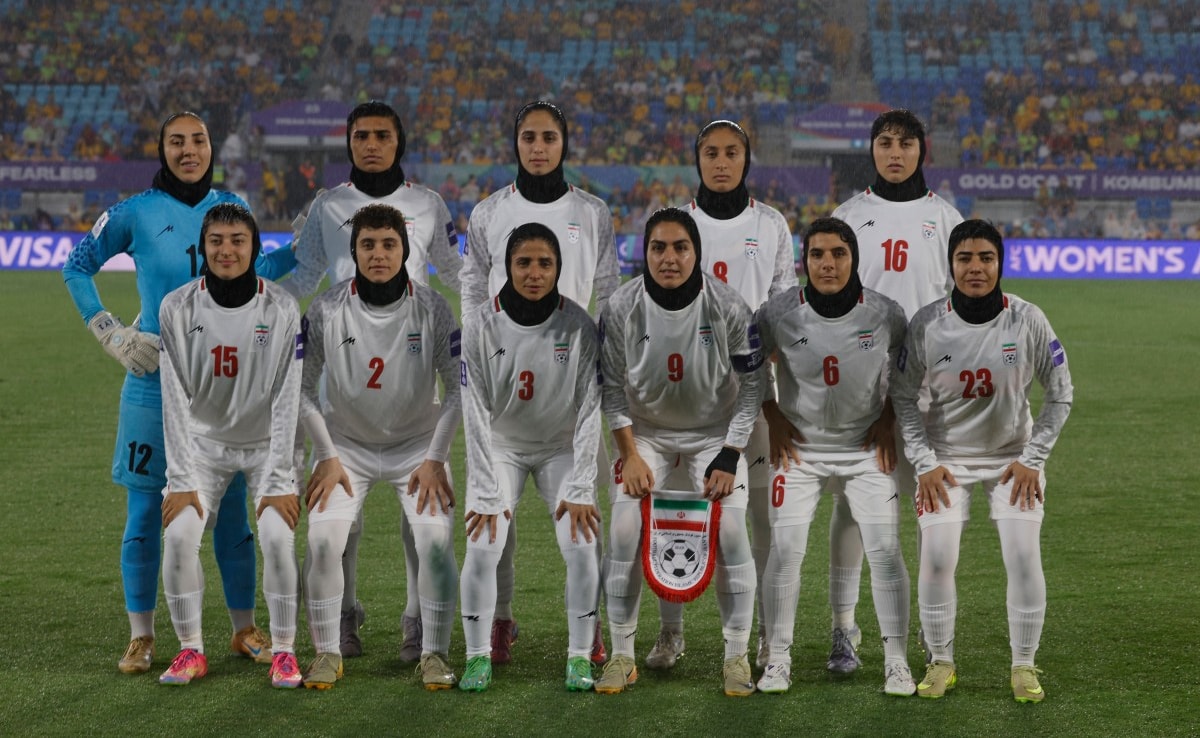
For the Iranian national team members, the trip to Australia for the Olympic qualifiers was supposed to be about goals and tactics. Instead, it became a crossroads. When the team bus eventually pulled away to return to the airport, several chairs remained empty. They stayed behind, hoping for a life where they could play without the shadow of the morality police or the stifling restrictions of a regime that views a woman’s silhouette as a liability.
But the silence that follows a defection is loud.
The Cost of a Second Chance
In the weeks following the initial asylum bids, the pressure doesn't just come from the authorities. It comes from the heart.
The Iranian government has a long memory. For those who stay abroad, the price is often paid by those who remained at home. Family members are questioned. Assets are frozen. The "betrayal" of a daughter becomes a debt the parents must settle. This is the invisible leverage that cracks the resolve of even the toughest competitors.
When the news broke that a fifth player had abandoned her quest for Australian residency, the public reaction was one of confusion. Why now? Why, after crossing the hardest bridge, would someone turn around and walk back into the fire?
The answer lies in the reality of the refugee experience. It is a slow-motion shedding of identity. You are no longer a star midfielder; you are a case file. You are no longer a daughter; you are a ghost in a family photo. For some, the oxygen of freedom isn't enough to compensate for the loss of the soil that raised them.
The Australian government’s role in this is a study in bureaucratic neutrality. They offer the process, but they cannot offer a new soul. The legal path to asylum is grueling, often taking months or years of uncertainty. During that time, you are in a limbo where you cannot fully start your new life, yet you have already destroyed your old one.
A Field Without Borders
This isn't just about soccer. It is about the specific, sharp pain of the modern exile.
Consider the hypothetical case of a player we will call Zahra. In Sydney, Zahra can run without a hijab. She can hear the roar of a crowd that doesn't care about her religion, only her footwork. But at night, she remembers the specific way the light hits the mountains in Bam. She remembers the smell of the saffron in her mother's kitchen. She realizes that by choosing her career, she has effectively buried her family while they are still breathing.
When the fifth player withdrew, she wasn't necessarily choosing the Iranian regime. She was choosing her people. She was choosing the right to be present for the mundane tragedies and joys of her own life.
The sports world often demands that its stars be symbols. We want them to be icons of resistance or paragons of loyalty. We forget that underneath the kit, they are people who just want to go home without being afraid.
The withdrawal of these asylum bids highlights a terrifying truth about the world in 2026: the borders are closing, not just on maps, but in the minds of those who try to cross them. The "Australian Dream" is a powerful lure, but it cannot compete with the bone-deep ache of a fractured home.
The Final Whistle
The tally now stands as a testament to the complexity of the human heart. Of the original group that sought to stay, the majority have folded their tents. They have looked at the vast, sun-drenched expanse of the Australian outback and realized it felt like a cage because their loved ones were not in it.
The fifth player’s return will not be easy. She will likely face interrogation. She will be watched. Her career may never recover its former luster. But for her, that risk is more palatable than the certainty of never seeing her home again.
We often talk about the "courage to leave." We rarely talk about the "courage to return."
As the plane touches down in Tehran, she will see the same mountains she saw when she left. The air will be thinner, drier, and heavier with the weight of expectation. She will walk off the ramp, not as a defector or a hero, but as a woman who decided that the price of freedom was a currency she could no longer afford to spend.
The game continues. The pitch remains green. But for the women of Khatoon Bam, the lines on the field have never been harder to see.
She walks toward the terminal, a bag on her shoulder and a secret in her chest, knowing that the hardest match of her life is only just beginning.