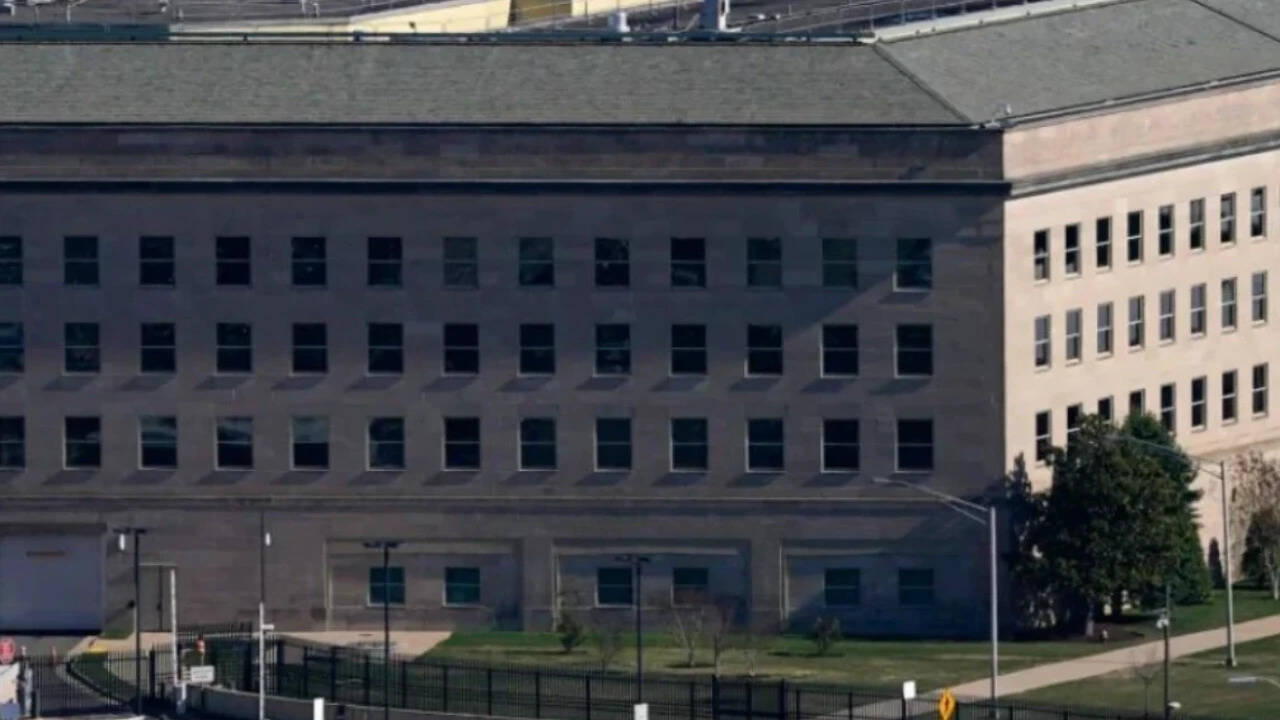
Can a private biotech company actually beat the United States Department of Defense in federal court? That's the multi-billion-dollar question at the heart of Novogene's lawsuit against the Pentagon.
When Beijing-based genetic sequencing giant Novogene filed a legal challenge against the Department of Defense (DoD), most casual observers wrote it off as corporate theater. They shouldn't have. This lawsuit isn't just about one company trying to clear its name—it's a direct test of how far Washington can stretch national security laws to choke off foreign biotech firms operating on American soil.
What Actually Happened Between Novogene and the Pentagon
Let's strip away the legal jargon. The Department of Defense maintains a specific roster known as the 1260H list, mandated by Section 1260H of the National Defense Authorization Act (NDAA) for Fiscal Year 2021. Being placed on this list officially labels an entity as a "Chinese military company" operating directly or indirectly in the United States.
Novogene landed on that list. And they fought back immediately.
In their federal complaint filed in Washington, D.C., Novogene argued that the Pentagon's designation was arbitrary, capricious, and completely unsupported by actual evidence. According to the company, it's a purely commercial enterprise providing DNA and RNA sequencing services to academic researchers, pharmaceutical companies, and agricultural scientists. They don't make weapons. They don't supply the People's Liberation Army (PLA).
At least, that's their side of the story.
If you've ever worked inside a university research lab or managed procurement for a mid-sized biotech startup, you know why Novogene is so popular. They're fast, and they're cheap. Sequencing human genomes or agricultural crops requires massive computing power and specialized reagents, and Novogene built an industrial-scale assembly line for genetic data that undercut American competitors by significant margins.
Why the 1260H Blacklist Hurts Even Without Immediate Sanctions
Here is something most media coverage gets wrong. Getting slapped onto the Pentagon's 1260H list doesn't automatically freeze your bank accounts or ban you from selling products to private American citizens. That's what the Treasury Department's SDN list or the Commerce Department's Entity List does.
So why did Novogene panic and hire high-priced Washington litigators?
Because in modern corporate America, a Pentagon blacklist is radioactive.
Once the DoD stamps "Chinese military company" on your forehead, three things happen almost overnight:
- Federal grant money dries up. Universities and research hospitals rely heavily on grants from the National Institutes of Health (NIH) and the National Science Foundation (NSF). Principal investigators aren't going to risk losing millions in federal funding just to save twenty percent on sequencing costs with a blacklisted vendor.
- Corporate compliance teams pull the plug. Big Pharma doesn't want the headline risk. Even if a contract is technically legal today, compliance officers know that a 1260H listing is often the precursor to stricter congressional bans—like the proposed BIOSECURE Act.
- Defense contracting doors slam shut. Under federal procurement rules, the Pentagon is barred from buying goods or services from entities on the list, and that prohibition ripples down through supply chains.
I've watched research directors scramble when a preferred vendor suddenly hits a federal watchlist. Nobody waits around for a court ruling. You cancel the purchase order, swallow the higher price from a domestic alternative, and move your samples to another lab before the compliance audit hits your desk. Novogene knew that waiting quietly would mean watching its U.S. revenue evaporate in real time.
The Bigger Geopolitical Fight Over Genomic Data
To understand why the Pentagon targeted a sequencing company in the first place, you have to look at how Washington views biology today. Twenty years ago, national security meant tanks, satellites, and fighter jets. Ten years ago, it shifted to semiconductors and telecom networks. Today, genomic data sits right at the top of the intelligence community's threat matrix.
U.S. intelligence agencies—including the National Counterintelligence and Security Center (NCSC)—have issued repeated warnings about China's push to collect vast amounts of foreign genetic data. The concern isn't science fiction. Defense analysts worry that massive genomic databases, combined with modern artificial intelligence, could eventually be used to identify specific biological vulnerabilities, develop targeted therapeutics, or gain an insurmountable commercial advantage in precision medicine.
Under China's National Intelligence Law, domestic companies can be compelled to cooperate with state intelligence work when requested. From the Pentagon's perspective, any Chinese firm processing massive volumes of U.S. biological samples represents a structural vulnerability—regardless of what the company's corporate charter says.
Novogene pushed back on this exact point in its legal filings. They pointed out that their U.S. subsidiary, Novogene Corporation Inc., operates sequencing laboratories inside the United States, specifically in California, to process American samples locally rather than shipping physical DNA overseas. They argued that guilt by nationality isn't a valid legal standard under the Administrative Procedure Act (APA).
Can Companies Actually Win Against the DoD in Court
You might think suing the Pentagon is a guaranteed loss. History says otherwise.
Take Xiaomi and Luokung Technology, for example. Both Chinese firms were placed on a similar Pentagon blacklist during the final days of the Trump administration in early 2021. Both sued in federal court. And both won injunctions blocking the designations because federal judges found the Defense Department's evidentiary record thin and poorly reasoned.
Those rulings forced the Pentagon to realize that judges won't simply rubber-stamp national security claims without seeing actual administrative records connecting a company to China's military-industrial complex.
However, the legal terrain has shifted since 2021. Congress specifically rewrote and expanded the statutory authority behind Section 1260H to give the Pentagon broader latitude. Under the updated rules, the Defense Department doesn't need to prove a company is directly owned by the PLA. It only needs to show that the entity is a "military-civil fusion contributor"—a broad category that captures companies receiving certain Chinese government subsidies, participating in state-backed industrial parks, or conducting research with state-affiliated institutions.
That distinction changes everything. In China's biotech sector, separating purely private enterprise from state-supported research initiatives is notoriously difficult. Many successful Chinese tech and science firms have accepted municipal grants or partnered with state-run universities at some point in their growth.
What Biotech Buyers and Investors Need to Watch
Whether Novogene ultimately wins its case in federal court or gets bogged down in years of sealed classified filings, the practical reality for the biotech industry is already clear. The era of frictionless cross-border genomic outsourcing is over.
If you're managing lab operations, biotech investments, or supply chain risk, don't wait for a final verdict from a D.C. district judge to adjust your strategy. Treat any vendor sitting on the 1260H list as high-risk for immediate offboarding, audit your subcontracted sequencing workflows to ensure third-party labs aren't quietly routing samples through blacklisted facilities, and price domestic sequencing alternatives like Illumina or Element Biosciences into your upcoming grant budgets now.