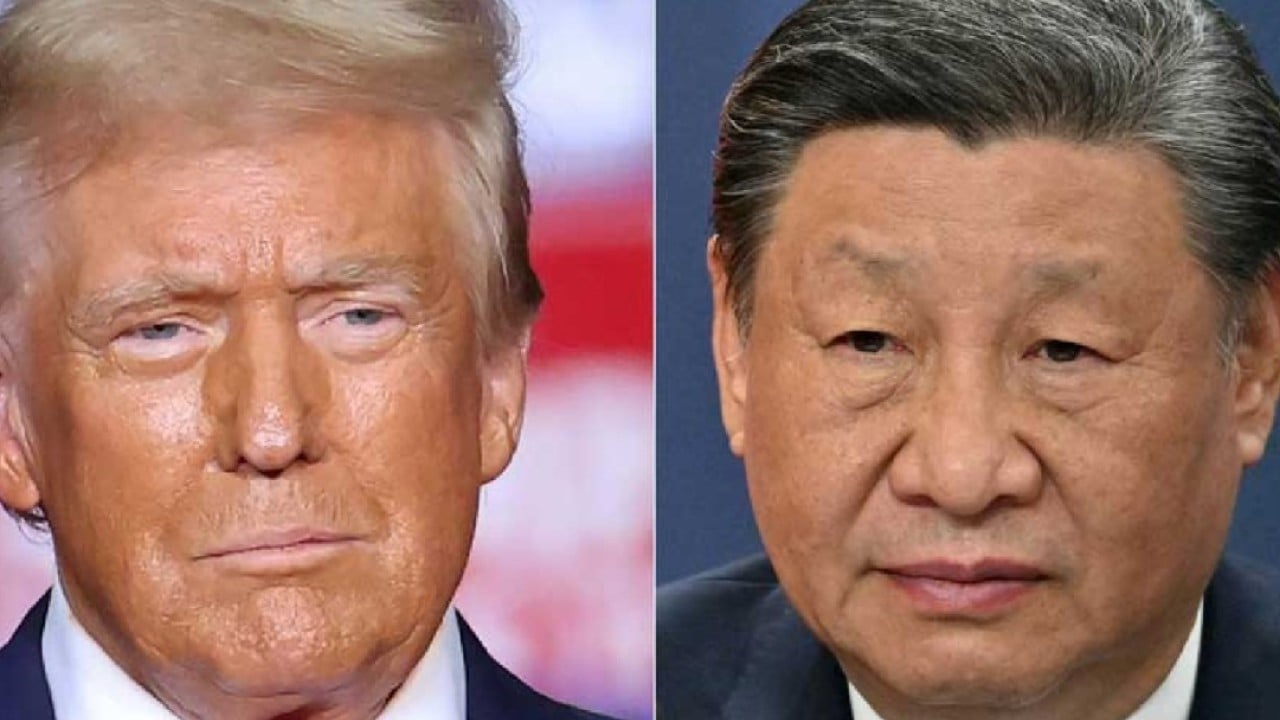
The United States is currently spending nearly $1 trillion a year on defense. That's a staggering amount of money, yet the Pentagon is sounding the alarm that it's losing the arms race to China. Beijing's official 2026 defense budget is roughly $277 billion, which looks like a fraction of the American war chest. If you only look at the raw exchange rate, you're missing the entire story.
China isn't just spending money; it's buying more "bang for its buck" through a system the US simply can't replicate. While Washington deals with massive cost overruns on single platforms like the F-35, Beijing is churning out hypersonic missiles and warships at a pace that suggests their $277 billion actually functions more like $700 billion when adjusted for local costs and hidden subsidies.
The Purchasing Power Myth
Comparing the US and Chinese military budgets using standard exchange rates is a rookie mistake. In America, a huge chunk of the budget goes to things that don't shoot. We spend billions on healthcare for veterans, high salaries to attract volunteers in a competitive job market, and massive overhead for private contractors.
China doesn't have those problems. A Chinese recruit costs about one-sixteenth of what an American soldier costs. When the People’s Liberation Army (PLA) buys steel, electronics, or labor, they pay "local prices." According to 2024-2026 economic data, China's military purchasing power parity (PPP) effectively doubles or triples their available cash. Basically, they're buying a five-star meal for the price of a burger.
Hidden Figures and Double Counting
The official Chinese budget conveniently leaves out massive categories. Research and development (R&D) often gets tucked away under civilian science ministries. Their "Military-Civil Fusion" strategy means that when a Chinese tech company develops a new AI or drone, the military gets it for free or at a deep discount.
- Space Operations: Large portions are funded through civilian agencies.
- Paramilitary Forces: The People’s Armed Police and the Coast Guard have their own separate funding streams.
- Infrastructure: Military-grade roads and ports in the South China Sea aren't always billed to the defense ministry.
Shipbuilding and the Tonnage Gap
The most visible area where China is winning is on the water. The US Navy has roughly 290 deployable ships. China has over 340 and is aiming for 400+ by 2030. But the numbers don't tell the full horror story for US planners. It’s about the industrial base.
China currently controls about 50% of the world’s commercial shipbuilding capacity. The US controls less than 1%. This means China can use the same massive dry docks to build a commercial tanker one day and a Type 055 destroyer the next. They have the workers, the supply chains, and the raw materials all in one place.
If a war starts tomorrow, China can repair damaged ships in dozens of high-tech yards. The US is struggling to maintain its few remaining public shipyards, some of which are over a century old. We're currently facing an 18-month delay just for routine maintenance on some attack submarines. You can't win a long war if you can't fix your ships.
Hypersonic Reality Check
For years, the US was the undisputed leader in missile tech. That’s over. China has already fielded multiple types of hypersonic glide vehicles, like the DF-17 and the DF-27, which can fly at five times the speed of sound and maneuver to dodge interceptors.
What did the US do? We spent billions on programs like the Air Force's AGM-183 ARRW, only to cancel it in 2024 after repeated test failures. We’re finally playing catch-up with the Navy’s Conventional Prompt Strike and the Army’s Long-Range Hypersonic Weapon, but these aren't expected to be fully operational in meaningful numbers until later in 2026 or 2027.
China didn't out-innovate us; they out-iterated us. They were willing to test, fail, and try again quickly. Our acquisition process is so bogged down in "requirements" and "oversight" that it takes a decade to get a new bolt approved.
The Drone Swarm Economy
The war in Ukraine changed everything, and China was paying attention. They're the world’s leading producer of commercial drones (DJI alone owns the market). They've taken that commercial dominance and turned it into a military juggernaut.
While the US buys high-end, exquisite drones like the MQ-9 Reaper that cost $30 million each, China is focused on "attritable" systems—cheap, mass-produced drones that can be lost in combat without breaking the bank. They’re building a military that values quantity as a quality of its own.
Why the US Can't Just Spend More
You might think the answer is just to throw more money at the problem. It’s not. The US defense industrial base is brittle. We have a massive labor shortage in skilled trades like welding and machining. Even if Congress doubled the Navy's budget tomorrow, we don't have the shipyards or the workers to build the ships any faster.
Honestly, we've spent thirty years de-industrializing while China did the opposite. Now, they have the "factory of the world" at their disposal for a New Cold War.
Focus on Asymmetric Defense
If the US wants to stay ahead, it has to stop trying to match China ship-for-ship. We can't out-build them in a traditional sense. The move now is toward "distributed lethality"—using smaller, cheaper, unmanned systems to make it too expensive for China to use their big, expensive ships.
The Pentagon's "Replicator" initiative is a step in this direction, aiming to field thousands of cheap drones to counter China’s mass. But even here, we’re reliant on Chinese-made components for many of our electronics and batteries. It's a mess.
Stop looking at the $900 billion vs $277 billion headline. The real race is about who can produce the most tech at the lowest cost with the shortest lead time. Right now, that’s not us. To get a better handle on this, keep an eye on the 2027 "Centennial" goals of the PLA; that’s the real deadline they’re working toward.