The Western tech elite is currently panicking over a headline they completely misunderstand.
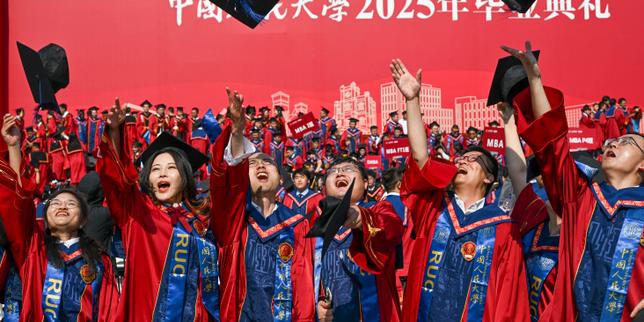
Commentators are looking at China’s massive overhaul of its university curricula—dumping traditional majors, mandating AI literacy for every single undergraduate, and forcing partnerships with domestic tech giants—and declaring it the end of Western intellectual dominance. The consensus view is simple: by rewiring its higher education system for a machine-driven economy, Beijing is engineering a generation of tech-super soldiers.
It is a terrifying narrative. It is also entirely wrong.
What the mainstream analysis misses is the fundamental friction between rigid, state-directed educational engineering and the chaotic, fast-mutating nature of generative technology. China is preparing its students for an industrial-era version of software development that no longer exists. They are building a massive, highly disciplined army to fight a war that is being waged by solo hackers and flexible generalists.
I have spent fifteen years tracking engineering pipelines and tech infrastructure allocations. I have watched universities throw hundreds of millions of dollars at shiny new technical departments only to graduate students whose skills were obsolete six months before they received their diplomas. China's current strategy isn't a blueprint for the future. It is the most expensive mistake in modern educational history.
The Illusion of the AI Major
The core premise of the current university restructuring in China is that AI is a distinct academic discipline that can be mass-produced through structured, top-down instruction.
This is an administrative delusion.
When Tsinghua or Shanghai Jiao Tong University replaces a traditional major like mechanical engineering or applied mathematics with a highly specialized "AI + X" track, they are making a dangerous bet. They are assuming that the specific tools, frameworks, and programming paradigms taught in 2026 will remain relevant by the time a freshman graduates in 2030.
They won't.
True innovation in this space does not happen within the neat confines of a state-approved syllabus. It happens in open-source repositories, late-night Discord servers, and messy, unaligned experiments. By institutionalizing the technology inside a rigid academic framework, you kill the exact element that makes it potent: its unpredictability.
Consider what actually happens when you mandate AI literacy for every student across diverse fields like history, law, and medicine. You do not get a million innovators. You get a million compliance officers who know how to plug variables into a state-sanctioned API. You get an intellectual monoculture.
The Flawed Premise of People Also Ask
If you look at search trends regarding global tech education, the internet is flooded with variations of the same anxious questions:
- How can universities adapt to the rapid pace of automation?
- Which country is winning the race for AI talent?
- Should students stop majoring in humanities to focus on machine learning?
Every single one of these questions is built on a broken premise.
When people ask how universities can adapt to automation, they assume the solution is to teach students how to build the automation. The brutal reality is that the tools are already building themselves. The bottleneck in technology today is not a lack of mid-level engineers who can tune a hyperparameter or clean a dataset. The bottleneck is a lack of people who understand deeply what problems are actually worth solving.
By forcing a humanities student or a medical student to spend twenty hours a week learning Python and basic neural network architectures, you aren't upgrading their skillset. You are downgrading their unique domain expertise. You are turning a potentially brilliant diagnostic physician into a mediocre data engineer.
The countries and institutions that "win" this shift will not be the ones that turn every student into a temporary programmer. They will be the ones that double down on deep, foundational logic, historical context, and razor-sharp critical analysis—the exact traits that top-down, hyper-specialized technical curricula explicitly suppress.
The Trap of Tech Giant Partnerships
A pillar of the ongoing overhaul is the deep integration between state universities and domestic tech conglomerates like Baidu, Tencent, and Alibaba. On paper, this sounds brilliant. Students get access to proprietary clusters, massive datasets, and real-world infrastructure.
Here is the downside that no one in Shenzhen or Beijing wants to openly admit: when a university ties its curriculum to a corporate titan, it ceases to be an institution of higher learning. It becomes a taxpayer-subsidized corporate onboarding program.
Corporate research is driven by quarterly metrics, commercial monetization, and immediate market survival. Academic research is supposed to be driven by high-risk, long-horizon curiosity. When you blur that line, you ensure that students are trained exclusively on the specific, closed ecosystems of their university's corporate sponsors.
If a student spends four years mastering the specific deployment pipelines and proprietary model architectures of a single domestic cloud provider, they aren't an adaptable innovator. They are a captive asset. If that specific corporate architecture loses a architectural paradigm war to an open-source alternative six months after graduation, that student's practical value drops to zero.
The Superior Strategy: Aggressive Under-Specialization
If you want to survive an economy defined by algorithmic volatility, you have to do the exact opposite of what the central planners are dictating. You must aggressively under-specialize.
The premium in the workforce shifted away from technical execution the moment code generation reached a certain threshold of velocity. The real value now lies at the edges of disciplines—where biology meets economics, or where classical philosophy intersects with system architecture.
The contrarian approach to education requires acknowledging a painful truth: the specific technical skill you learn today is a depreciating asset. The only appreciating asset is the meta-skill of learning, unlearning, and adapting on a week-to-week basis.
Instead of building massive, bureaucratic "AI Colleges" that take three years to approve a textbook change, institutions should be stripping down curricula to their bare essentials.
- Drop the tool-specific courses. Stop teaching specific software suites or programming languages that will be obsolete before the semester ends.
- Elevate first-principles thinking. Double down on probability, discrete mathematics, structural linguistics, and formal logic. These are the invariant laws under the hood of every model that will ever be built.
- Embrace structural friction. Force students to confront messy, unstructured problems where there is no clean data, no clear API documentation, and no predetermined outcome.
The Cost of the Counter-Intuitive Path
Let’s be completely transparent about the downside of this contrarian approach. If a university adopts this philosophy, its short-term metrics will look terrible.
They won't have flashy press releases detailing massive corporate donations. Their graduates won't instantly slot into entry-level corporate engineering roles with pre-packaged titles. To an outside observer or a government auditor looking at immediate employment statistics, the institution will look like it is lagging behind the hyper-efficient, tech-heavy factories of its competitors.
But engineering immediate employment metrics is a trap. The hyper-specialized graduates coming out of heavily overhauled, state-directed programs are being optimized for the immediate present. They are being dropped into the market at the exact peak of a specific technological wave.
When that wave breaks—when autonomous workflows completely absorb the mid-tier execution layer of tech development—those highly disciplined, single-track graduates will have no safety net. They lack the philosophical depth to pivot, the historical context to reframe their value, and the foundational mathematics to understand the next architectural shift from first principles.
The massive restructuring of higher education we are witnessing right now isn't an act of strategic foresight. It is an act of bureaucratic panic dressed up as progress. True cognitive resilience cannot be top-down, it cannot be centrally planned, and it certainly cannot be manufactured by forcing an entire generation to learn how to interface with today’s corporate machinery.
Stop looking at the curriculum overhauls with envy. The university systems that remain stubborn, chaotic, deeply theoretical, and frustratingly unaligned with immediate corporate needs are the ones that will accidentally inherit the earth.