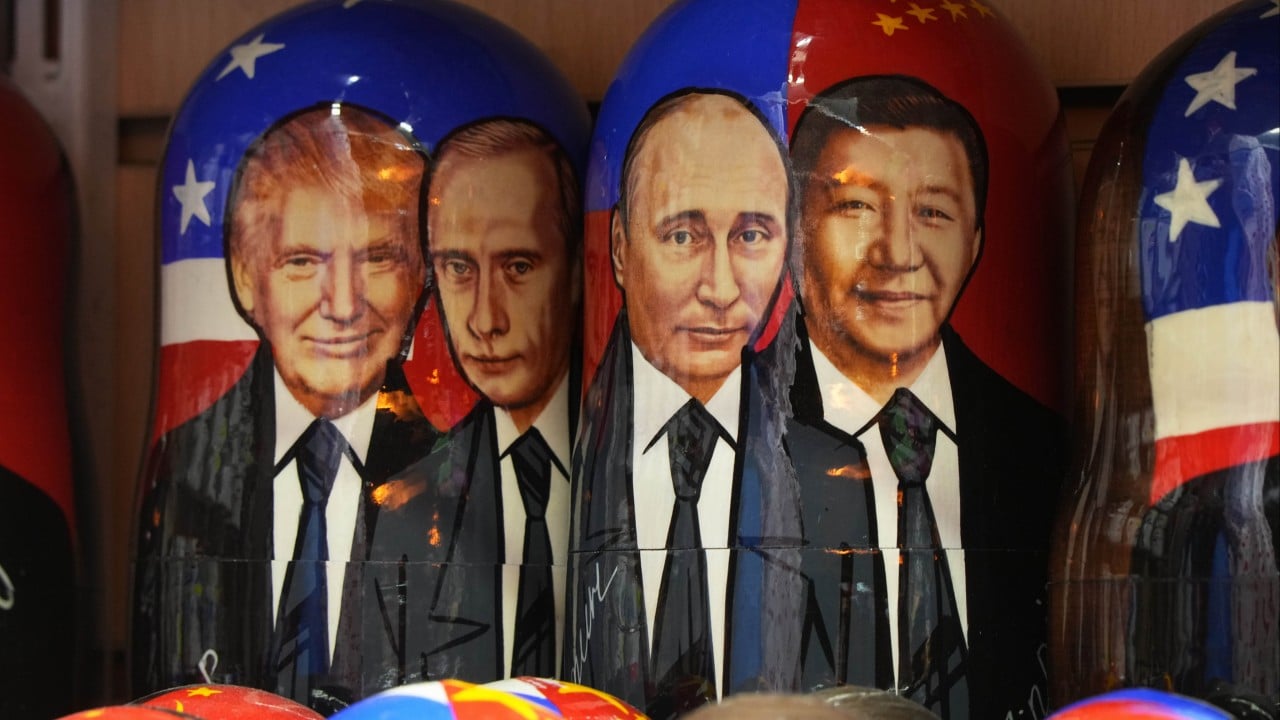
Mainstream foreign policy coverage treats every three-way handshake between Beijing, Washington, and Moscow like the Congress of Vienna. According to the standard diplomatic press wire, a Thursday trilateral on the sidelines of the Asia-Pacific Economic Cooperation summit signals an epochal reordering of global power.
That reading mistakes a scheduling convenience for a structural shift.
When three nuclear-armed powers sit in the same room during an economic forum designed around trade facilitation, journalists immediately reach for Cold War metaphors. Analysts on cable news start drawing arrows on maps. Commentary pieces warn of spheres of influence being carved up behind closed doors. Yet anyone who has actually watched how multilateral summits operate knows that sideline trilaterals are frequently about optics, crisis management, and domestic signaling—not grand bargains.
The Myth of the Grand Trilateral Bargain
The lazy consensus in international commentary assumes that when the United States, China, and Russia meet together, two of them are plotting against the third, or all three are secretly dividing the world into compliant regions. International relations scholars like Kenneth Waltz and John Mearsheimer have spent decades analyzing great-power competition, and even realists recognize that structural rivalries do not dissolve over ninety minutes of diplomatic talking points on the margins of a trade conference.
Consider the actual incentives of each capital sitting at that table.
- Beijing's perspective: Chinese foreign policy officials consistently emphasize multipolarity and regional stability, particularly when hosting or participating in Asia-Pacific forums. By facilitating or participating in a three-way dialogue on APEC sidelines, Beijing projects diplomatic centrality. It signals to Southeast Asian economies and global markets that China is the indispensable convener capable of keeping Washington and Moscow talking.
- Washington's perspective: U.S. policymakers face severe domestic and allied scrutiny whenever they engage Moscow while simultaneously managing strategic competition with Beijing. Participating in a trilateral meeting allows American diplomats to convey direct warnings on nuclear stability, regional security, or economic coercion without granting Moscow the prestige of a standalone bilateral summit.
- Moscow's perspective: Russian officials regularly frame multilateral engagement outside Western-led institutions as proof that diplomatic isolation efforts have failed. Sitting alongside the world's two largest economies at an Asia-Pacific forum reinforces Moscow's narrative of a post-Western order.
None of these objectives require—or even allow for—a comprehensive geopolitical settlement. Each side enters the room with mutually incompatible red lines. Washington will not abandon its treaty alliances in the Indo-Pacific or its support for European security architecture. Beijing will not subordinate its territorial claims or industrial policy to American demands. Moscow will not reverse its strategic alignment with Beijing to please Washington.
Why Sideline Diplomacy Rarely Moves Structural Plates
Experienced diplomats draw a sharp distinction between summitry and negotiation. Real negotiations happen months before leaders or foreign ministers ever sit in front of flags. Working groups spend hundreds of hours hammering out bracketed text, verifying compliance mechanisms, and trading technical concessions.
Sideline meetings at APEC work in reverse.
APEC itself is built on voluntary, non-binding consensus among 21 member economies. Its institutional DNA avoids hard security treaties in favor of customs harmonization, supply chain resilience, and digital trade standards. When geopolitical rivals use the physical venue of an APEC meeting to hold a security-focused trilateral, the venue itself imposes hard limits. There is no dedicated secretariat drafting a binding arms-control treaty in the hallway. There is no verification regime being signed before the afternoon plenary session.
What actually happens in these rooms?
First, diplomats read prepared talking points to establish an official record. If tensions spike six months later over maritime incidents in the South China Sea, cyber intrusions, or missile deployments, each foreign ministry can point to the transcript and claim they issued clear warnings.
Second, they test tactical bandwidth. Mid-level officials watch body language and note which issues trigger immediate pushback versus which technical channels—such as maritime deconfliction hotlines or consular staffing—remain open for quiet follow-up.
Third, they manage third-party anxiety. Smaller APEC economies, from Singapore to Chile, do not want to be forced into binary geopolitical alignment. Seeing the major powers at least maintain diplomatic communication lowers the immediate temperature for regional trade ministers who just want to discuss tariff schedules and green energy transitions.
The Flawed Premise Behind the Media Frenzy
When readers search for news about a China-US-Russia meeting, the underlying anxiety is usually straightforward: Are we heading toward global conflict, or are they making a deal behind our backs?
Both questions rest on a flawed premise. They assume that diplomatic contact automatically equals either imminent war or secret collusion. In reality, routine communication among nuclear powers is the baseline requirement for avoiding accidental escalation. During the height of the original Cold War, Washington and Moscow maintained constant backchannels, arms control talks, and diplomatic encounters even during severe crises.
Treating a trilateral meeting as a binary turning point creates three predictable distortions in public understanding:
- Overestimating short-term breakthroughs: Commentators look for immediate joint communiqués. When none appear—because trilateral statements require unanimous wording that none of the three will sign—pundits declare the meeting a failure. In diplomacy, a meeting without a communiqué is often just a normal working session.
- Ignoring asymmetric bilateral dynamics: A three-way photo opportunity creates the illusion of an equilateral triangle. In economic and technological terms, the triangle is wildly lopsided. The U.S. and Chinese economies are deeply intertwined global engines, whereas Russia's economic footprint in the Asia-Pacific is overwhelmingly concentrated in energy and raw commodities. Treating all three as symmetrical actors obscures where actual leverage lies.
- Missing the real APEC agenda: While cameras crowd outside the trilateral holding room, quiet regulatory decisions on cross-border data flows, semiconductor supply chains, and agricultural standards are taking shape in the main conference halls. Those technical rules shape corporate balance sheets far more directly than a 45-minute diplomatic exchange.
What Analysts and Decision-Makers Should Watch Instead
If you want to know whether a China-US-Russia sideline meeting actually matters, ignore the official readouts. Diplomatic readouts are written before the meeting ends and use standardized vocabulary—"candid," "constructive," "in-depth exchange of views"—specifically designed to reveal nothing.
Instead, track concrete operational indicators over the 60 days following the summit:
- Working-group calendars: Do defense ministries or foreign offices announce follow-up meetings at the assistant-secretary or director-general level? Without scheduled working-level follow-ups, a high-level meeting has zero operational traction.
- Sanctions and export-control enforcement: Watch whether regulatory agencies in Washington pause or proceed with planned entity-list additions, secondary sanctions, or tariff reviews. Policy continuity after a summit proves the meeting was strictly informational.
- Military signaling in the Western Pacific: Track naval transits, air defense identification zone entries, and joint military exercises in the weeks immediately after APEC. Operational tempo on the water reflects true strategic intent far more accurately than podium remarks.
- Third-country diplomatic shuttles: Pay attention to immediate post-summit briefings given to treaty allies like Japan, South Korea, Australia, and European partners. How Washington and Beijing brief their respective partners reveals what was actually contested in the room.
The Honest Limits of Contrarian Skepticism
Dismissing summit theater does not mean diplomatic dialogue is useless. Even skeptical realist theorists acknowledge that face-to-face contact reduces miscalculation. When senior officials look across a table, they calibrate tone, gauge domestic political constraints, and verify that messages sent through intelligence or military channels are reaching top decision-makers intact.
Furthermore, a sideline meeting can occasionally unlock narrow, transactional off-ramps—such as prisoner exchanges, embassy visa quotas, or emergency communication protocols—that would stall in public negotiations. Calling these encounters political theater does not make them worthless; it simply puts them in their proper category. They are shock absorbers, not steering wheels.
Stop expecting a Thursday afternoon meeting on the margins of an Asia-Pacific trade summit to rewrite the global balance of power—watch the shipping lanes, the export-control lists, and the working-level calendars instead.