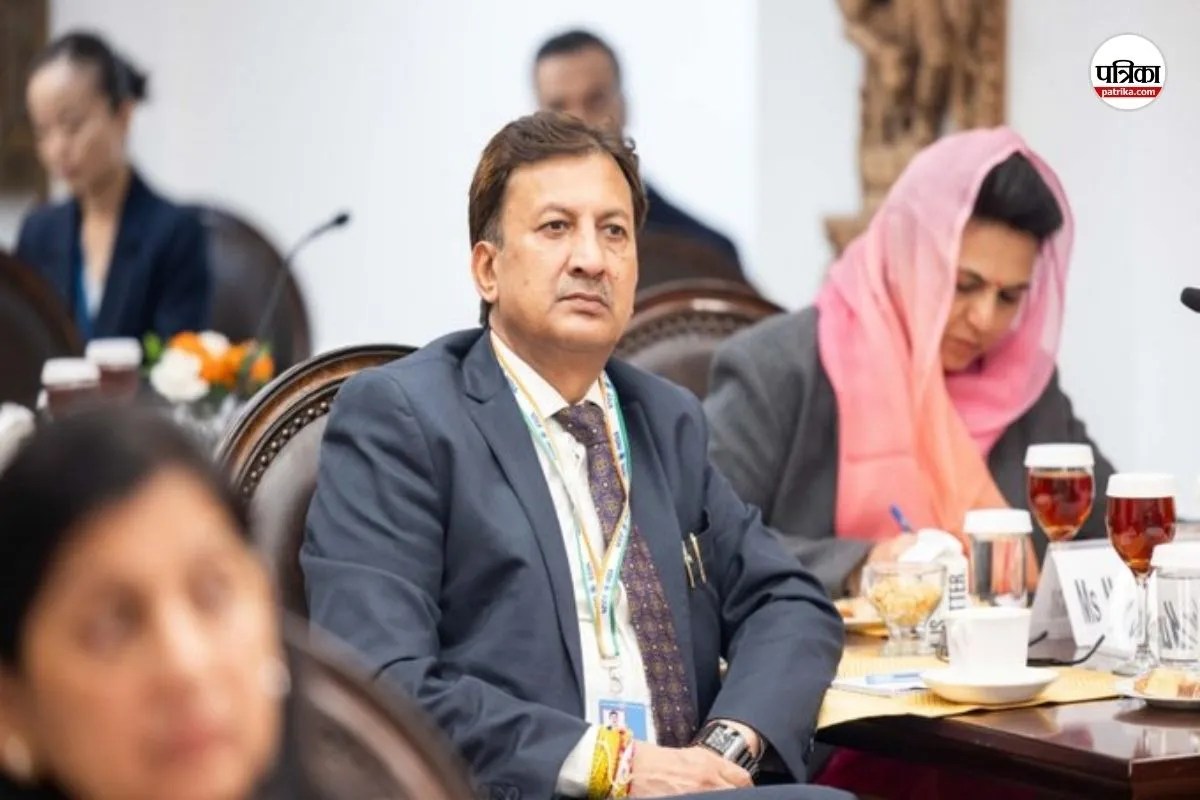
The hand-wringing has already started across Western newsrooms. When Beijing put forward Song Li for a leadership post, the usual suspects immediately reached for their favorite panic scripts. You have heard the predictable chorus: institutional capture, geopolitical proxy wars, the erosion of transparency, and the end of global health governance as we know it.
It is a lazy, comfortable narrative. It assumes the World Health Organization was an objective, flawlessly functioning scientific temple before anyone from the East walked into the room.
I have watched international public health bureaucracy from the inside for over a decade. I have seen millions in donor funds vanish into administrative black holes, watched consensus-driven committees water down critical epidemiological warnings to avoid offending member states, and witnessed decades of Western institutional hubris lead to catastrophic blind spots during global outbreaks.
The panic over Song Li reveals a fundamental misunderstanding of how international bodies actually operate. Western critics assume that having a Chinese official in a high-ranking position means Beijing will simply dictate terms and turn the agency into a branch office of the Ministry of Foreign Affairs. But international organizations are not simple megaphones. They are vast, bureaucratic swamps where national interests constantly clash, dilute, and neutralize each other.
Let us look at the actual track record. For years, Western nations treated the WHO as their personal policy incubator, prioritizing donor-driven agendas that favored pharmaceutical giants and wealthy nations while neglecting basic frontline infrastructure in the global South. When COVID-19 hit, the entire machinery stuttered not because of a single official, but because the foundational architecture of global health governance is built on voluntary compliance, political appeasement, and toothless oversight.
Blaming a prospective nomination from Beijing lets the traditional power brokers off the hook.
A stronger presence from the East introduces a necessary friction into a system that has grown dangerously complacent. When power shifts in these organizations, the old guard is forced to negotiate rather than dictate. That is not a crisis. That is the reality of a multipolar world.
Consider the alternative everyone pretends to want: a return to Western-dominated consensus where everyone politely agrees to ignore structural inequalities until the next pathogen crosses a border. That system failed. It failed during Ebola, it failed during the early months of COVID-19, and it fails every day in regions where basic healthcare access remains a distant dream.
Injecting competing geopolitical priorities into the executive ranks strips away the polite fiction of pure technocracy. The WHO was never purely technical; it has always been political. Bringing that political struggle into the open forces member states to bargain transparently rather than hiding behind bureaucratic neutrality.
The real danger is not that Beijing will hijack the organization. The danger is that Western capitals will throw a tantrum, defund vital programs, or build parallel structures, fracturing global health security entirely out of wounded pride.
If you want an agency that actually adapts to shifting global realities, stop demanding perpetual hegemony. Competition at the top of these institutions forces accountability. Let them fight it out in the conference rooms. The alternative is a stagnant club pretending the world hasn't changed.