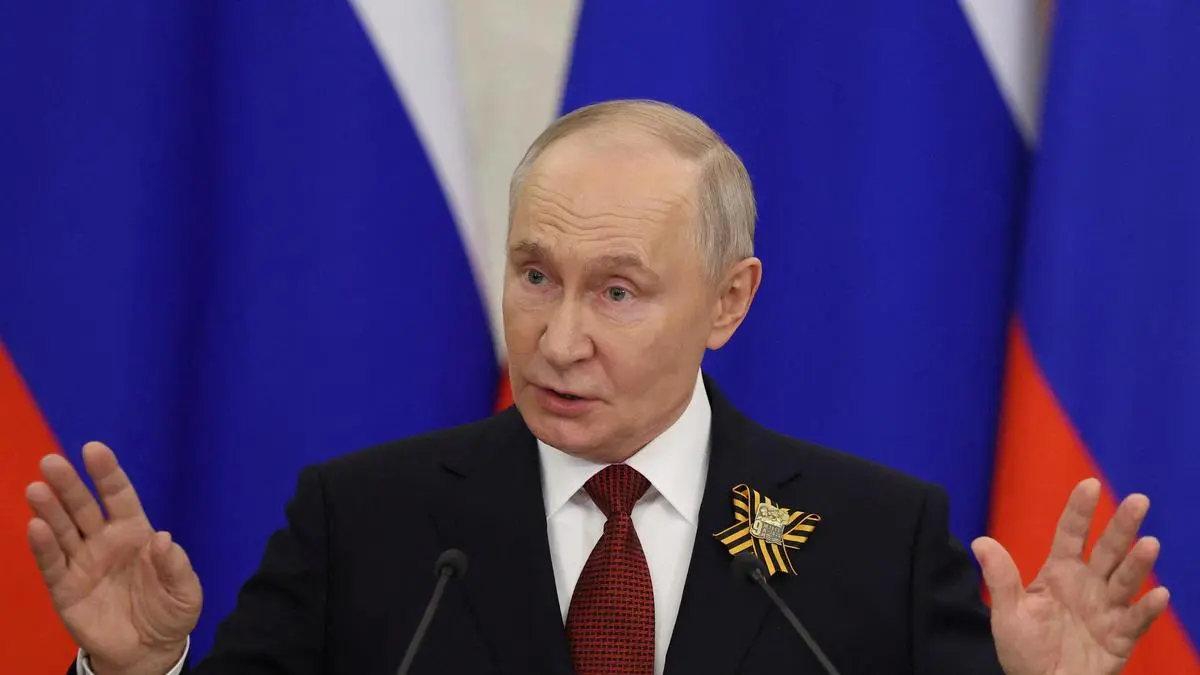
The mainstream media is about to throw a collective tantrum over Vladimir Putin’s upcoming visit to Beijing on May 19-20.
You can already write the headlines yourself. They will scream about a "new axis of autocracy," a "borderless partnership," and a unified front engineered to dismantle the Western economic order. Every think-tank pundit from Washington to London will look at Putin and Xi Jinping shaking hands in front of a red carpet and tell you that the global balance of power has fundamentally shifted.
They are reading the script backward.
This upcoming summit is not a demonstration of shared strength. It is a highly choreographed masterclass in asymmetrical leverage, and Russia is not the partner—it is the client. The lazy consensus among geopolitical commentators is that Moscow and Beijing are building a durable, co-equal alliance to insulate themselves from Western sanctions. In reality, Beijing is executing a slow, deliberate economic acquisition of a desperate neighbor.
If you want to understand the actual mechanics of global trade and power, you need to look past the photo-ops and examine the balance sheets.
The Asymmetry the Pundits Ignore
An alliance requires a mutual alignment of strategic vulnerabilities. What we have between China and Russia is a predatory buyer-seller dynamic disguised as diplomatic brotherhood.
Let us look at the raw data that the standard news reports conveniently gloss over. Russia’s economy is currently hyper-dependent on China for its survival. Since the escalation of the war in Ukraine and the subsequent cutoff from Western markets, the Kremlin has turned to Beijing to buy its crude oil and supply its consumer market.
But look at the percentage of total trade volume:
| Country | Dependence Metric | Reality Check |
|---|---|---|
| Russia | Over 50% of its imports now originate from China. | Moscow has zero alternative suppliers for critical industrial goods. |
| China | Russia accounts for less than 4% of China's total trade portfolio. | Beijing can walk away tomorrow without a scratch. |
I have spent twenty years analyzing trade flows and corporate supply chains through major geopolitical disruptions. I have watched executives and politicians alike mistake a temporary marriage of convenience for a permanent structural shift. When one partner holds 96% of the diversified trade leverage, it is not a partnership. It is a hostile corporate restructuring where the target company has no board seats left to defend itself.
The Great Yuan Deception
The crowd loves to talk about the de-dollarization of the global economy. They point to Putin and Xi expanding bilateral trade settled in Yuan and Rubles as definitive proof that the US Dollar is dead.
This is a fundamental misunderstanding of monetary mechanics.
When Russia accepts Chinese Yuan for its oil, those Yuan do not magically become a globally liquid reserve currency that Moscow can use to buy advanced machinery from Europe or microchips from Taiwan. They can only spend those Yuan in one place: China.
The Trap: Russia is forced to accumulate vast reserves of a currency that is subject to strict capital controls by the People's Bank of China. Moscow cannot freely convert its own trade surplus into gold or hard global currencies without Beijing’s explicit permission.
By forcing Russia onto the Yuan standard, Beijing has effectively turned the Russian economy into an extension of its own domestic industrial base. Russia exports raw materials at a steep discount—because Beijing knows Moscow has no other buyers—and imports finished Chinese goods at premium prices.
Is this a threat to the West? Yes, but not the one the newspapers are selling you. It does not create a formidable dual-headed monster. It creates an environment where Russia’s long-term economic autonomy is permanently eroded, rendering it a vassal state to Chinese industrial policy.
Beijing Does Not Want a Confrontation With Your Customers
Here is the flaw in the "Axis of Evil" narrative: China’s economic survival depends entirely on the very Western consumers that Russia is trying to alienate.
The United States and the European Union remain China’s largest export markets by a staggering margin. Xi Jinping is a cold-blooded pragmatist. He is not going to sacrifice access to a $30 trillion Western consumer base just to bail out Vladimir Putin’s imperial ambitions.
When you read about the May 19-20 talks, watch what is not agreed upon.
1. Power of Siberia 2 Will Stay Stalled
Watch the negotiations over the Power of Siberia 2 pipeline. Russia desperately needs this project to redirect the natural gas that used to flow to Europe. China has been dragging its feet for years. Why? Because Beijing wants Russia to foot the entire bill for construction while demanding heavily discounted, domestic-level pricing for the gas. Beijing will keep dangling the project to maintain leverage, but they will not sign a contract that gives Russia an equal share of the profits.
2. Strict Adherence to Secondary Sanctions
Look at Chinese banking behavior. Despite the fiery rhetoric against Western sanctions, major Chinese state banks (like the Industrial and Commercial Bank of China) have consistently restricted or halted clearing payments for Russian entities suspected of dealing in sanctioned dual-use goods. Why? Because the threat of being cut off from the SWIFT international payment system and the US dollar market is an existential threat to Chinese banking stability.
Beijing will help Moscow just enough to keep it from collapsing—ensuring a steady supply of cheap oil and keeping a friendly buffer state along its northern border—but not a single millimeter more. The moment Russian demands risk triggering systemic Western sanctions on Chinese mega-corporations, Beijing quietly pulls the plug on the conversation.
Dismantling the People Also Ask Nonsense
If you search for information on this summit, the algorithm serves up questions that reveal just how thoroughly the public has been misled. Let us answer them with zero diplomatic polish.
Is China sending weapons to Russia?
No. China is sending machine tools, microelectronics, and dual-use components that can be diverted into military production. Why? Because it gives Beijing plausible deniability while charging Russia a massive premium for components they cannot source anywhere else. Beijing will not send crates of artillery shells or Chinese-branded missiles. They will not risk their multi-trillion-dollar export machine to fight Russia’s battles. They are arms dealers charging a desperate client, not allies sharing a trench.
Will this summit create a new global currency to replace the dollar?
Absolutely not. To create a credible global reserve currency, you need a transparent legal system, free capital mobility, and open financial markets. Neither Moscow nor Beijing will ever allow that level of transparency or loss of domestic control. The Yuan is a weapon of control for Beijing, used to bind its economic dependents to its own system. It is not an alternative global standard; it is a regional leash.
The Real Winner of the May 19-20 Summit
If you want to understand the outcome of this meeting before it even starts, stop looking at the joint statements about global stability and multi-polarity. Look at the economic landscape of Siberia and the Russian Far East.
Russian timber, copper, coal, and oil are flowing south at prices that would make a Western commodities trader weep with envy. In return, Chinese automakers like Chery and Geely have completely captured the Russian automotive market after European brands exited. Chinese smartphones, household appliances, and industrial equipment have replaced Western alternatives entirely.
Putin is traveling to Beijing on May 19 because he has to. He is going to pay tribute to his sole remaining economic lifeline. Xi is hosting him because it provides immense theater for the Global South, showing that China is the true center of gravity for anti-Western sentiment, all while locking down a permanent, cheap commodity supply for the next three decades.
Stop treating this as a military alliance of equals. Start treating it for what it actually is: the most successful corporate buyout of an entire nation-state in modern history.
The West is terrified of a partnership that does not exist, entirely missing the fact that Russia is signing away its economic sovereignty one discounted oil barrel at a time.