White-collar criminals usually expect a comfortable prison cell or a heavily negotiated plea deal. Not in Beijing. If you steal enough from the public coffers in China, they don't just take your assets. They take your life.
The Changzhou Intermediate People's Court just dropped a hammer that echoed through every municipal building in the country. Yang Youlin, the former vice director of an economic development zone in Nanjing, was handed an immediate death sentence. The price tag on his head? A staggering 2.21 billion yuan. That is roughly $325 million accumulated over three decades of systematic grift.
This isn't a suspended sentence with a tidy two-year reprieve where he gets to live out his days in a cell reading books. It's a straight-to-the-gallows ruling. For anyone watching the inner workings of the ruling party, it is a glaring message about where the red line sits.
The Anatomy of a 325 Million Dollar Grift
Yang Youlin wasn't a top-tier Beijing politician. He operated at the municipal level, helping run an economic development zone in Jiangsu province. That is exactly why this case is so terrifying for local officials across China. You don't have to be a minister to pull in generational wealth through corruption.
The court laid out exactly how Yang operated from 1993 to 2023. For thirty years, he treated his office like a private brokerage. He traded government favors for cold hard cash, real estate, and corporate assets.
If a private developer wanted a lucrative piece of state land, they went through Yang. If a logistics company needed working capital or a fast-tracked business license, Yang made it happen for a fee. The court convicted him of five major crimes:
- Accepting massive bribes
- Embezzlement of public funds
- Offering bribes to grease wheels further up the chain
- Abuse of official power
- Money laundering to hide the massive cash inflow
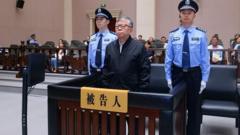
Photos from the courtroom showed a gray-haired Yang standing in a dark jacket flanked by two towering police officers. He read a final statement expressing his total guilt and remorse. It didn't save him. The court ordered the complete seizure of his personal property and demanded the state claw back every single cent of the $325 million.
When Does China Choose Execution Over Reprieve
Many foreign observers get confused by China's legal system because of how it uses the death penalty for financial crimes. Most economic death sentences are handed down with a two-year reprieve (sixing huanqi). If the prisoner doesn't commit any new crimes in those two years, the sentence automatically converts to life in prison.
Just a few months ago, China gave suspended death sentences to former defense ministers Wei Fenghe and Li Shangfu. So why did a local economic zone bureaucrat get an actual, immediate death sentence while military chiefs got reprieves?
It comes down to scale, cooperation, and the sheer audacity of the losses. Yang's crimes were deemed "exceptionally grave" because the $325 million sum is one of the largest single-person corruption totals in the history of modern China. When the financial damage to the state hits a certain threshold, and the laundering is as extensive as Yang's was, the party decides that an example must be made.
He joins a very short, grim list of officials who actually faced execution. In 2021, Lai Xiaomin, the head of the state-owned bad debt manager China Huarong, was executed for taking $277 million in bribes. In 2024, Li Jianping, a local official from Inner Mongolia, met the same fate. The pattern is clear: if you cross the quarter-billion-dollar mark, your chances of getting a reprieve drop to near zero.
The Reality Behind the Anti Corruption Campaign
It's impossible to look at Yang's sentence without looking at the broader political landscape under President Xi Jinping. Xi has spent over a decade running a relentless anti-graft campaign. Critics like to point out that this campaign is a highly convenient tool for clearing out political rivals. It definitely serves that purpose. If you want to bench an opponent permanently, a corruption probe is the cleanest way to do it.
But reducing this to a simple political purge misses the bigger picture. The party knows that rampant, unchecked local corruption is a literal threat to its survival. When local officials steal hundreds of millions of dollars, it drives up real estate costs, drains money from infrastructure, and makes regular citizens furious.
During a major address celebrating the 105th anniversary of the Chinese Communist Party's founding, Xi told the audience that the party must eliminate all viruses that erode its health. Yang Youlin was treated as a terminal virus.
What This Means for Global Businesses Doing Business in China
If you are an investor, executive, or business strategist dealing with Chinese markets, you need to understand what this verdict signals. The days of casual local grease payments or "mianzi" (face-saving) luxury gifts to municipal officials are completely dead.
The state is monitoring local economic zones with extreme scrutiny. Any foreign or domestic business that paid into Yang's $325 million pool is likely under investigation right now. If a local official offers to fast-track land grants or look the other way on environmental regulations in exchange for corporate favors, it isn't an opportunity. It's a trap that could end with your local partners in front of a firing squad and your assets seized by the state treasury.
The practical next step for multinational compliance officers is simple: audit every single land deal, joint venture agreement, and municipal subsidy secured through economic development zones over the last decade. The Chinese court system is looking backward thirty years to find this money, and they will look at your books to find where it went.