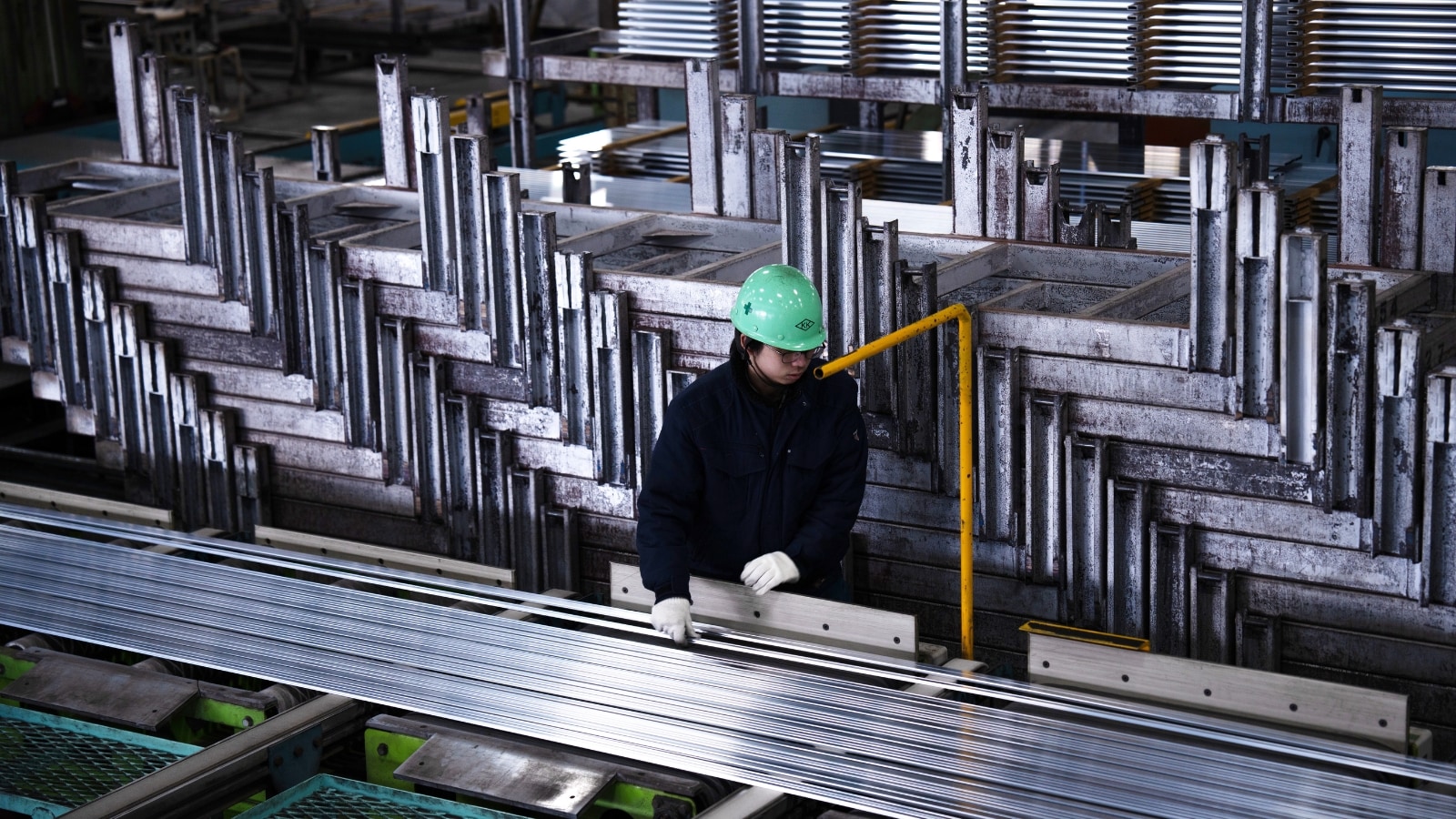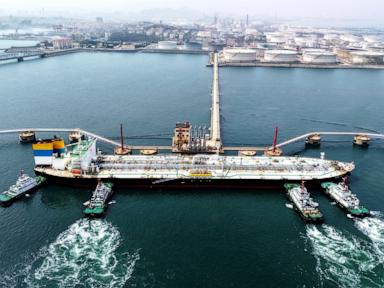
China just pulled off a move that caught most of the Western trading desks off guard. While headlines scream about the escalating Iran war and the messy geopolitical fallout in the Middle East, Chinese manufacturing just clocked its second straight month of expansion. It isn't just a fluke. The latest Purchasing Managers' Index (PMI) data shows a level of resilience that suggests Beijing’s stimulus efforts are finally starting to stick, even as the rest of the world braces for an energy price spike.
If you’ve been following the doom-and-gloom narrative about the Chinese economy, these numbers feel like a glitch in the matrix. They aren't. We're seeing a fundamental shift in how the world's second-largest economy handles external shocks. The factory floor is humming again. If you found value in this post, you should look at: this related article.
The Reality Behind the New Manufacturing Surge
The official manufacturing PMI recently landed above the 50-point mark. For those who don't live and breathe economic spreadsheets, anything over 50 means growth. Anything under is a contraction. Seeing this happen two months in a row tells us that the initial jump wasn't a one-off holiday bump or a statistical error. It’s a trend.
Domestic demand is doing the heavy lifting here. For years, the world looked at China as a giant export machine that lived and died by what consumers in Los Angeles or London bought. That’s changing. Beijing has been pumping liquidity into high-tech manufacturing and green energy sectors. They’re betting the farm on electric vehicles, lithium-ion batteries, and solar panels. This "new three" strategy is paying dividends. For another angle on this story, see the recent coverage from Forbes.
I’ve talked to logistics managers who say the throughput at major ports like Ningbo-Zhoushan hasn't staggered despite the chaos in the Middle East. Why? Because the supply chains are becoming more localized. China is buying more of its own stuff, and it’s finding new ways to get its goods to market without relying solely on traditional routes that are currently under fire.
Why the Iran War Haven't Sunk the Recovery
War usually means one thing for global manufacturing: expensive energy. When the conflict involving Iran intensified, the immediate assumption was that China—the world’s biggest oil importer—would see its factory margins evaporated.
It didn't happen.
China has been playing a long game with its energy security. They’ve built up massive strategic reserves and locked in long-term contracts that don't fluctuate with the daily spot price of Brent crude. Also, let's be honest about the trade dynamics. China’s relationship with Russia and Iran allows it to access energy at prices that don't always align with the global benchmarks you see on CNBC. They've built a "sanction-proof" energy pipeline that keeps the lights on in Shenzhen even when the Strait of Hormuz is a no-go zone.
There’s also the sheer scale of the internal market. When global shipping rates spike because of war risks, Chinese factories pivot. They focus on the "Internal Circulation" policy. They sell to the 1.4 billion people at home. It’s a massive safety net that most other manufacturing hubs simply don't have.
The High Tech Pivot is Saving the Day
Traditional low-end manufacturing—think cheap toys and fast fashion—is struggling. I’m not going to sugarcoat that. Those jobs are moving to Vietnam and India. But the factories that remain in China are getting smarter.
Automated assembly lines and high-end semiconductor fabrication are where the growth is. The latest PMI data reflects strength in "high-tech manufacturing" specifically. While the world worries about the Iran war, Chinese engineers are busy hitting production targets for 5G equipment and industrial robotics.
What the Numbers Actually Tell Us
- Production Index: This is up, showing that factory owners are confident enough to actually make things rather than just clearing out old inventory.
- New Orders: This is the big one. If there are no new orders, the party ends. The index shows a steady climb, partly driven by a surge in regional trade within Asia.
- Employment: It’s still a bit shaky. Factories are producing more, but they’re doing it with fewer people. Automation is great for the PMI, but it’s a headache for the labor market.
Small Factories Are Still Feeling the Squeeze
Don't let the big numbers fool you into thinking everything is perfect. There’s a massive gap between the state-owned giants and the "little guys." Small and medium-sized enterprises (SMEs) are still fighting for air. They don't have the same access to cheap credit that the big players do.
When the Iran war causes a slight uptick in raw material costs, a giant state-backed steel mill can absorb that cost. A family-owned plastics factory in Zhejiang cannot. They operate on razor-thin margins. If you're looking for a reason to be skeptical of the recovery, this is it. The "expansion" is top-heavy. It’s driven by the sectors Beijing wants to win, while the older parts of the economy are left to fend for themselves.
Navigating the Volatility in 2026
If you’re an investor or a business owner sourcing from this region, the play isn't to run away because of the geopolitical headlines. It’s to look at what is being manufactured. The era of "Made in China" being synonymous with "cheap" is over. It’s now about "Made in China" being synonymous with "indispensable tech."
The Middle East conflict is a tragedy and a massive disruption, but it isn't the death knell for Chinese industry. If anything, it’s proving that China’s decoupling from Western-led financial and energy systems is further along than we thought. They've built a fortress.
Stop looking at the broad index and start looking at specific sectors. Renewable energy and advanced machinery are the only places that matter right now. Everything else is just noise. Watch the producer price index (PPI) next. If that starts to climb alongside the PMI, we’ll know that factories are successfully passing on war-related costs to consumers. That’s the real sign of a healthy, dominant manufacturing sector.
Keep your eyes on the shipping routes through Central Asia. The "Belt and Road" isn't just a vanity project anymore; it’s the literal lifeline that’s keeping these factory numbers in the green while the sea lanes stay risky. If the rail freight numbers keep rising, the manufacturing expansion has plenty of room to run. Get your supply chain diversified, focus on the high-tech hubs, and quit waiting for a total collapse that the data simply doesn't support.