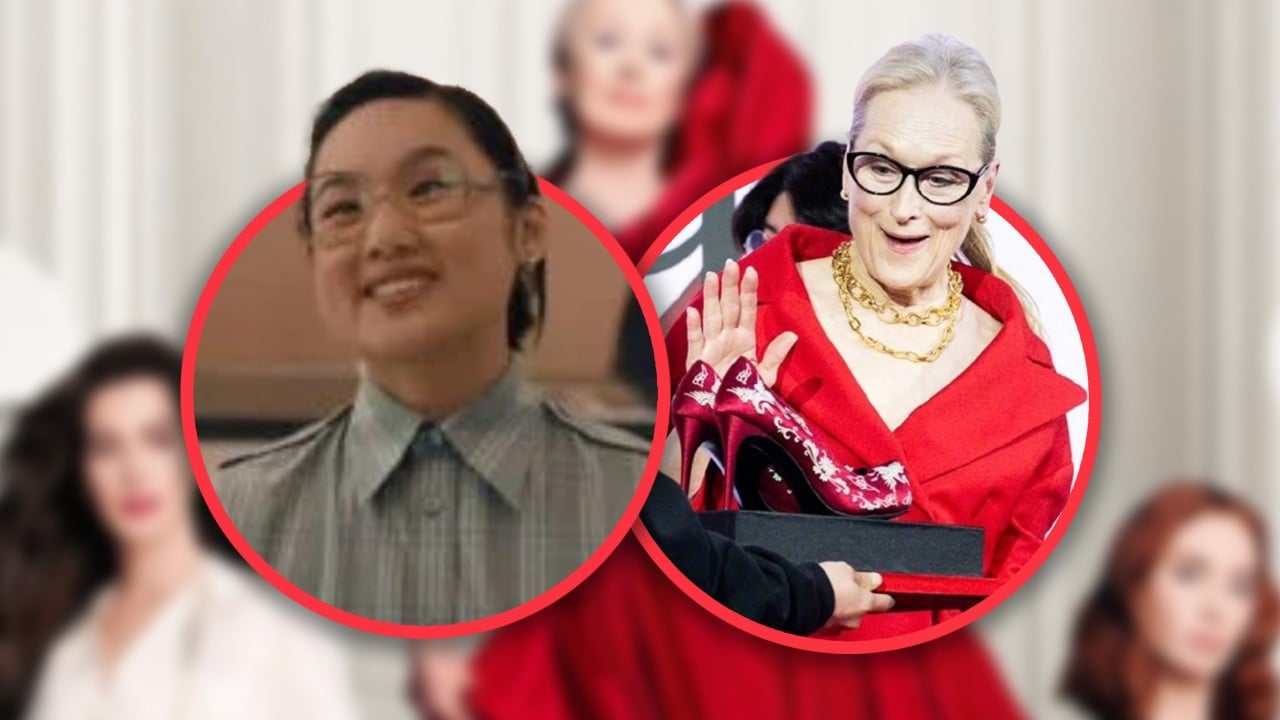
The internet is currently hyperventilating over a leaked character description from the The Devil Wears Prada sequel. The target? "Chin Chou," a supposedly nerdy, socially awkward Chinese character who has sent the "cultural sensitivity" industrial complex into a tailspin. Critics are calling it a "step back" for representation. They are crying foul over "outdated tropes." They are, as usual, completely missing the point.
The outrage is lazy. It’s a performative reflex from people who view global cinema through a lens of fragile victimhood rather than economic reality. If you think the "Chin Chou" character is a slight against China, you aren't paying attention to how power actually moves in the 2020s. Hollywood isn't punching down. It’s desperately, clumsily trying to figure out how to portray the people who now own the building.
The Myth of the "Harmful Stereotype"
Let’s dismantle the primary grievance. The "nerdy" Asian trope is widely viewed as a relic of the Long Duk Dong era. Critics argue that by making a Chinese character a "nerd," the filmmakers are dehumanizing a billion people.
This is an antique perspective. In the original The Devil Wears Prada, the entire point of the narrative was that "cool" is a currency controlled by a very specific, very white, very thin Manhattan elite. The "nerd" was Andy Sachs—the brilliant outsider who looked down on the industry until she realized it was more sophisticated than her Northwestern degree.
In 2026, the "nerd" isn't the victim. The nerd is the architect.
When you look at the power dynamics of the global fashion and tech industries, the "awkward" genius from Tsinghua University or MIT isn't a punchline; they are the person signing the checks. By reacting with such visceral horror to a Chinese character being portrayed as intellectually elite but socially distinct, Western critics are projecting their own insecurities. They are terrified of a world where the "cool kids" of the 1990s—the Mirandas and the Christian Thompsons—are obsolete.
The Luxury Market Doesn't Care About Your Tweets
The loudest voices screaming "offense" are almost exclusively Western-based activists. If you go to the actual luxury hubs in Shanghai, Chengdu, or Shenzhen, the conversation is different.
I’ve spent a decade consulting for luxury brands trying to crack the Tier 1 markets in China. Do you know what actually offends a Chinese ultra-high-net-worth individual? It isn't a nerdy character in a movie. It’s a brand that thinks "pandering" is the same as "respect."
They are offended by:
- Red and gold "Lunar New Year" collections that look like they were designed by someone who has never been further east than Queens.
- Western CEOs who show up to meetings and bow like they’re in a 1970s martial arts flick.
- The assumption that they want "sanitized" representation.
The Chinese market is sophisticated. They understand satire. They understand that in the world of The Devil Wears Prada, everyone is a caricature. Miranda Priestly is a monster. Nigel is a sycophant. Andy is a snob. Why should the Chinese character be the only one spared the satirical knife? Demanding that Chin Chou be a flawless, "cool" icon is the ultimate form of "othering." It’s a demand for special treatment that suggests the culture isn't strong enough to handle a joke.
The Economic Irony of the "Chin Chou" Debate
Here is the truth no one wants to admit: Disney and the producers of this sequel are terrified of the Chinese box office. They aren't trying to insult China; they are trying to court it.
The character of Chin Chou is likely a calculated attempt to reflect the tech-driven, data-obsessed reality of modern commerce. Fashion isn't just about sketches and "cerulean" anymore. It’s about algorithms, supply chain logistics, and e-commerce dominance—fields where Chinese firms like Shein, Temu, and ByteDance have completely upended the status quo.
If Chin Chou is a "nerd," it’s because the power in fashion has shifted from the runway to the server room.
The Cost of Sensitivity
When studios cave to these outrage cycles, the result is always the same: beige, boring, soulless content. We get "representation" that feels like a HR training manual.
Imagine if the original Devil Wears Prada was made under these conditions. Stanley Tucci’s character wouldn't be allowed to be biting or flamboyant. Emily Blunt’s character wouldn't be allowed to be mean. The movie would be a two-hour lecture on workplace ethics.
By demanding that every non-white character be a paragon of dignity, critics are effectively banning those characters from being interesting. They are trapping actors in a prison of "positive imagery" where they can never be the villain, never be the fool, and never be the human.
The "Chin Chou" Thought Experiment
Imagine a scenario where the sequel features a character named "Caleb," a hyper-analytical, socially awkward tech bro from Palo Alto who dictates the digital strategy for Runway magazine. Would there be an outcry? Would there be think pieces about the "harmful stereotyping of Californians"?
Of course not. We would accept it as a commentary on the current state of the industry.
The fact that we treat the Chinese character differently proves that we still view China as a "subject" to be protected rather than a "peer" to be reckoned with. This is the "soft bigotry of low expectations" rebranded for the social media age.
Data Doesn't Lie: The Audience is Smarter Than the Critics
Every time a "problematic" film is released, we see the same pattern. The critics scream, the Twitter threads go viral, and the actual audience—the people paying for tickets—shows up and enjoys the movie.
- Exhibit A: The persistent "controversies" surrounding Emily in Paris. Critics called it a stereotypical insult to French culture. The French audience made it one of the most-watched shows in the country. Why? Because they knew it was a fantasy, not a documentary.
- Exhibit B: The backlash against Crazy Rich Asians for not representing "every" Singaporean experience. It still became a cultural touchstone because it dared to be specific rather than universal.
The "Chin Chou" outrage is a Western luxury. It’s a way for people in Brooklyn and London to feel virtuous while ignoring the fact that the people they are "protecting" are currently building the future of the global economy.
Stop Sanitizing Art to Feed the Machine
The entertainment industry is currently dying a slow death by a thousand "consultations." Every script is scrubbed by sensitivity readers until there is nothing left but a smooth, frictionless surface that provides no grip for the mind.
If you want better representation, stop asking for "nice" characters. Ask for "mean" ones. Ask for "weird" ones. Ask for characters like Chin Chou, who might actually reflect the friction and the awkwardness of a world where East and West are colliding in the boardroom.
The real "insult" to China isn't a nerdy character. The insult is the belief that Chinese culture is so fragile that it cannot survive a supporting character in a fashion movie.
If the "Chin Chou" character is a genius who doesn't fit in with the vapid, aging guard of the New York fashion world, then he isn't the butt of the joke. He’s the one who’s going to buy the magazine and fire everyone in the third act.
That isn't a stereotype. That’s a forecast.
Stop looking for reasons to be offended and start looking at the scoreboard. The old world is terrified of the new one. The "nerds" have already won. If you’re still worried about a name and a pair of glasses, you’ve already lost the war.