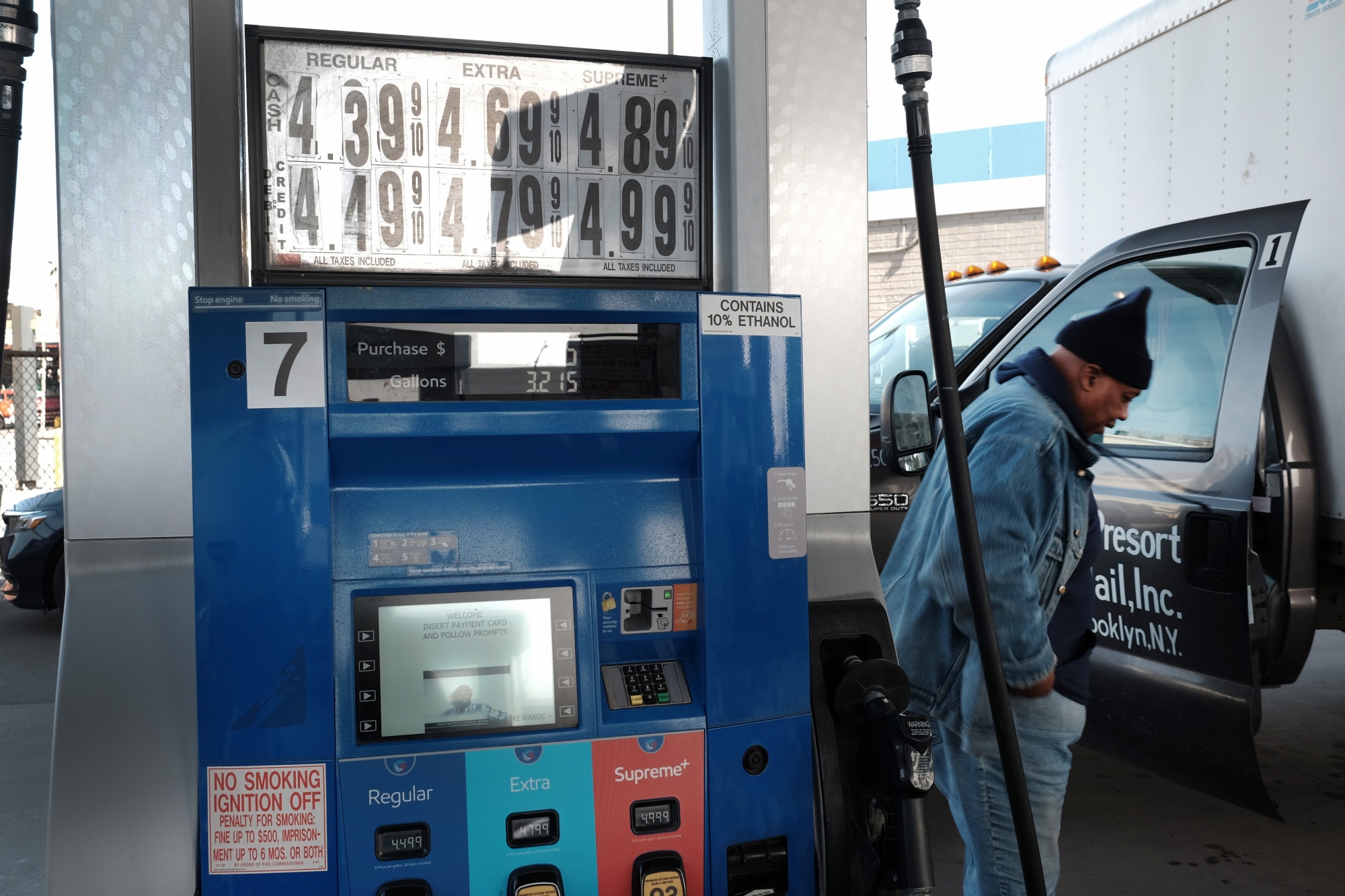
Scott Bessent is selling you a fairytale. The Treasury Secretary candidate’s recent optimism—suggesting that a combination of geopolitical "deal hopes" and domestic policy shifts will drag US petrol prices below $4 by summer—is a masterclass in political optics, not economic reality. It treats the global energy market like a thermostat you can simply turn down if you find the right dial.
It is a lie. Worse, it’s a distraction from the structural rot in the energy sector that no amount of diplomatic "hopes" will fix.
The consensus view is that high gas prices are a temporary glitch, a political failure that can be "solved" by more drilling or better handshakes. This is fundamentally wrong. High prices aren't the problem; they are the symptom of a system that has been starved of capital for a decade. If you are waiting for a return to the era of $2.50 or even a stable $3.50 gallon, you aren't just an optimist; you're ignoring the basic laws of physics and finance.
The Strategic Petroleum Reserve is Not a Magic Wand
The current administration, and the potential future one, love to talk about the Strategic Petroleum Reserve (SPR) as if it’s a bottomless pit of relief. It’s not. It’s a rainy-day fund that we’ve been using during a light drizzle to keep poll numbers from tanking.
When Bessent or any other insider hints at price drops, they are betting on the "fear premium" evaporating. They think that if tensions in the Middle East cool by 10%, the price at the pump will follow suit. This ignores the fact that the SPR is at its lowest level since the early 1980s. Refilling that reserve creates a floor for prices that no "peace deal" can break. You cannot dump millions of barrels into the market to lower prices and then expect to buy them back later without sending those same prices soaring. It is a zero-sum game played with a diminishing deck of cards.
I’ve watched traders play this game for twenty years. They wait for the political announcement, ride the 3% dip, and then go long because they know the underlying supply isn't there.
The Refining Bottleneck Nobody Wants to Discuss
Even if we pumped 20 million barrels of crude a day tomorrow, your gas prices wouldn't plummet. Why? Because you don't put crude oil in your Ford F-150. You put in refined gasoline.
The United States has not built a major, high-capacity refinery since 1977. We have spent decades shutting down smaller refineries or converting them to biofuels to chase ESG scores. We are running our existing fleet at nearly 95% capacity. There is no "slack" in the system.
Imagine a scenario where the crude price drops to $40 a barrel. If the refineries are at capacity, the "crack spread"—the difference between the price of crude and the price of the refined product—simply widens. The refiners pocket the profit, and you still pay $4 at the pump. Talking about "deal hopes" in the Middle East is irrelevant if the pipe in Louisiana is too narrow to handle the flow.
Why High Prices are Actually Your Best Friend
Here is the take that gets me kicked out of dinner parties: we need high gas prices.
Low prices are a sedative. They encourage inefficiency. They keep us tethered to a supply chain that is inherently volatile and controlled by regimes that do not have our best interests at heart. When gas is cheap, capital stops flowing into alternative energy and, more importantly, into the efficiency tech that actually reduces our dependence.
If gas stays at $5, the market forces a transition. If it drops to $3.50 because of some temporary political theater, we hit the snooze button for another four years. We’ve been hitting snooze since the 1970s. The "misery" at the pump is actually the only honest signal the market has left. It’s telling you that the era of easy, cheap, dense energy is over. Bessent’s promise of $4 gas is an attempt to mute that signal so you’ll feel better while the ship continues to sink.
The Myth of "Drill, Baby, Drill"
The industry insider’s dirty secret is that the oil majors don't actually want prices to collapse.
Wall Street has changed the rules. Ten years ago, an oil company could borrow endless cash to drill speculative holes. Today, investors demand "capital discipline." They want dividends and buybacks. If an oil CEO announces a massive, price-crushing increase in production, their stock gets hammered.
The "lazy consensus" says that regulation is the only thing stopping a flood of US oil. In reality, it’s the shareholders. They’ve seen the boom-bust cycles of the last two decades and they’ve decided they prefer the high-margin "boom" part. No amount of deregulation from a new administration can force a private company to commit commercial suicide by oversupplying its own market.
The Geopolitical Deal Fallacy
The "deal hopes" Bessent mentions are usually centered on a normalization of relations in the Middle East or a de-escalation in Eastern Europe.
Let’s be brutal: Russia doesn't want lower prices. Saudi Arabia doesn't want lower prices. Even "allies" like the UAE need oil at a certain level to fund their massive domestic infrastructure projects and keep their populations from revolting.
The idea that a US Treasury Secretary or a President can walk into a room and convince OPEC+ to destroy their own GDP for the benefit of the American suburban commuter is pure ego. The "deal" is always a compromise that favors the producer, not the consumer.
Stop Asking "When Will Gas Get Cheaper?"
You’re asking the wrong question. You should be asking, "How do I become indifferent to the price of gas?"
The people who are waiting for $3.99 are the ones who are going to be wiped out when the next inevitable supply shock hits. Whether it’s a tanker stuck in the Suez or a drone strike on a processing plant, the "just-in-time" energy economy is fragile.
Bessent’s rhetoric is designed to make you feel like someone is in control. No one is in control. The global energy market is a chaotic, multi-polar brawl. Betting your family budget or your business strategy on a politician’s summer price target is a recipe for bankruptcy.
The real "game" isn't lowering the price; it's navigating a world where energy is permanently expensive. Anyone telling you otherwise is either campaigning or selling a newsletter.
The era of cheap mobility was an anomaly of the 20th century. We are now returning to the historical norm where moving goods and people across vast distances costs a premium. You can complain about it, you can vote against it, or you can adapt to it. But don't for a second believe that a "deal" is going to save you.
The $4 mark is a psychological anchor, nothing more. It’s a number picked by consultants to sound "reasonable" without being "cheap." It has no basis in the current cost of extraction, the cost of refining, or the reality of global demand.
If you want to understand the future of the US economy, stop looking at the price on the sign at the corner station and start looking at the empty space where our energy infrastructure should be. We are a nation that wants the fruit without planting the trees, and Scott Bessent is just the latest gardener promising a harvest from a dead orchard.
Prepare for $5. Hope for $6. Because at $6, maybe we’ll finally stop lying to ourselves.
The cheap gas is gone, and it’s never coming back. Pick a different hill to die on.