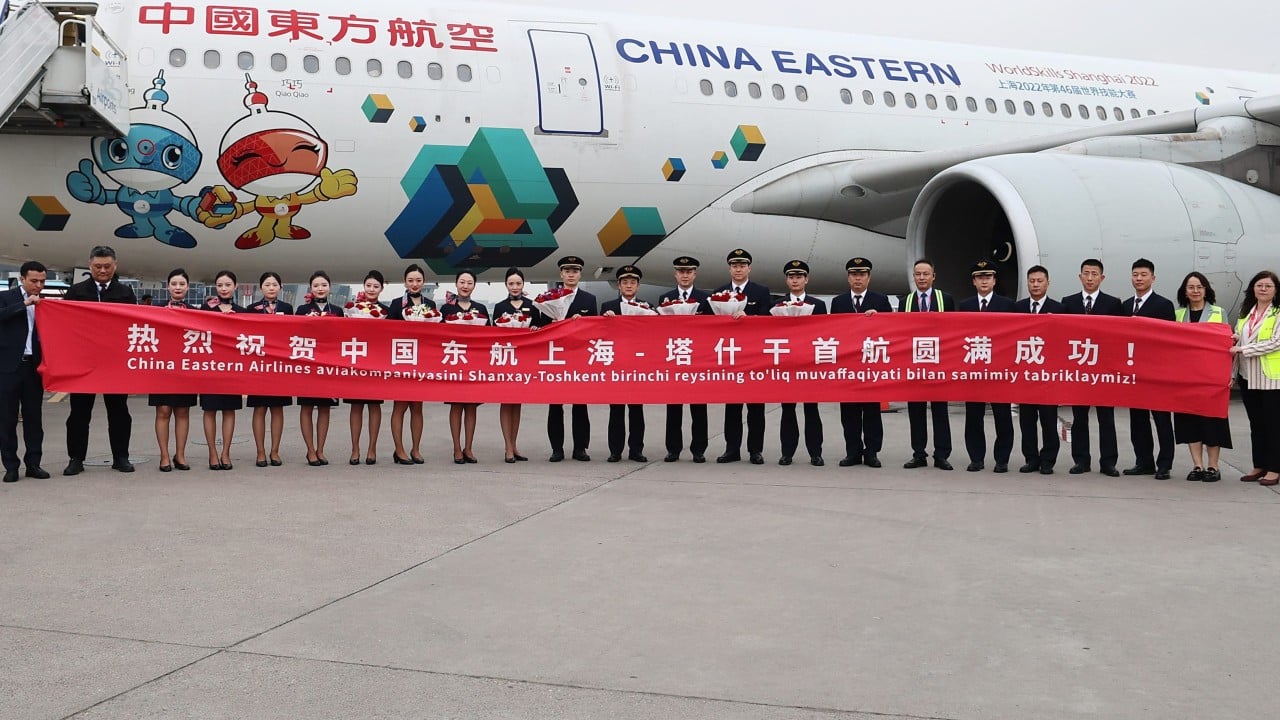
The 120% surge in flight bookings from China to Central Asia relative to 2019 levels is not a temporary spike in travel interest; it represents a fundamental realignment of the Chinese outbound tourism market. This shift is driven by a convergence of visa liberalization, expanded aviation infrastructure, and a strategic pivot in consumer preference from traditional European and North American destinations toward "Silk Road" corridors. The primary driver is the removal of friction in the travel value chain, specifically through mutual visa-exemption agreements that have transformed Kazakhstan and Uzbekistan into high-velocity transit and destination hubs.
The Frictionless Border Hypothesis
The primary mechanism behind the triple-digit growth in travel volume is the reduction of administrative barriers. In 2023 and 2024, the establishment of reciprocal visa-free regimes between China and nations like Kazakhstan and Georgia effectively lowered the "cost of entry" for Chinese travelers. When administrative friction is removed, the destination's utility increases relative to its competitors.
While traditional Western destinations remain bogged down by visa processing delays—often exceeding 60 days for Schengen or US visas—Central Asian nations offer instantaneous access. This creates a "substitution effect" where middle-class travelers, deterred by the bureaucracy of the West, reallocate their discretionary spending toward the Almaty-Samarkand-Tashkent circuit.
The Aviation Infrastructure Multiplier
Flight capacity serves as the ceiling for any international tourism recovery. The 120% growth figure is predicated on the aggressive expansion of narrow-body and wide-body routes from secondary Chinese cities (Urumqi, Xi’an, Chengdu) directly into Central Asian capitals.
The logistics of this expansion follow a specific hub-and-spoke logic:
- The Urumqi Gateway: As the closest major Chinese aviation hub to the region, Urumqi functions as a pressure-relief valve for travelers from eastern provinces.
- State-Led Connectivity: Carriers like Air Astana and China Southern have synchronized schedules to facilitate short-haul business travel and long-haul leisure transit.
- Price Parity: Due to shorter flight durations and lower fuel burn per seat-kilometer compared to transcontinental flights, the price point for a ticket to Astana is significantly lower than a ticket to London or Paris, broadening the total addressable market (TAM) to include younger, budget-conscious demographics.
The Demographic Bifurcation of Demand
We can categorize the surge into two distinct archetypes, each providing different levels of economic impact for the host countries.
The Institutional and Business Class
This segment is tied to the Belt and Road Initiative (BRI). Their travel is non-discretionary and highly correlated with infrastructure projects and energy investments. Their presence ensures a baseline occupancy for high-end hospitality sectors in Astana and Tashkent. This group views Central Asia as an extension of the domestic Chinese economic sphere.
The "New Frontier" Leisure Traveler
Disillusioned by over-tourism in Southeast Asia and rising costs in Western Europe, this group seeks "untouched" cultural authenticity. They are digitally native and heavily influenced by platforms like Xiaohongshu (Little Red Book). Their spending patterns favor boutique experiences, high-end photography services, and local artisanal goods. The surge in "Silk Road" aesthetics on social media has created a self-reinforcing feedback loop: high visibility leads to increased demand, which justifies further flight capacity increases.
Quantifying the Economic Capture
The 120% increase in bookings does not automatically translate to a 120% increase in GDP contribution for Central Asian nations. The efficiency of capital capture depends on the "leakage" of tourism revenue.
In many emerging markets, tourism spending often flows back to the source country through:
- Aviation: If Chinese carriers dominate the routes, the airfare revenue stays in China.
- Hospitality: If travelers stay in international chains or Chinese-owned hotels, the local economic multiplier is diminished.
- Digital Ecosystems: The use of Alipay and WeChat Pay, while convenient, can sometimes bypass local banking systems if not integrated properly with local merchant accounts.
To maximize the "Return on Tourism" (RoT), Central Asian governments are currently moving to localize the supply chain, encouraging the development of home-grown luxury brands and travel agencies that can cater to the specific linguistic and culinary requirements of the Chinese market.
Structural Risks and Capacity Constraints
The current growth trajectory faces three primary bottlenecks that could decelerate progress within the next 24 months.
The Hospitality Gap
While flight capacity has increased 120%, hotel room inventory in cities like Samarkand or Bishkek has not scaled at the same rate. This creates a supply-demand imbalance, leading to price inflation that may eventually price out the very "middle-class" demographic currently driving the surge.
Linguistic and Service Infrastructure
The Chinese traveler segment requires a high degree of digital integration and Mandarin-language service. Currently, the shortage of licensed Mandarin-speaking guides and the lack of Chinese-language signage in regional museums and transport hubs act as a friction point. If the "experience quality" drops below the threshold expected by high-spending travelers, the region risks becoming a "one-and-done" destination rather than a source of repeat visitors.
Geopolitical Sensitivity
The region’s popularity is partially a result of "negative selection"—travelers avoiding other regions due to geopolitical tensions. Any shift in the security landscape of Central Asia or a sudden thaw in China-West relations could see a portion of this traffic diverted back to traditional European markets.
The Cultural Proximity Paradox
Central Asia benefits from a unique "familiar-yet-exotic" positioning. The historical narrative of the Silk Road provides a shared cultural framework that makes the region feel more accessible to Chinese tourists than Africa or South America. However, the region must balance this proximity with the need to offer a distinct, high-value alternative to domestic Chinese tourism in Xinjiang. If the product offering in Kazakhstan or Kyrgyzstan is too similar to what a traveler can find in Urumqi or Kashgar, the incentive to cross the border diminishes as domestic travel remains cheaper and easier.
The Strategic Play for Regional Operators
For stakeholders in the Central Asian travel ecosystem, the objective is to transition from a "transit mindset" to a "destination mindset." This involves three specific operational shifts:
- Integrated Digital Payments: Moving beyond simple QR code acceptance toward full integration with Chinese travel platforms (Ctrip, Fliggy) for pre-booking activities and niche experiences.
- Niche Diversification: Developing products specifically for the "silver economy" (wealthy retirees) and the "MICE" (Meetings, Incentives, Conferences, and Exhibitions) sector, which offer higher margins than mass-market leisure groups.
- Regional Circuit Logic: Promoting multi-country itineraries (e.g., a "Five Stans" tour) to increase the average length of stay and total spend per visitor.
The data indicates that the 120% growth in flight bookings is a lead indicator of a broader economic integration. As Central Asia becomes more accessible, it will cease to be a "frontier" market and will instead become a core component of the global Chinese travel portfolio. The winners in this space will be those who move first to upgrade their physical and digital infrastructure to meet the rigorous expectations of the modern Chinese consumer.
Investors and policymakers should prioritize the expansion of four-star and five-star hotel inventories in secondary cities and invest in the digitisation of the transit experience. The window for "early mover advantage" is closing as major international hospitality groups begin to announce aggressive expansion plans across the region. The focus must now shift from attracting volume to managing value and ensuring that the infrastructure can sustain the weight of a permanent, large-scale influx of foreign capital.