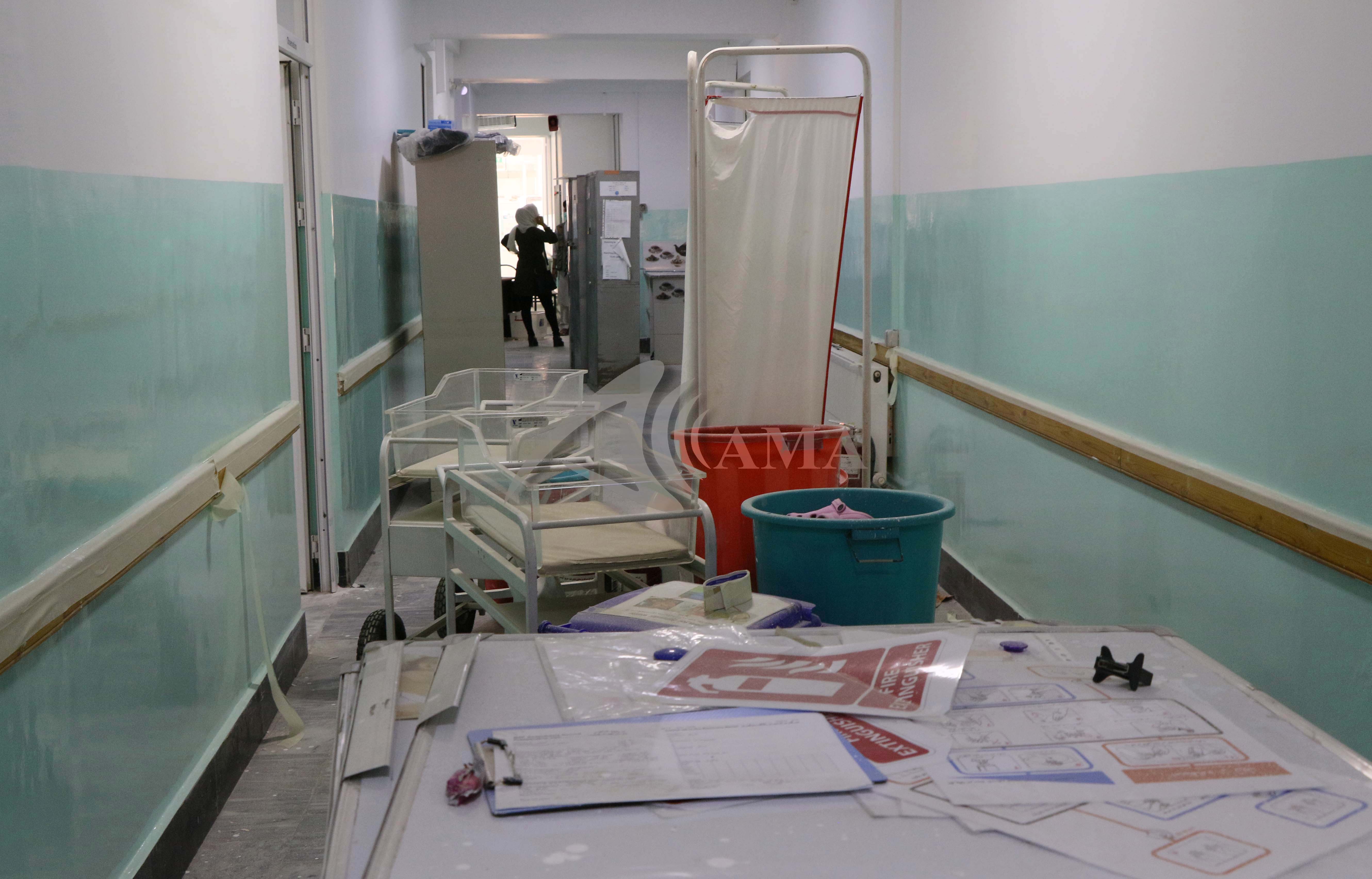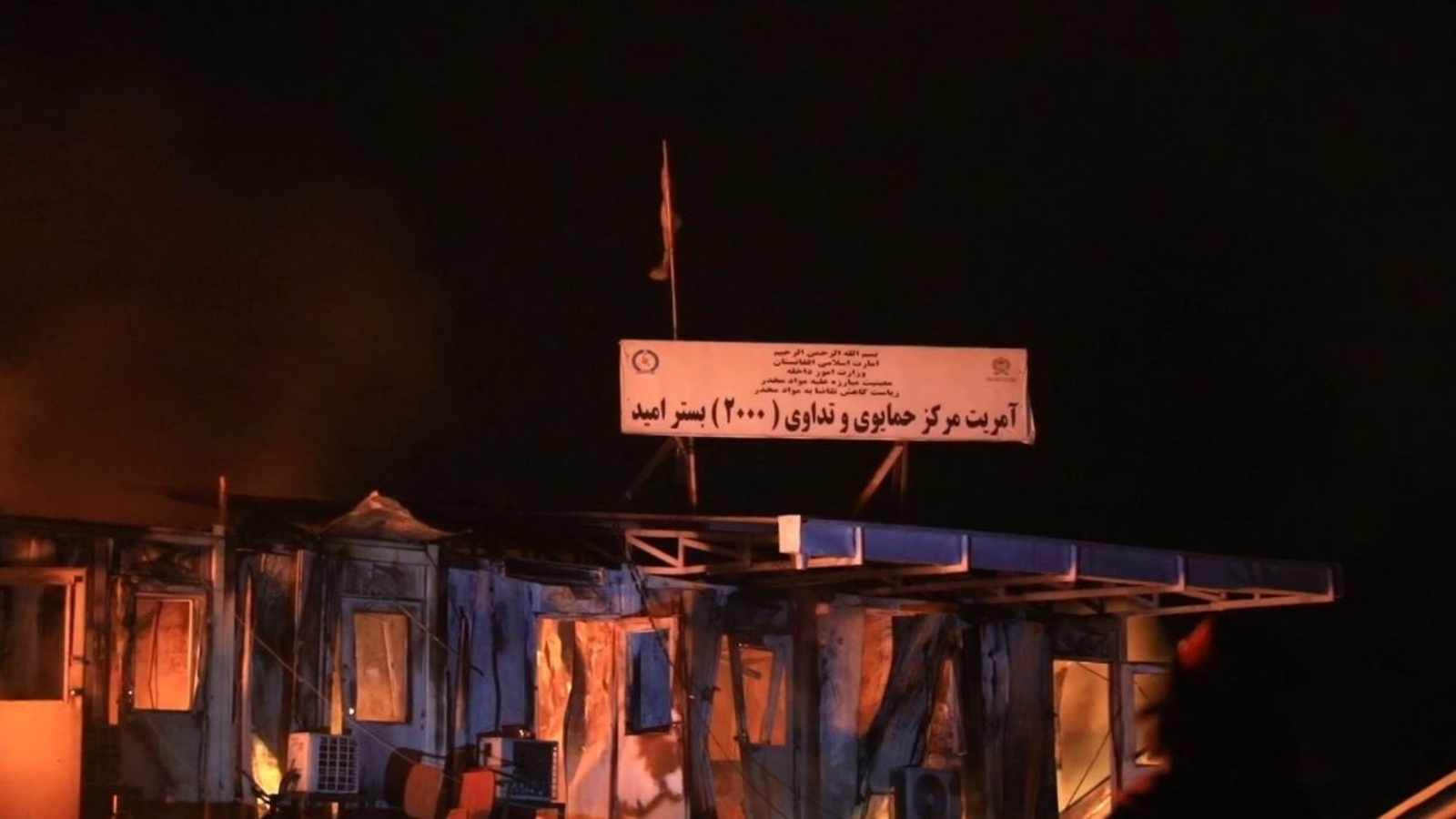
The oxygen tank didn’t explode. It hissed. In the sterile, white-tiled silence of a district hospital in the borderlands between Pakistan and Afghanistan, that hiss is usually a sound of life. It means a lung is being assisted. It means a premature infant is getting a fighting chance. But when the walls began to vibrate with the low, rhythmic thrum of approaching aircraft, the hiss of the oxygen felt like a countdown.
Dust filtered down from the ceiling. It landed on the blue plastic of the incubators. It landed on the clipboards of nurses who had worked thirty-six-hour shifts because the mountain passes were closed and no relief was coming. When the strike finally hit, it wasn’t the cinematic roar of a big-budget film. It was a dull, bone-shaking thud that turned the world gray.
Reports from the ground are often sanitized by the time they reach a screen in London or New York. We read terms like "collateral damage" or "surgical strikes." We see maps with red shaded areas indicating "zones of conflict." But a map cannot feel the grit of pulverized concrete in its teeth. A headline cannot describe the specific, haunting smell of scorched antiseptic and ionized air.
The human rights bodies are calling for a probe. They want answers. They want to know why a place of healing became a grid coordinate for a missile.
The Geography of a Grudge
The border between these two nations is not a line on a map; it is a jagged scar carved through some of the most unforgiving terrain on earth. For decades, the Durand Line has been less of a boundary and more of a suggestion. Families live on both sides. They trade. They marry. They bleed.
When tensions boil over into open aerial warfare, the people living in these valleys become characters in a tragedy they didn't write. On one side, you have a Pakistani military apparatus determined to root out what it describes as safe havens for militants. On the other, an Afghan administration that views every cross-border flight as a violation of its very soul.
In the middle? The patients.
Consider a hypothetical doctor—let’s call him Dr. Aman. He grew up in these mountains. He studied in Peshawar, could have moved to Dubai or Chicago, but chose to come back to a clinic where the electricity is as temperamental as the local politics. For Aman, the "geopolitical landscape" isn't an abstract concept discussed in a think tank. It is the physical weight of a child he has to carry out of a smoking ward because the roof is no longer structural.
When a hospital is hit, the damage isn't measured in the cost of the bricks. It is measured in the loss of the "neutral space." In war, the hospital is supposed to be the one place where the rules of the world are suspended. You leave your gun at the door. You leave your allegiance at the door. When that sanctuary is violated, the psychological floor drops out from under an entire population.
The Mechanics of the Strike
The official statements are predictable. One side claims they targeted a hideout. They insist that intelligence suggested high-level commanders were using the facility as a shield. The other side produces photos of broken beds and shattered medicine vials.
The Independent Human Rights Commission doesn’t care about the intent. They care about the result. Under international law—specifically the Geneva Conventions—hospitals enjoy a protected status that is supposed to be absolute. Even if a combatant is inside, the "proportionality" of the attack is scrutinized. You do not burn down a forest to catch a single wolf, and you certainly do not level a wing of a hospital to neutralize a ghost.
The data tells a grim story. Over the last forty-eight hours, the escalation in the border regions of Khost and Kunar has seen a sharp uptick in civilian displacement. Thousands are moving toward the interior, carrying what they can on their backs. These aren't "migrants" in the way political pundits use the word. They are parents who realized that the walls of their homes, and even the walls of their clinics, are now transparent to the eyes of a drone.
The Invisible Stakes of a Probe
Why does a "probe" matter? To the skeptical observer, it seems like a bureaucratic exercise. Paperwork filed in Geneva. A sternly worded letter sent to Islamabad or Kabul.
But for the survivors, a probe is the only thing that stands between them and a total descent into nihilism. If a hospital can be struck without an investigation, then everything is permitted. If there are no consequences for a missile hitting a maternity ward, then the very idea of "human rights" becomes a cruel joke told by people in suits to people in rags.
The investigation sought by rights groups is an attempt to re-establish a baseline of civilization. It’s a demand for a "black box" recording of the decision-making process. Who gave the order? What did the sensor operator see on their screen? Was the "H" on the roof visible? Or was it obscured by the very smoke of the conflict itself?
We often think of modern war as a high-tech, precise endeavor. We are told about "smart bombs" that can find a specific window. This creates a dangerous illusion of perfection. It leads us to believe that if a hospital was hit, it must have been a mistake—or worse, a necessity. But technology is only as "smart" as the biases of the person operating it. If the operator is told that everyone in a certain valley is an enemy, the thermal signature of a person in a hospital bed looks exactly like the thermal signature of a person in a barracks.
The Ripple Effect
When a strike happens, the immediate news cycle focuses on the death toll. Six dead. Twelve injured. Twenty missing.
The real story begins three months later.
It’s the mother who dies in childbirth because the nearest functioning clinic is now a three-day trek over a mountain pass. It’s the child whose infection turns into sepsis because the refrigerated vaccines were destroyed in the blast. It’s the elderly man who stops taking his heart medication because he is too terrified to go to any building that looks like a target.
This is the "invisible" war. It is a slow-motion catastrophe that doesn't make the live updates. The strike on the hospital isn't just an event; it is a shockwave that travels through time, killing people months after the smoke has cleared.
The tension between Pakistan and Afghanistan is currently a tinderbox. Decades of resentment, fueled by shifting alliances and the shadows of larger global powers, have led to this moment. But the rhetoric of "national security" feels hollow when it is shouted over the sound of a grieving father.
Is the security of a border worth the destruction of a sanctuary?
The answer from the ground is a resounding no. The people living in the shadow of the Hindu Kush don't care about the grand strategy of the generals. They care about whether they can sleep without the low-frequency hum of a propeller overhead. They care about whether the white coat of a doctor is still a symbol of safety or just a more visible target.
The Weight of the Silence
The "live updates" will eventually stop. The news cycle will move to a different border, a different crisis, a different tragedy. The "probe" will likely take years, its findings buried in a report that few will read in its entirety.
But the silence in that hospital corridor remains.
It is a heavy, thick silence. It is the silence of a place that was built to save lives and was instead used to end them. It is the silence of a promise broken.
The world looks at the coordinates. The survivors look at the sky.
In the end, the most terrifying thing about the strike wasn't the noise. It was the realization that, in the eyes of a missile, there is no difference between a bed and a battlefield. There is only the target. And as long as we allow "security" to justify the destruction of the places where we are most vulnerable, we are all just waiting for our coordinates to be typed into a screen.
The dust in the ward has finally settled, coating the shattered glass in a fine, gray shroud.