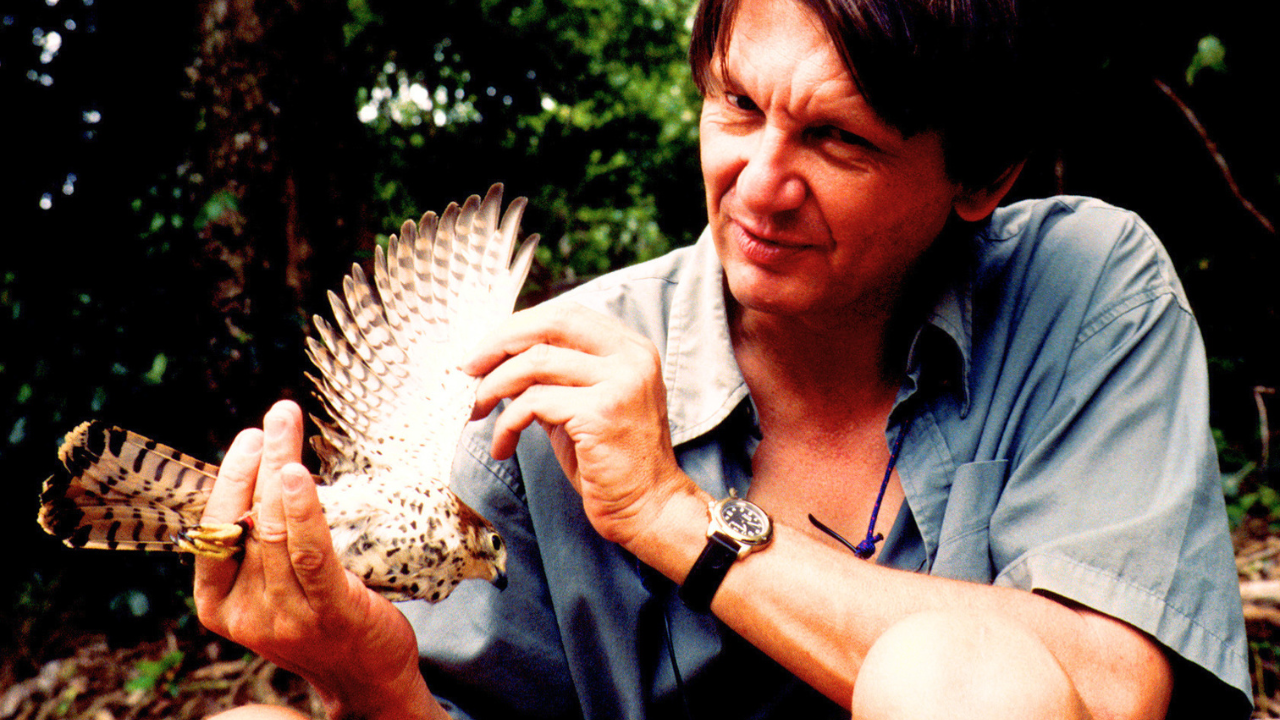
In 1974, the Mauritius kestrel (Falco punctatus) was the rarest bird on Earth. Only four wild individuals remained alive in the rugged gorges of southwestern Mauritius, including a single breeding female. Major conservation organizations wrote the species off as functionally extinct and advised pulling funding to focus on birds with better odds. Instead, a Welsh biologist named Carl Jones ignored the consensus, stayed on the island, and used aggressive captive-breeding and veterinary techniques to rebuild the population to roughly 600 birds within two decades.
That survival story has become a foundational case study in modern conservation, though the real mechanics behind it rarely make the headlines. Most accounts frame the recovery as a romantic tale of patience and grit. In reality, it was an ideological street fight over how conservation money gets spent, how aggressively humans should intervene in failing ecosystems, and whether a species crippled by a severe genetic bottleneck can ever truly stand on its own.
The Math of Giving Up
To understand why the conservation establishment wanted to abandon the Mauritius kestrel in the 1970s, you have to look at the cold logic of conservation triage. At the time, global wildlife organizations operated with tight budgets and strict orthodoxies. The prevailing wisdom held that habitat preservation was the only legitimate way to save a species. Captive breeding was viewed with deep suspicion—seen as an artificial, expensive distraction that produced genetically compromised animals unfit for the wild.
The numbers in Mauritius looked terminal. By 1974, decades of deforestation for sugar cane plantations and widespread DDT spraying for malaria control had devastated the island's native ecosystems. Introduced predators—crab-eating macaques, black rats, Indian mongooses, and feral cats—raided tree cavities and devoured eggs and chicks. With four wild birds left, institutional advisors argued that pouring scarce resources into a lost cause would starve other, more viable projects of funding.
Carl Jones arrived in Mauritius in 1979 on behalf of the Durrell Wildlife Conservation Trust (then the Jersey Wildlife Preservation Trust). His mandate was essentially to turn out the lights. If the remaining birds died on his watch, he was to shut down the aviaries and go home.
Jones refused. He recognized that the standard hands-off orthodoxy failed to account for the speed at which island ecosystems collapse. You cannot wait fifty years for a native forest to regenerate when the last breeding female on the planet has a life expectancy of less than a decade. If the bird was going to survive, someone had to manually override its reproductive limits.
Hacking Avian Biology
The breakthrough did not come from waiting for nature to take its course. It came from treating wildlife recovery like an intensive agricultural and veterinary operation.
Jones and his team borrowed heavily from falconry and poultry science, applying techniques that many academic biologists considered unorthodox or overly invasive. The core strategy relied on a biological quirk common to many raptors known as double-clutching (or multiple-clutching).
In the wild, a female Mauritius kestrel typically lays a single clutch of three to four eggs per breeding season. If those eggs are destroyed by a storm or eaten by a monkey, she will often lay a replacement clutch. Jones realized he could exploit this reflex systematically.
The Mechanics of Accelerated Recovery
Egg Pulling and Artificial Incubation
Teams scaled sheer basalt cliffs to locate wild nests, removing the first clutch of eggs shortly after they were laid. Those eggs were transported in portable incubators back to the breeding facility at Black River. The wild pair, registering the loss, would promptly lay a second clutch—and sometimes even a third.Hand-Rearing and Puppet Feeding
In the lab, chicks hatched under tightly controlled temperature and humidity conditions. To prevent imprinting—where young birds bond with humans instead of their own species and fail to mate later in life—technicians fed the chicks using specialized hand puppets modeled after adult kestrels.Hack Boxes and Soft Releases
Once fledged, young birds were not simply tossed into the forest. They were placed in hack boxes—elevated, predator-proof wooden enclosures mounted in suitable habitats. Keepers fed the birds through hidden chutes until they learned the geography of the canopy, eventually opening the doors so the kestrels could explore while still returning for supplemental food until they mastered hunting native geckos.Supplemental Feeding in the Wild
Even after establishment, wild pairs received supplementary dead mice placed on feeding platforms near their territories. Well-fed females laid larger clutches, survived tropical cyclones at higher rates, and raised more chicks to independence.
This was not passive preservation. It was biological engineering at the population level. Between 1984 and 1994, the team released 333 captive-bred and wild-harvested kestrels back into the forests of Mauritius. By the mid-1990s, the wild population had surged past 400 individuals, eventually stabilizing between 400 and 600 birds across three distinct subpopulations.
The Genetic Bottleneck Problem
Every conservation victory carries a bill, and for the Mauritius kestrel, that bill arrived in the form of inbreeding depression and lost genetic diversity.
When an entire species passes through a bottleneck of just four individuals—and effectively a single maternal lineage—the genetic consequences are severe. Every living Mauritius kestrel today is extraordinarily closely related. In genetic terms, the modern population exhibits some of the lowest levels of heterozygosity ever recorded in a wild bird species.
Critics of intensive captive breeding warned about this exact scenario from the beginning. In theory, a genetically uniform population lacks the raw evolutionary material needed to adapt to new diseases, shifts in climate, or emerging environmental pressures. Studies on the recovered kestrel population have confirmed measurable impacts from this narrow gene pool, including lower hatching success rates and reduced fertility compared to outbred continental raptors.
Yet the Mauritius kestrel also shattered a major assumption in conservation genetics. Textbooks predicted that a bottleneck that extreme would trigger an extinction vortex—a downward spiral of lethal recessive mutations that would wipe out the population regardless of human help. That did not happen.
Why did the birds survive their own DNA? Island species often carry a lower genetic load of harmful recessive mutations than mainland species. Over millennia of living on small landmasses with naturally fluctuating populations, evolutionary pressure purges the worst genetic defects from island lineages. The Mauritius kestrel was bruised by its bottleneck, not broken by it. Having a genetically impoverished bird flying over the Bambous Mountains proved infinitely preferable to having a genetically pure museum specimen sitting in a drawer.
The Ecological Trap in Modern Mauritius
Reaching 600 birds downgraded the Mauritius kestrel from Critically Endangered to Endangered on the IUCN Red List, a milestone hailed globally as proof that extinction is not inevitable. Yet walking through the bird's territory today reveals a fragile reality. The species is safe from immediate disappearance, but it is far from self-sustaining.
Mauritius has lost more than 95 percent of its original native forest. The remaining fragments are heavily degraded by invasive alien plants like Chinese guava (Psidium cattleianum) and traveller's palm. These invasive thickets grow so densely beneath the forest canopy that kestrels cannot see or dive through them to catch their primary prey, the native day geckos (Phelsuma species).
Ongoing Threats to the Recovered Population
- Predator Persistence: Invasive rats, mongooses, and feral cats still saturate the island. Without continuous trapping and poisoning grids around prime nesting territories, reproductive success drops sharply.
- Habitat Fragmentation: The three main subpopulations—in the Black River Gorges, the Bambous Mountains, and the Moka Range—are separated by expanses of agricultural land and urban development, limiting natural gene flow between groups.
- Climate Volatility: Mauritius sits squarely in the path of Indian Ocean tropical cyclones. Severe storms strip foliage, destroy cavity trees, and wipe out prey populations overnight, requiring emergency supplemental feeding to prevent mass starvation.
- Monoculture Vulnerability: Large portions of the Bambous Mountains population rely on exotic tree plantations and degraded edge habitats rather than intact native forest, leaving them exposed to land-use changes and forestry operations.
Because the underlying ecosystem remains broken, the Mauritius kestrel requires permanent management. Conservationists still maintain hundreds of artificial nest boxes because invasive plants and cyclones have eliminated most natural tree cavities. If active predator control and nest monitoring stopped tomorrow, the population would almost certainly begin sliding backward within a decade.
How One Bird Rewrote the Conservation Playbook
The real legacy of Carl Jones and the Mauritius kestrel is not just the survival of a single raptor. It is the destruction of the passive conservation model on oceanic islands.
Before Mauritius, saving a critically endangered species meant drawing a line on a map, declaring a nature reserve, and hoping the wildlife inside would recover on its own. Jones demonstrated that on degraded islands overrun by invasive species, a fence does nothing. Saving the native fauna requires aggressive, hands-on intervention—manipulating reproduction, controlling predators at landscape scale, and rebuilding ecological functions piece by piece.
The Mauritian Wildlife Foundation, which grew directly out of Jones's early field teams, applied these exact protocols to other island species teetering on the edge. The pink pigeon (Nesoenas mayeri), reduced to around 10 wild birds in the 1980s, climbed past 400. The echo parakeet (Alexandrinus eques), down to fewer than 20 individuals and once labeled the rarest parrot in the world, rebounded to over 750. Even extinct ecological roles were restored by introducing Aldabra giant tortoises to graze invasive weeds and disperse native seeds in place of Mauritius's long-extinct native tortoises.
These methods are now standard practice from New Zealand to Hawaii and the Galapagos. Whenever biologists pull eggs from a California condor nest or hand-rear a kakapo chick in a remote field station, they are running the playbook written in the gorges of Mauritius.
Conservation is no longer about preserving an untouched wilderness that ceased to exist centuries ago. It is about active, relentless stewardship of damaged ecosystems—and refusing to accept extinction just because the math looks bad.