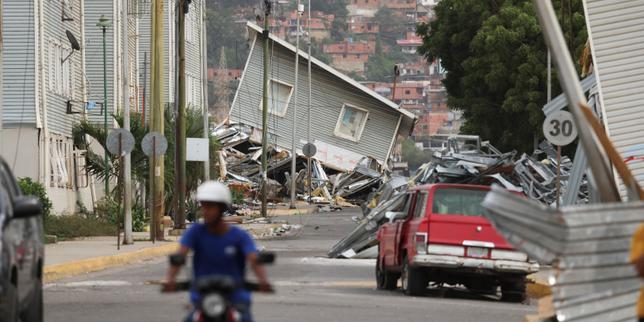
Mainstream disaster reporting follows a predictable, lazy script. A tragedy strikes, the death toll climbs—in this case, reaching a devastating 3,685 souls in Venezuela—and the media immediately scrambles for a narrative of "normalization." The ultimate symbol of this superficial recovery? The imminent reopening of Caracas’s Maiquetía International Airport.
It sounds like progress. It feels like a triumph of human resilience. It is actually a catastrophic misallocation of resources driven by political theater rather than sound crisis management.
For decades, international emergency response data has shown that rushing to restore high-profile, centralized infrastructure hubs while the surrounding urban ecosystem remains fractured is a recipe for secondary disasters. I have spent years analyzing supply chain failures in high-stress zones, and the pattern is always the same. Politicians want a ribbon-cutting ceremony to signal stability to international markets and nervous citizens. But a functioning runway means nothing if the arteries connected to it are bleeding out.
The Bottleneck Illusion: Why More Cargo Won't Save Caracas
The immediate defense for opening the airport is simple: we need it for humanitarian aid. It is a flawed premise that ignores the cold reality of logistics.
When a major earthquake hits a densely populated region like Caracas, the primary bottleneck is almost never the point of entry. It is the last-mile distribution. Right now, the roads cutting through the mountainous terrain surrounding Maiquetía are compromised by landslides and structural cracking. The bridges are unvetted. The local fuel supply is heavily depleted.
If you open the airport today, you do not solve a logistical crisis; you merely relocate it.
Imagine a scenario where dozens of cargo planes from international donors land in a 48-hour window. The tarmac floods with pallets of medical supplies, water purification kits, and temporary shelters. But there are no trucks to move them because the vehicles are trapped behind rubble. There is no warehouse space because the airport structures haven't been cleared by structural engineers. The aid sits on the asphalt, degrading under the tropical sun, while neighborhoods just twenty miles away go without basic necessities.
We saw this exact failure state during the 2010 Haiti earthquake response. Toussaint Louverture International Airport became so choked with incoming flights and unmanaged cargo that it actually paralyzed the broader rescue effort, forcing planes to circle until they ran out of fuel or divert to neighboring countries.
Opening Caracas's airport right now is not a humanitarian victory. It is an operational hazard.
The True Cost of Political Symbolism
Let's address the question that standard news outlets refuse to ask: Who actually benefits from a premature reopening?
It isn't the victims in the barrios. It is a government desperate to project an image of control and a business class eager to resume international capital flight. An operational airport allows a state to claim that the worst is over, effectively shifting the global media spotlight away from the ongoing, grueling reality of search, rescue, and long-term recovery.
- Resource Diversion: Securing an international airport requires an immense deployment of military personnel, engineers, heavy machinery, and electrical power. Every generator used to light a runway is a generator stripped from a field hospital or a water pumping station.
- Structural Blind Spots: Fast-tracking safety inspections to meet a politically motivated reopening date risks catastrophic structural failure later. A runway can look pristine from a drone flyover while the subterranean soil stability has been completely hollowed out by seismic liquefaction.
- The Valuation Gap: Reopening signals to international markets that commerce can resume, which artificially stabilizes economic metrics while the local population is still barter-trading for antibiotics.
True operational expertise dictates that you rebuild from the inside out, not the outside in. You stabilize the core—water, localized medical triage, and clearing primary domestic transit corridors—before you attempt to reconnect the country to the global grid.
The Uncomfortable Truth About the Death Toll
The media fixates on the number: 3,685 dead. It is a horrific figure, but it is also a lagging indicator. The fixation on the immediate casualty count obscures the much larger, rolling death toll that occurs in the three weeks following a seismic event due to institutional incompetence.
People ask: "How can we prevent the death toll from rising further?"
The conventional answer is always "more international aid." The correct answer is "smarter domestic isolation."
When an infrastructure network is shattered, the influx of foreign personnel often does more harm than good. They require housing, clean water, security, and translation services—consuming the very resources that should be going to locals. By forcing the reopening of international transit, Venezuela is inviting a logistical invasion that its broken internal systems cannot support.
The hard truth is that the priority should be sealing the perimeter, empowering local civil defense authorities who actually understand the terrain, and utilizing maritime ports—which offer far more scalable and slow-rolling cargo capacity—rather than relying on the high-velocity chaos of an international airport.
Shift the Strategy Immediately
If we want to stop managing disasters for the cameras, the playbook has to change today.
First, suspend all commercial and non-essential military flights into Caracas indefinitely. The airport should be utilized strictly as a restricted, slow-tempo staging ground for heavy heavy-lift helicopters, not commercial jets or massive cargo carriers. Helicopters can bypass the shattered road networks and deliver targeted aid directly to the communities that need it, avoiding the central bottleneck entirely.
Second, reallocate every single engineer and security asset currently stationed at Maiquetía to the stabilization of the regional power grid and water treatment facilities. A city without water will devolve into civil unrest within 72 hours, regardless of whether a commercial flight can land from Miami or Madrid.
Stop looking at the sky for salvation. Look at the ground beneath your feet. Reopening the airport isn't a sign that Venezuela is recovering; it is proof that we have learned absolutely nothing from history.


