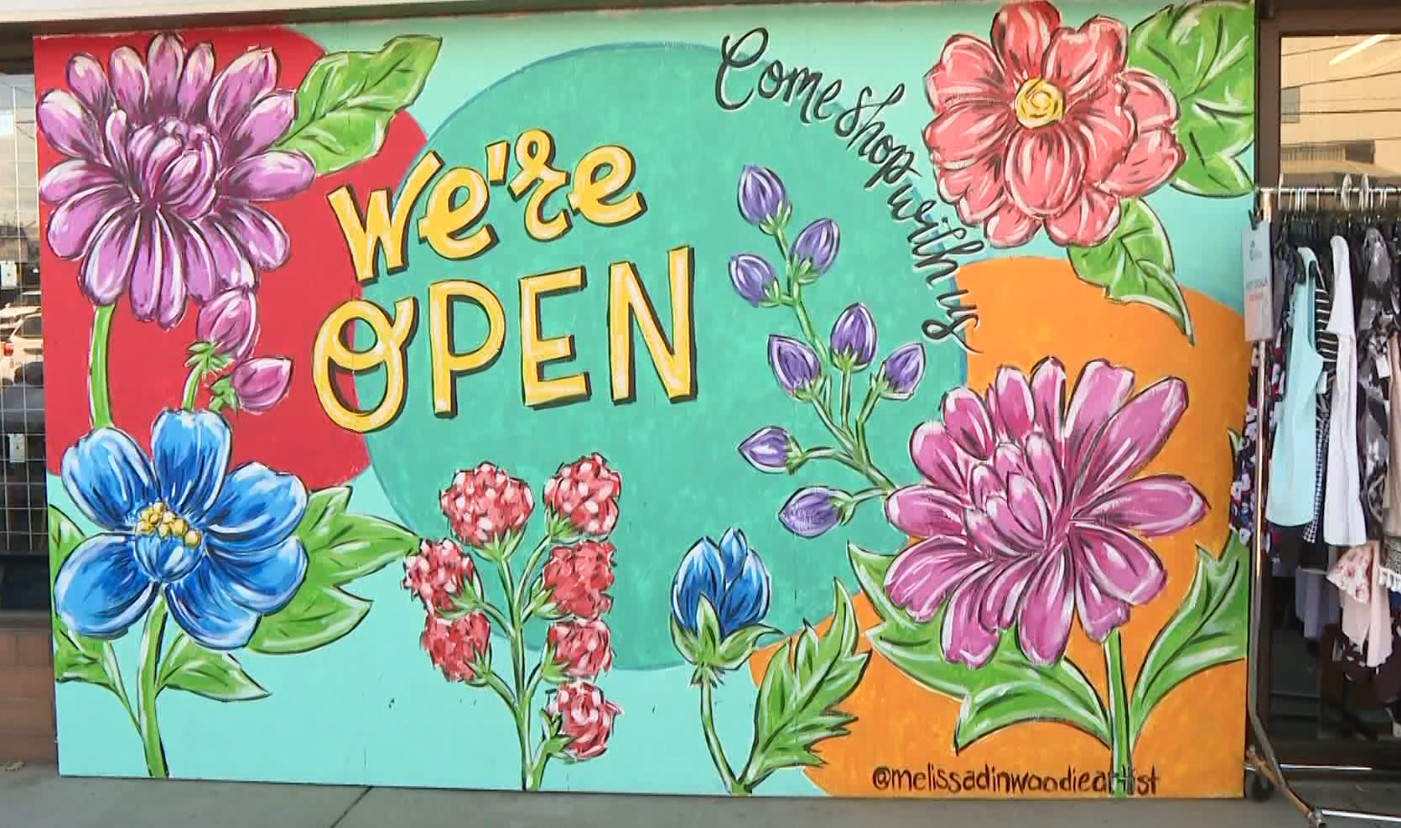
The sound of shattering glass at three o’clock in the morning has a distinct, sickening weight. It is the sound of a boundary dissolving. For a small business owner, that noise is not just property damage; it is a violent interruption to a livelihood built brick by individual brick.
When a vehicle careened off the asphalt and smashed directly into the storefront of a local business in Kelowna, British Columbia, the immediate aftermath followed a predictable, depressing script. Plywood went up. The splintered wood, raw and ugly, stood as a temporary scar on the streetscape. Normally, these boards remain for weeks or months, a gray testament to bureaucracy, insurance delays, and the slow grind of repairs. They scream to every passerby that something is broken here.
But boundaries can be redrawn.
The Anatomy of an Eyesore
Walk down any commercial avenue after a break-in or an accident. The plywood barricade is a universal symbol of urban pause. It repels foot traffic. It signals vulnerability. To the person who pours their life, savings, and sleepless nights into running a shop, that blank wooden expanse feels like a defeat. It tells the community to keep walking.
Consider the psychological toll of a boarded-up window. It triggers a subtle, subconscious shift in how people perceive a neighborhood. Economists talk about the broken windows theory—the idea that visible signs of decay invite more decay. When a storefront stays shattered or hidden behind industrial hoarding, foot traffic drops. Neighbors look away. The vibrancy of a block dims just a fraction.
The team in Kelowna looked at the raw plywood blocking their light and saw something else. They saw a canvas.
They chose not to wait for the insurance adjusters to dictate the emotional atmosphere of their street. Instead of letting the damage define their corner, they decided to change the conversation entirely. They reached out to local artists, grabbed brushes, and turned a symbol of destruction into a vibrant, living gallery.
From Impact to Canvas
The transition from a car crash to a community art project requires a specific kind of alchemy. It demands that you reject the role of the victim.
Imagine standing on the sidewalk the morning after. The smell of burnt rubber and spilled fluids still hangs in the air. The glass has been swept into blue plastic bins. You are looking at a massive financial headache. Most people would call contractors, file reports, and sit in the dark waiting for the drywall to be replaced.
The turning point happens when someone suggests doing something ridiculous. Like buying bright acrylic paint.
By transforming the hoarding into a mural, the business bypassed the standard waiting period of corporate recovery. They invited the neighborhood to watch the transformation happen in real time. Passersby who would have normally hurried past the crash site stopped to look. They talked to the artists. They took photos. The narrative shifted from "Look at this terrible accident" to "Look at what we are making."
This is not about toxic positivity or pretending a crisis is actually a blessing. A crashed car is expensive, dangerous, and stressful. Rather, it is about agency. You cannot control the driver who loses control of their vehicle, but you absolutely control how your square footage reacts to the impact.
The Invisible Network of a Street
A business does not exist in a vacuum. It is anchored to the sidewalk, connected by invisible threads to the coffee shop next door, the pharmacy across the street, and the residents who walk their dogs past the windows every evening. When one link in that chain is damaged, the entire ecosystem feels the vibration.
When the community saw colors spreading across the plywood, something remarkable happened. The art became a magnet. People came to support the shop specifically because they refused to let the boarded-up windows signal an ending. The local arts scene stepped in, volunteering time and vision to ensure the design reflected the spirit of Kelowna—resilient, bright, and deeply connected to the landscape.
Art has a strange utility. We often treat it as a luxury, something to be hung in quiet galleries with polished floors and hushed voices. But its truest, oldest function is survival. It is a way to mark territory, to say we are still here when the environment becomes hostile.
The True Cost of Waiting
The standard corporate response to a crisis is containment. Minimize risk. Keep it quiet. Wait for the official channels to clear the wreckage. But silence is expensive for a local shop. Every day spent behind plain plywood is a day spent fading into the background of the consumers' minds.
The Kelowna mural proved that speed and vulnerability beat perfection every time. The artwork was raw. It was born out of an emergency. Yet, it held more power than a million-dollar marketing campaign because it was true. It was a direct response to a real event that happened on that exact corner.
Think about the contrast. On one hand, a gray, dead space that reminds everyone of danger and disruption. On the other, a burst of community-driven color that turns a sidewalk into a destination. The choice seems obvious in hindsight, but it requires immense courage to make that call when you are still dealing with the shock of an impact.
The plywood will eventually come down. The glass will be replaced by professionals, and the walls will be painted back to their original, uniform color. The physical scar of the crash will disappear. But the memory of the color will remain. The neighborhood will remember that when a hole was ripped into the streetscape, the people inside didn't close the blinds. They painted the hoarding.
The next time you walk past a boarded-up window, don't just see the wood. See the space where a story is waiting to be rewritten.


