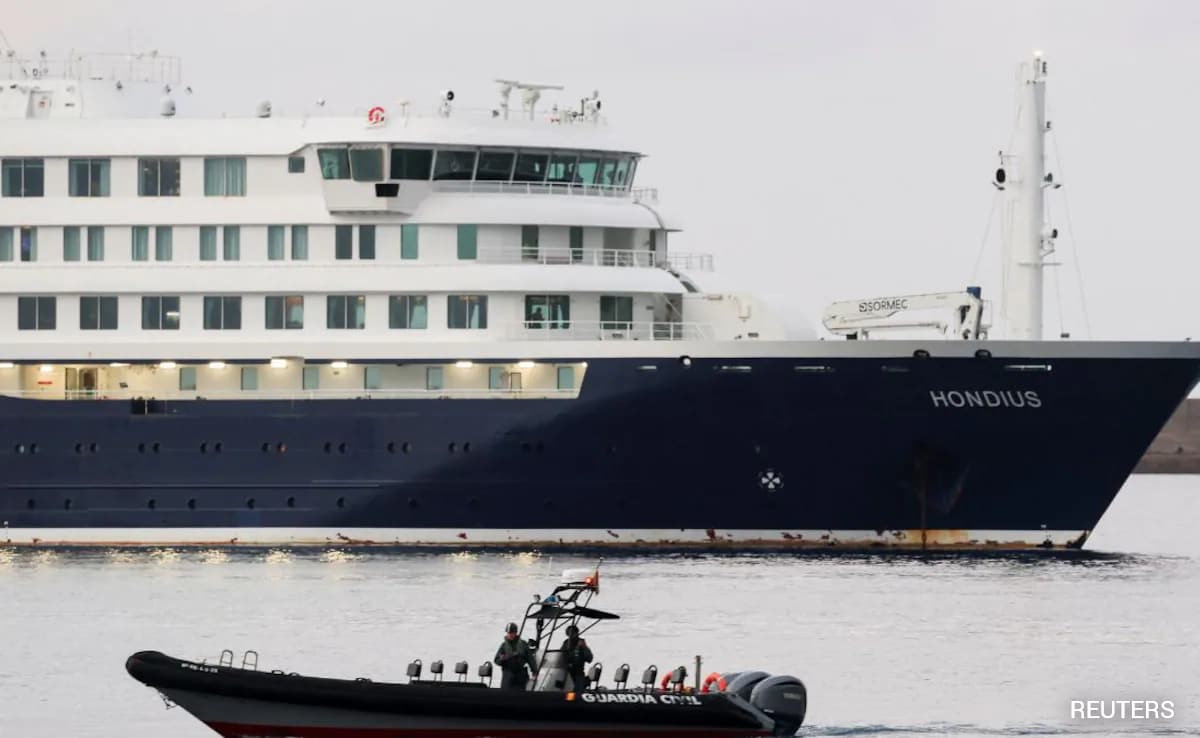
The arrival of a cruise vessel at Santa Cruz de Tenerife under the shadow of a Hantavirus outbreak is not merely a localized maritime incident. It is a loud alarm for an industry that has spent years trying to scrub the "floating petri dish" image from its marketing materials. While the immediate focus remains on the medical evacuation of infected passengers and the quarantine of those remaining on board, the deeper investigation reveals a systemic failure in how international health regulations intersect with the practicalities of massive, isolated human ecosystems at sea.
Hantavirus is generally associated with rural land environments, specifically through contact with the urine, droppings, or saliva of infected rodents. Seeing it manifest on a high-end passenger ship in the Atlantic suggests a breakdown in the very first line of defense: basic pest control and supply chain integrity. Meanwhile, you can explore other developments here: Geopolitical Convergence in the Palk Strait Analyzing the Dissanayake Vijay Axis.
The Breach in the Hull
Port authorities in Spain’s Canary Islands confirmed the ship was redirected after multiple individuals displayed the severe respiratory distress and fever characteristic of the virus. This specific pathogen does not spread person-to-person like a common cold or the norovirus that frequently plagues the industry. Because Hantavirus requires a direct link to rodent vectors, its presence on a modern cruise liner points to a significant breach in the vessel's sanitary perimeter.
Most people assume these ships are sealed environments. They are not. Every time a ship docks, thousands of pounds of fresh produce, dry goods, and luggage are hauled into the hold. Somewhere between the warehouse and the galley, the vector found a way in. This incident exposes the reality that even the most expensive luxury suites are only as safe as the least-inspected crate of tomatoes in the cargo bay. To understand the bigger picture, check out the recent analysis by TIME.
The logistics of cruise travel involve a global web of suppliers. If a grain shipment in a departure port was infested, the cooling systems of a ship could inadvertently circulate aerosolized particles of the virus throughout the lower decks. This isn't a failure of the medical staff on board; it is a failure of the industrial logistics that underpin the entire vacation experience.
Why Hantavirus Changes the Equation
Public health officials are rightfully concerned because Hantavirus is not a standard "stomach bug." In its most severe form, Hantavirus Pulmonary Syndrome (HPS), the mortality rate can hover around 38%. This is a different tier of risk than the typical viral outbreaks reported in travel news.
The logistical nightmare for the Spanish authorities in Tenerife is twofold. First, they must provide advanced respiratory support for those in critical condition. Second, they have to oversee a decontamination process that is far more rigorous than a simple bleach-down of the handrails. Hantavirus is hardy. It survives in dust and can remain infectious for days in the right conditions.
The Problem with Maritime Quarantine
Standard maritime law requires the "free pratique" to be suspended when a dangerous pathogen is detected. However, keeping three thousand people on a ship where the source of infection might be the air ventilation or the food storage is a gamble.
- Risk of Secondary Infection: While humans don't usually pass it to each other, the source remains active until every rodent and every dropping is neutralized.
- Medical Resource Strain: A ship's infirmary is designed for broken bones and minor ailments, not a dozen cases of acute pulmonary failure.
- Legal Liability: The jurisdictional dance between the ship’s flag state, the corporate owners, and the Spanish government creates a vacuum where quick decisions are often replaced by bureaucratic posturing.
The Canary Islands as a Medical Frontline
Choosing Tenerife as the landing point was a tactical necessity. The port has the infrastructure to handle large-scale vessels, and the local healthcare system is accustomed to dealing with tropical and imported diseases due to its geography. Yet, the local population is understandably on edge.
The investigative reality is that the cruise industry has lobbied for years to self-regulate much of its health and safety protocols. This incident in Spain proves that self-regulation has blind spots. When a ship enters a port with a Level 4 pathogen, the burden shifts entirely to the host nation’s taxpayers and medical professionals. The cost of a few missed inspections at a loading dock in a different country is now being paid by the Canary Islands' emergency wards.
Beyond the Scrub Down
To prevent a recurrence, the industry needs to move beyond the theater of hand sanitizer stations. The real work happens in the dark. It happens in the massive dry-storage areas and the trash-compaction rooms where rodents are most likely to nest.
Current protocols often rely on visual inspections and "cleanliness certificates" that are often rubber-stamped. We need a shift toward environmental DNA testing in cargo holds and advanced filtration systems that can trap viral particles before they enter the guest cabins.
The situation in Tenerife is a warning that the sea provides no protection against the biological realities of the land. If the industry continues to prioritize rapid turnaround times over the grueling, unglamorous work of deep-tier pest and pathogen exclusion, these "isolated" incidents will become a permanent fixture of the travel landscape.
The passengers currently looking out their cabin windows at the Spanish coastline aren't just victims of a rare virus. They are the collateral damage of a global supply chain that moved too fast and looked the other way. The immediate priority is saving lives in the Tenerife ICU, but the long-term task is a brutal audit of how these vessels are provisioned in the first place. Every crate, every pallet, and every port of call represents a gap in the armor. Until those gaps are treated with the same seriousness as a hole in the hull, the risk remains.