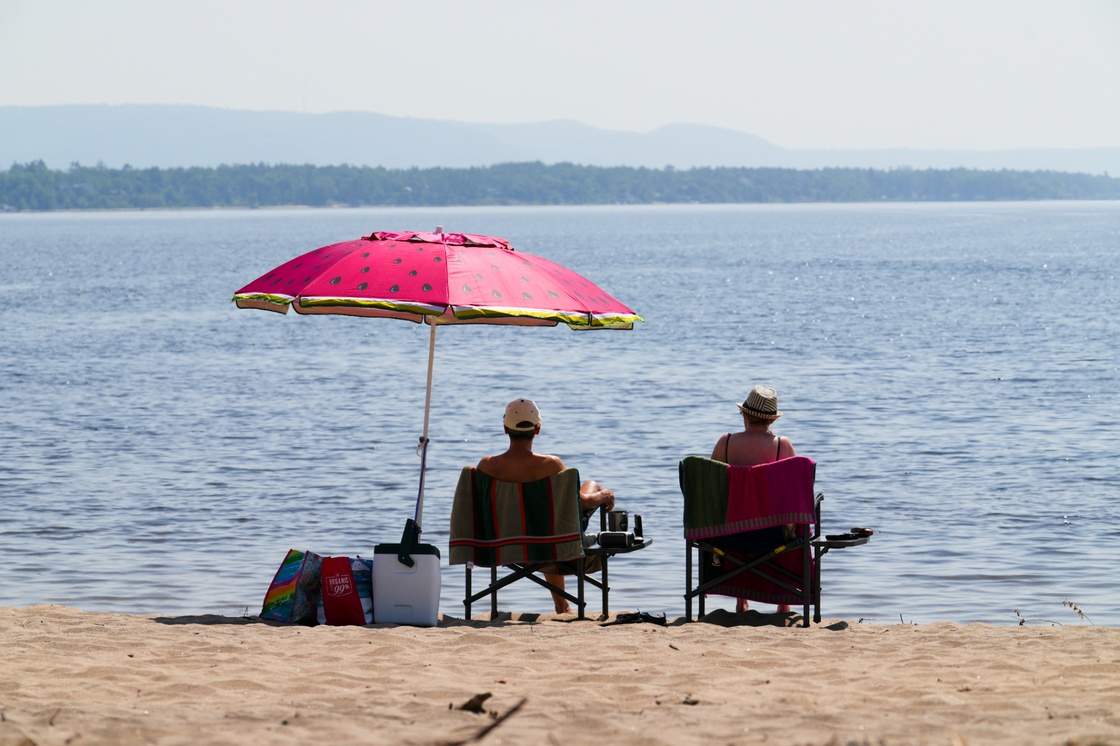
Every summer, the same predictable script plays out. Environment Canada flashes red alerts across your phone screen. News anchors adopt their most grave, hushed tones. Public health officials repeat the same tired script: drink water, stay indoors, check on your neighbors.
It is a masterclass in bureaucratic hand-wringing. It is also actively making us less safe. Recently making news lately: The Strait of Hormuz Cost Function Decoding the United States Toll Reversal.
We have treated a predictable, seasonal meteorological event like an unexpected alien invasion. By framing standard summer heat as an ambient monster we must hide from, we ignore the structural rot that actually makes high temperatures dangerous. The official response to Canadian heat waves is a systemic failure of imagination, architecture, and basic physics.
We do not have a heat crisis. We have an infrastructure crisis masquerading as a weather report. Further details regarding the matter are covered by Al Jazeera.
The Psychological Failure of Alert Inflation
Environment Canada has a metric problem. By issuing "extreme heat warnings" for temperatures that are standard for July in most of the mid-latitude world, they have triggered a massive case of alarm fatigue.
When you tell a resident of Southern Ontario or the Okanagan Valley that 31 degrees Celsius is an "extreme emergency" worthy of a push notification, you dilute the psychological capital of public alerts. Human beings are wired to habituate to repeated, low-consequence warnings.
If every hot Tuesday is a crisis, then no Tuesday is a crisis.
When a genuinely historic thermal anomaly arrives—like the 2021 Pacific Northwest heat dome—the public treats the warnings as just another bureaucratic notification to swipe away. During my years analyzing municipal risk communication, I watched this exact pattern play out. If you scream "fire" every time someone lights a match, people will eventually ignore the smoke when the house is actually burning.
The threshold for a warning must be pegged to actual physiological danger, not to statistical deviations from a 30-year cool-climate average.
The Thermodynamic Ignorance of Our Building Codes
The true villain of a Canadian heat wave is not the sun. It is the concrete-and-glass greenhouse you call an apartment.
Canadian building codes were historically designed with a single goal: keep the cold out. We optimized our entire built environment for insulation and solar heat gain. We mandated massive double-glazed windows facing south to capture weak winter light. We wrapped our buildings in thick layers of synthetic envelope material.
Now, those same buildings act as highly efficient thermal traps.
In a typical modern Canadian condo tower, the cooling load is astronomical. These structures are designed as passive solar ovens. When outdoor temperatures hit 30 degrees, the interior of a glass-walled unit without active air conditioning can easily soar past 40 degrees due to the greenhouse effect.
The advice to "stay indoors" is lethal if your indoor environment is a heat incubator.
We refuse to mandate passive cooling standards. In Europe, architects use external solar shading, dynamic louvers, and thermal mass to keep heat out of buildings before it ever penetrates the glass. In Canada, we build cheap, unshaded glass boxes and tell people to buy a portable air conditioner. It is lazy engineering, and it is costing lives.
The Grid Collapse We Are Actively Scheduling
The standard response to a heat warning is a massive, uncoordinated surge in electrical demand. Every single person runs to their thermostat and cranks the AC.
This is a dangerous, fragile strategy.
Our electrical grids are built on assumptions of peak load that are rapidly becoming obsolete. When millions of inefficient compressor units kick on simultaneously, the grid undergoes severe thermal stress. Transformers overheat. Transmission lines sag.
If we experience a multi-day heat event paired with a high-voltage transformer failure, we face a cascading blackout.
Imagine a metropolitan area like Toronto or Vancouver losing power for 48 hours during a 35-degree heat wave. High-rise buildings lose water pressure because the electric pumps stop working. Elevators freeze, trapping vulnerable seniors on the 28th floor of a concrete oven. The very mechanical systems we rely on to survive the heat become our prison.
By telling people that mechanical cooling is the only solution, we are centralizing our vulnerability. We are betting our lives on the uninterrupted flow of electrons through a strained, aging grid.
The Wet-Bulb Truth We Refuse to Measure
Public health departments love to talk about the Humidex. It is a uniquely Canadian metric designed to describe how hot the air feels to a typical human.
The Humidex is a useless metric for actual survival.
We need to talk about Wet-Bulb Globe Temperature (WBGT). This is the gold standard used by military organizations and industrial hygienists worldwide. Unlike simple temperature or relative humidity metrics, WBGT accounts for wind speed, solar radiation angle, and cloud cover.
A person working construction in direct sunlight at 30 degrees Celsius faces a vastly higher physiological load than someone standing in the shade at 34 degrees. Yet our public warnings treat entire geographic zones with a single, blunt brushstroke.
We are sending outdoor laborers into hazardous conditions because regional policy is based on ambient air temperature measured in the shade at a nearby airport, rather than the microclimatic reality of a concrete-and-asphalt job site. Conversely, we are shutting down productive economic activity in areas where the wind and shade make outdoor work perfectly safe.
We need localized, real-time WBGT tracking, not generic, province-wide panic broadcasts.
Dismantling the People Also Ask Premise
Let us tackle the standard questions that flood search engines during every warm spell, and correct the fundamental misunderstandings behind them.
What is the safest temperature to set your AC during a heat wave?
The standard advice from utility companies is 25.5 degrees Celsius (78 degrees Fahrenheit). This is often mocked by a sweaty public. But the utilities are right, for the wrong reasons.
Setting your AC to 18 degrees does not cool your house down any faster; it merely forces the compressor to run continuously for hours, increasing the probability of mechanical failure and grid overload. The goal of cooling during an extreme event is not to mimic a refrigerator; it is to maintain a safe margin of thermal safety (around 24 to 26 degrees) while minimizing grid strain.
Why do heat waves cause more deaths than other weather events?
Because heat is an invisible killer that attacks the cardiovascular system, not just the skin. When the body cannot shed heat through sweat evaporation, the heart must pump drastically faster to push blood to the skin's surface.
Most heat-related deaths are registered as heart attacks or kidney failure. It is a quiet, indoor tragedy. We do not see flipped cars or shattered trees, so we treat it as a secondary threat.
Does drinking cold water actually cool you down?
Barely. The thermodynamic capacity of a glass of ice water is tiny compared to the total heat mass of a human body.
If you want to cool down rapidly, you must focus on conduction and evaporation at the key vascular points of your body. Submerging your hands and forearms in cold water is vastly more effective than drinking it. The high concentration of blood vessels in your extremities acts as a highly efficient heat exchanger.
The Unconventional Survival Playbook
If you want to actually survive high-temperature events without relying on a fragile power grid or useless government advice, you must change your personal tactics.
- Evaporative Micro-Cooling: Do not try to cool your entire home. Cool your immediate micro-environment. A damp t-shirt paired with a simple USB-powered fan (which can run for days off a portable power bank) provides more effective cooling than an air conditioner set to a moderate temperature in a drafty room.
- Active Thermal Management: Close your windows the moment the outdoor temperature exceeds the indoor temperature. Keep them closed until the outdoor air drops below the indoor temperature at night. Opening windows during the hottest part of the day because "you want a breeze" is simply importing hot air into your thermal mass.
- Vascular Off-Ramps: If you are overheating, do not put ice packs on your forehead. Put them on your neck, under your armpits, or submerge your feet in cold water. You need to cool the moving blood volume, not just the surface skin of your face.
- Ditch the Glass: If you are hunting for a new home, treat floor-to-ceiling glass as a structural hazard. Prioritize properties with deep window recesses, external shutters, and cross-ventilation capabilities.
Stop waiting for Environment Canada to save you with a push notification. The weather is not going to get any cooler, and our infrastructure is not going to get fixed overnight. Stop panicking about the thermometer, accept the physical reality of your environment, and adapt your tactics accordingly.

