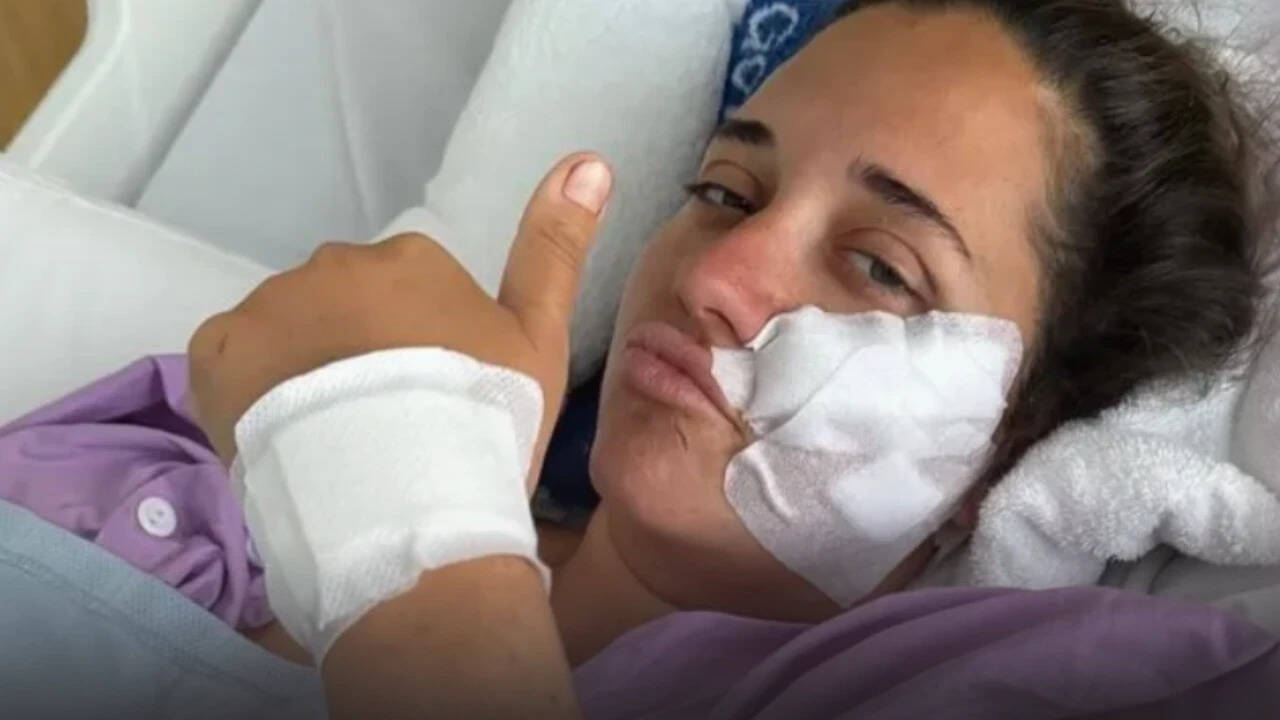
Ten.
Count them out loud in a quiet room, tapping a single finger against a wooden desk until the rhythm feels mechanical, relentless, and utterly detached from the warmth of human skin. One, two, three, four, five, six, seven, eight, nine, ten. Each tap is a fraction of a second, yet for a Brazilian Uber driver working the late shift in Australia, those ten strikes split an entire life cleanly in half, leaving everything she had built on one side of the blade and an unfamiliar, immobilized body on the other. Also making news lately: Three Men in a Room and the Ghost of 1945.
Before the night of the attack, her life followed a script familiar to hundreds of thousands of international students across Sydney, Melbourne, and Brisbane. You arrive with a suitcase full of winter coats you aren't sure you'll need, a student visa stamped with strict work-hour limits, and a quiet, stubborn determination to build a future brick by brick. You attend lectures by day, memorizing English idioms and business frameworks, and by night you turn on a rideshare app, trading sleep for the steady, glowing trickle of fares that pay for groceries, textbooks, and rent in a shared apartment. It is an exhausting, unglamorous bargain, yet it runs on an unspoken promise: if you follow the rules, work hard, and stay out of trouble, the country will give you a fair shot.
Nobody writes a clause in a student visa brochure for what happens when a passenger pulls a knife in the backseat of your car. Further details on this are detailed by The New York Times.
When the blade came down ten times, it didn't just pierce muscle and sever nerves; it severed her spinal cord, leaving her quadriplegic in an Australian hospital bed while the clock on her temporary immigration status kept ticking silently on a government server miles away. While she was learning how to breathe through the shock, how to communicate without the use of her hands, and how to comprehend a body that no longer answered the brain's simplest commands, her student visa expired. Suddenly, the woman who had survived a brutal, unprovoked attack on Australian soil found herself facing a second, quieter crisis: the terrifying possibility of being deported back to Brazil, away from the specialized medical team keeping her alive and the community that had rallied around her bedside.
The Bureaucracy of a Broken Body
To understand why a paralyzed crime victim has to beg a wealthy nation simply to remain in its hospital system, you have to look at how immigration law treats human beings when their circumstances break the mold. Immigration systems are built like rigid assembly lines. Every applicant is sorted into a neat, predefined box—student, skilled worker, tourist, spouse—and each box comes with strict conditions attached. A student visa requires you to remain enrolled in an approved course, maintain satisfactory attendance, and prove you have the financial means to support yourself without relying on public welfare.
Think of a temporary visa like a tightrope stretched between two skyscrapers. As long as you keep moving forward, balancing your tuition payments with your allowable work hours, the wire holds your weight. There is no safety net woven into the policy for catastrophic violence. The moment a criminal act leaves you quadriplegic in an intensive care unit, you obviously cannot sit in a lecture hall, you cannot pass your exams, and you certainly cannot drive an Uber to pay the next semester's tuition fees. In the eyes of an automated visa database, however, the system doesn't register tragedy; it only registers non-compliance and an expiration date.
Consider what happens next when a hospital discharge planner and an immigration lawyer sit down at the foot of that bed.
In Australia, international students are required to hold Overseas Student Health Cover, a private insurance policy designed for routine doctor visits, broken bones from weekend sports, or sudden appendicitis. It is not built to fund decades of round-the-clock quadriplegic care, specialized respiratory support, electric wheelchairs, and home modifications. Once a student visa lapses and a patient is shifted onto a bridging visa while awaiting ministerial intervention, access to Medicare—Australia's universal public healthcare system—becomes a labyrinth of exemptions, delays, and bureaucratic uncertainty. Every day spent waiting for a signature from the Department of Home Affairs carries a staggering financial and medical weight, turning a medical recovery into a high-stakes legal battle for basic survival.
Why Going Home Isn't an Option
From the outside, a casual observer reading a headline might ask a seemingly logical question: Why doesn't she want to go home to Brazil to be with her family?
That question exposes a profound misunderstanding of both severe spinal cord trauma and the realities of transnational migration. Moving a newly diagnosed quadriplegic patient across the Pacific Ocean isn't as simple as booking a business-class ticket and arranging an ambulance at the arrival gate. High-level spinal cord injuries disrupt the body's most fundamental automatic systems, including blood pressure regulation, body temperature control, and respiratory strength. A multi-leg, twenty-four-hour international flight carries real, life-threatening risks of autonomic dysreflexia, deep vein thrombosis, and respiratory failure—complications that require specialized aeromedical transport costing tens of thousands of dollars that a student rideshare driver simply does not have.
Even if she survived the flight, what awaits her on the other side?
In Brazil, public rehabilitation centers for severe spinal cord injuries face chronic underfunding, long waiting lists, and stark regional disparities in long-term care. Leaving Australia would mean severing ties with the exact neurosurgeons, spinal specialists, and physical therapists who pieced her body back together in the critical hours after the stabbing and who understand the precise architecture of her injury. More than that, it would mean stripping away her autonomy. Over the years she spent studying and driving in Australia, she built a life, an identity, and a support network of friends and advocates who know her not as a tragic statistic, but as a resilient woman who refused to give up. Being deported back to her birth country against her will wouldn't feel like a homecoming; it would feel like exile after surviving an execution.
The Invisible Labor of the Night Shift
There is an uncomfortable truth sitting beneath this story that most cities prefer not to examine too closely. Modern urban life in Australia—and across the developed world—runs smoothly because of an invisible workforce of temporary migrants.
When you step out of a restaurant in Sydney at midnight, tap a button on your phone, and watch a clean sedan pull up to the curb within three minutes, there is a high probability the person behind the wheel is an international student or a temporary graduate visa holder. They pay full international tuition fees that subsidize university budgets. They pay taxes on every dollar they earn. They absorb the late-night shifts, the drunk passengers, the isolation, and the physical risks of the gig economy so that locals can get home safely after a night out.
I have spent enough time talking with gig drivers and watching how precarious their safety nets truly are to know how thin the margin between stability and ruin really is. A driver sits alone in a metal box, separated from strangers by nothing more than the back of a headrest, trusting that the digital rating system on an app is enough to keep violence at bay. Yet when that trust is shattered by a knife, the legal structure surrounding gig work and temporary visas suddenly reveals how disposable these workers are treated once they can no longer turn the ignition key. While state-based victims of crime compensation schemes exist in Australia to offer modest financial support and counseling to people injured in violent assaults, those lump sums are a drop in the ocean compared to the lifetime cost of quadriplegia, and they carry zero authority to grant permanent residency.
The Human Cost of Waiting for Mercy
Picture a hospital room at three in the morning.
The fluorescent lights in the corridor are dimmed, casting long shadows across the linoleum floor, while inside the room, the rhythmic hum of medical monitors marks the slow passage of time. For someone living with quadriplegia, night is when the mind has nowhere left to hide. You cannot roll over to relieve an ache in your shoulder. You cannot reach out to pick up a glass of water on the bedside table. You cannot wipe away a tear rolling down your cheek without calling a nurse to do it for you. Every single physical interaction with the world must be negotiated through another person's hands.
Now layer onto that total physical vulnerability the constant, gnawing dread of immigration limbo.
Every morning brings the fear that an envelope or an email will arrive declaring that her compassionate plea has been denied, that her temporary stay has reached its legal limit, and that arrangements are being made to remove her from the country. Stress isn't merely an emotional burden for a spinal cord patient; it actively sabotages physical rehabilitation. Learning to adapt to paralysis requires immense neurological focus, daily physical therapy, and psychological resilience. You cannot fully commit to rebuilding a life in a wheelchair when you don't even know which hemisphere you will be living in six months from now.
When the Law Must Bend to Decency
Australia's Migration Act grants the Minister for Immigration specific, discretionary powers—often referred to as ministerial intervention—precisely for extraordinary cases where the rigid application of visa rules produces an outcome that violates basic human decency. These powers exist because lawmakers recognized long ago that no statute book can anticipate every twist of human fate. A young woman who came to the country legally, worked hard, contributed to her community, and was permanently paralyzed by a violent crime committed within Australia's borders is the exact definition of an extraordinary case.
Granting her permanent residency and full access to the National Disability Insurance Scheme isn't an act of reckless generosity; it is a moral obligation. A nation that welcomes international students, collects their tuition dollars, and benefits from their late-night labor cannot simply wash its hands of them the moment they become victims of violent crime on its streets. Compassion in immigration policy isn't a loophole to be feared—it is the measure of a country's character when nobody is forcing its hand.
She entered that car on the night of the attack with two working hands, two working legs, and a student visa that promised a future she was willing to work tirelessly to earn. Ten knife strikes took away her ability to walk, took away her ability to hold a pen, and took away the life she knew, leaving her in a hospital bed asking the country she called home for one simple thing: the right to stay alive where she fell.


