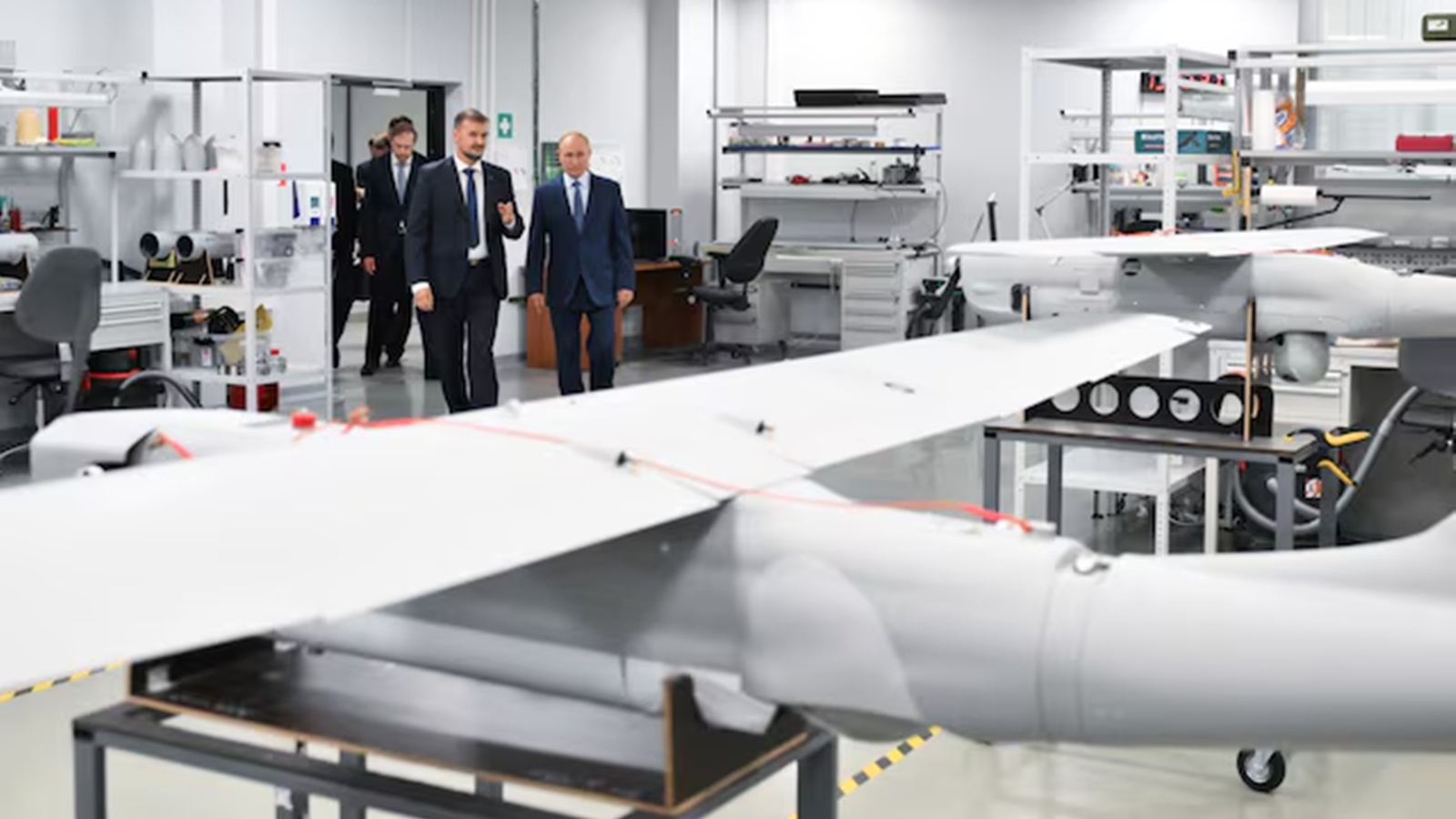
Lazy headlines love a single villain. Slap the word "slaves" onto a story about North Korean workers inside a Russian drone plant and watch the clicks roll in. Moral outrage is cheap. Analytical clarity is hard.
When analysts, activists, and commentators frame North Korean labor in Russian defense manufacturing purely as chattel slavery, they get the moral horror half-right and the strategic reality completely backward. Calling it slavery creates a tidy emotional box. It also blinds policymakers and supply-chain leaders to how modern wartime labor coercion actually works—and why that distinction matters if you care about sanctions enforcement, industrial output, or geopolitical risk.
I have spent years watching companies and governments misread dark supply chains because they reached for the most sensational label instead of the most accurate mechanism. I have seen compliance teams blow millions chasing phantom "slave plantations" while missing the financial conduits, state-backed contracting shells, and wage-skimming structures sitting right in plain sight. Outrage feels decisive. Precision actually stops things.
Why "Slavery" Is the Wrong Lens for Wartime Labor
Words have definitions. When commentators casually equate North Korean overseas workers with chattel slaves, they flatten distinct legal, economic, and coercive systems into one melodrama.
True chattel slavery treats human beings as transferable property bought and sold outright in open or clandestine markets. What happens with North Korean workers sent abroad—whether to timber camps, construction sites, shipyards, or defense-adjacent assembly lines—operates through state-monopolized labor export, wage withholding, surveillance, passport confiscation, and familial leverage back home. The state or a state-linked intermediary captures the lion's share of the worker's earnings, restricts movement, and enforces compliance through political and economic pressure on the worker and their relatives.
That system is coercive, exploitative, and abusive. Pretending it is identical to buying and selling human chattel on an auction block is sloppy thinking.
Sloppiness carries a price. If a legal or compliance framework defines a violation narrowly around chattel ownership or physical chains, bad actors route around the definition. If a policy briefing treats workers as passive, non-economic props rather than people trapped inside a rigid state-extraction machine, it misses how labor shortages in wartime Russia are actually being solved.
To understand what is happening inside a Russian drone facility employing North Korean labor, you have to look at two colliding pressures:
- Russia's acute industrial bottleneck: Wartime drone production demands rapid scaling, repetitive assembly, component integration, and round-the-clock shifts at a moment when Russia's domestic working-age population is strained by military mobilization, emigration, and competition from high-paying contract military roles.
- Pyongyang's hard-currency desperation: North Korea has long used dispatched workers as a pressure-relief valve and foreign-exchange extraction mechanism, channeling overseas labor into sectors that generate state revenue or political leverage with key partners.
When those two pressures meet, you do not get a cartoon dungeon. You get a grim, bureaucratic, tightly controlled industrial arrangement built to move hardware fast while keeping labor costs and political friction contained.
The Lazy Consensus Around Drone Factories
The conventional story goes like this: Russia cannot build enough drones, North Korea ships over desperate workers who are treated like slaves, and therefore the whole operation is a crude, makeshift desperation play.
That narrative is comforting for critics of Moscow and Pyongyang. It is also analytically lazy.
Modern drone warfare is not won solely by exotic prototypes or boutique engineering labs. It is won by throughput—airframes, motors, wiring harnesses, flight controllers, optics, batteries, and ground-control gear rolling off lines consistently enough to absorb attrition. Even relatively simple reconnaissance or one-way attack drones require disciplined sub-assembly, quality checks, kitting, and logistics.
Dismissing a factory because its workforce faces severe coercion confuses ethical depravity with industrial incompetence. History shows the opposite again and again. Coerced or heavily restricted labor forces can still produce high volumes of standardized goods when paired with clear division of labor, strict supervision, and predictable material inputs.
Think about the mechanics of a high-volume assembly line. A worker does not need freedom of contract to solder a connector, seat a board, wrap a harness, or pack a crate. They need clear work instructions, parts on the line, quota enforcement, and compliance mechanisms. Coercion supplies compliance; industrial engineering supplies throughput.
Analysts who assume "coerced workers = broken factory" underestimate how adaptable wartime manufacturing can be when a state treats industrial output as a survival priority.
Imagine a Different Bottleneck
Imagine a scenario where a drone plant manager has plenty of floor space and plenty of workers, yet output stalls every week. The problem is not whipping workers harder. The problem is missing microcontrollers, inconsistent battery cells, voltage drift in cheap motors, or a bottleneck in final calibration.
In that scenario, adding more tightly controlled labor does not magically fix a parts shortage or a quality-control failure. Yet headlines fixate on the human-rights angle—rightly shocking to readers—while ignoring whether the bottleneck is labor, components, tooling, or testing.
That is the blind spot in most commentary on this topic. People ask, "How cruel is the treatment?" and treat the answer as an explanation of industrial capability. Those are two separate questions. Cruelty tells you about the regime and the workplace environment. Supply-chain and engineering analysis tells you how many drones actually fly.
What "People Also Ask" Gets Backward
Public curiosity around stories like this clusters around predictable questions. Most of them start from a flawed premise.
Are North Korean workers in Russia actually slaves?
If you use the word loosely to mean "severely exploited and unfree," people nod along. If you use it precisely to describe chattel property relations, you blur how state-directed labor dispatch works.
In North Korea's model, workers are selected, vetted, and deployed under state oversight, with heavy deductions from wages, tight controls on movement and communication, and implicit or explicit pressure tied to life back home. Calling every severe labor abuse "slavery" makes the term do too much work and obscures the specific state-to-state contracting and wage-extraction machinery behind it.
Does foreign labor solve Russia's drone shortage?
It helps at the margins of assembly and support, which is not nothing when skilled and semi-skilled hands are scarce. It does not magically erase bottlenecks in advanced electronics, precision optics, propulsion, or software.
Treating foreign labor as a silver bullet exaggerates what unskilled or semi-skilled assembly hands can do. Treating it as meaningless ignores how much time domestic workers would otherwise spend on repetitive tasks. The honest answer sits in the unglamorous middle: it eases certain labor pinch points without solving every industrial constraint.
Why would a drone factory rely on foreign workers in the first place?
Because wartime economies distort labor markets violently. When defense plants, factories, and armed forces all chase a shrinking pool of domestic workers, wages spike, turnover rises, and managers look for external labor pools that are easier to lock into shifts and housing.
A factory boss facing unfilled shifts does not care about ideological symmetry; they care about headcount, attendance, and quota completion. Foreign labor offered through a willing partner state looks like a practical fix to a staffing headache.
The Contrarian Playbook That Actually Works
If you want to understand—or disrupt—networks that combine coercive labor with wartime hardware production, moral outrage alone is a terrible instrument. Speeches do not reroute shipping manifests or untangle shell contracts.
Here is what sharp operators, investigators, and policymakers actually focus on instead:
- Follow the payment and contracting rails, not just the headlines. Coerced labor systems rely on money flows, intermediary firms, recruitment agencies, housing operators, and transit routes. Trace who signs the contracts, who collects the fees, and where the funds land.
- Separate assembly labor from critical components. A factory can recruit body-shop labor locally or regionally, but specialized electronics, sensors, and materials often cross borders through distinct procurement channels. Target the choke points where substitution is hardest.
- Audit sub-tiers, not just prime names. Sanctions and compliance programs routinely fail at tier-two and tier-three suppliers—the machine shops, wire harness makers, enclosure molders, and logistics brokers feeding the main facility.
- Use precise legal and compliance definitions. Vague labels invite loopholes and pushback. Clear documentation of forced labor indicators, wage withholding, movement restrictions, and state-backed recruitment builds cases that hold up under scrutiny.
Where This Contrarian View Can Go Wrong
Every sharp lens distorts something if you push it too far. Here is the honest downside of zooming in on mechanisms and industrial logistics: clinical detachment can slide into coldness.
When analysts talk too clinically about "throughput," "labor arbitrage," and "choke points," it is easy to forget that real human beings are having their wages skimmed, their movements policed, and their lives leveraged by states that treat them as expendable inputs. If you strip out the human reality completely, your analysis becomes sterile—and blind to morale, evasion, escape attempts, or quality slips caused by mistreatment.
The trick is holding both truths at once without flinching: see the human abuse clearly, and analyze the industrial system coldly.
Stop Asking the Comforting Question
Most commentary asks whether a story fits a familiar moral script. A better question is: what exact coercion mechanism is running here, what exact bottleneck is it relieving, and what lever actually breaks it?
Drop the lazy labels. Look at the machinery.