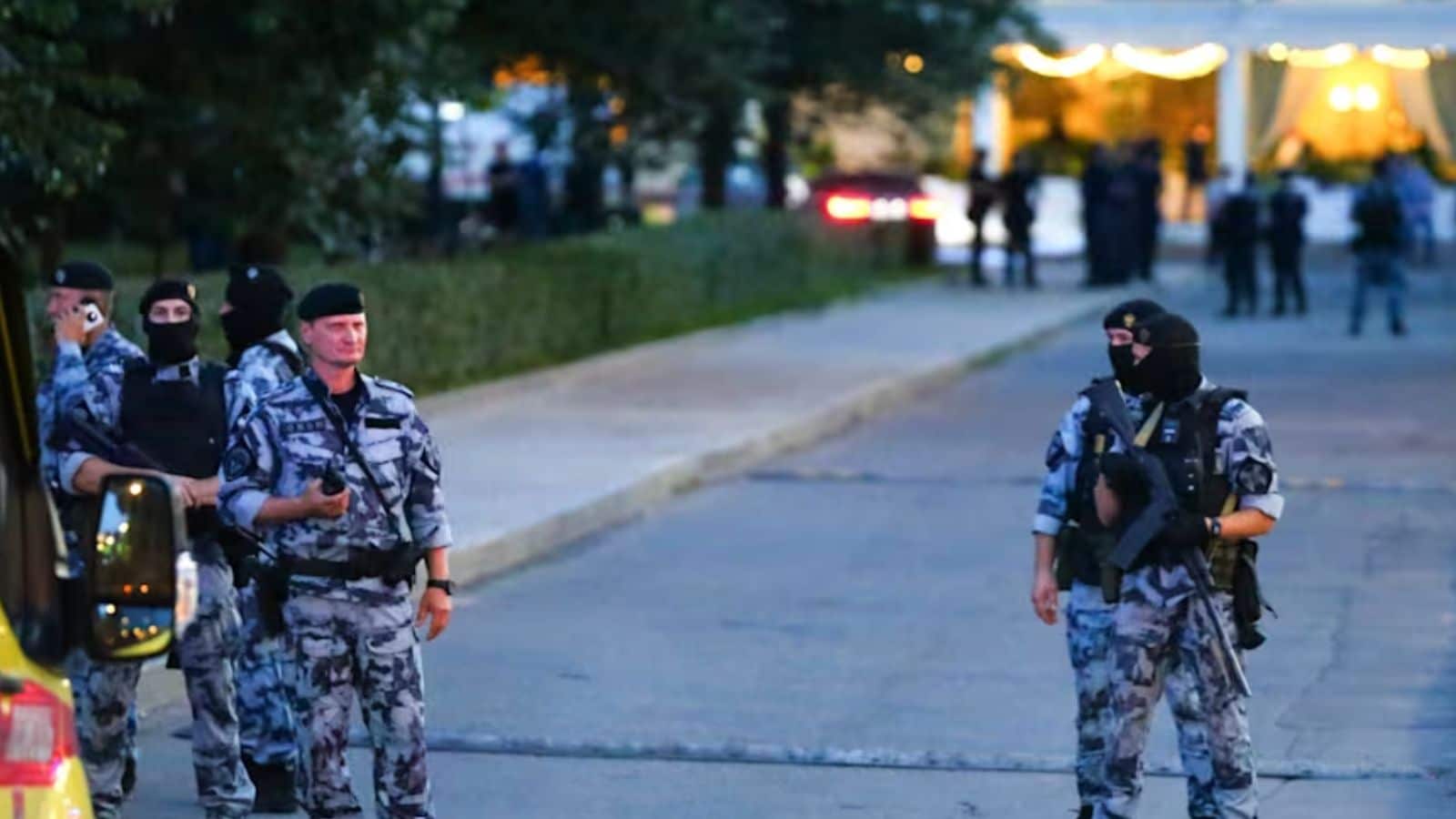
Every single time a high-explosive device detonates in a crowded urban eatery, the reflex script drops like clockwork. Politicians cluster in front of microphones, furrow their brows, and utter the mandatory label. Terrorist act.
It is the path of least resistance. Slapping the terrorism tag on a restaurant bombing does not clarify reality. It functions as a diplomatic shield, a rhetorical sedative designed to let everyone involved avoid the uncomfortable mechanics of actual geopolitical violence.
I have spent the last fifteen years tracking urban conflict zones, analyzing explosive payloads, and watching intelligence agencies butcher basic threat attribution. When a municipal mayor or a national executive immediately screams terrorism, they are rarely delivering an analytical judgment. They are managing public panic. They are closing the book before the hard investigation even begins.
Let us dismantle the lazy consensus.
The Comfort of the Terror Label
Labeling an attack terrorism requires zero intellectual heavy lifting. It implies a faceless, fanatical actor motivated purely by ideological hatred for civilian populations. It fits nicely into a pre-approved media narrative.
The reality on the ground is almost always messier, colder, and far more transactional.
When an explosive device rips through a dining establishment, security analysts should be asking structural questions rather than defaulting to emotional shorthand. Is this ideological theater designed to coerce a government, or is it a targeted liquidation wrapped in theatrical chaos? Was the venue chosen for its civilian density, or was the target sitting at table four?
By calling every restaurant blast an act of terror, we obscure the target. We pretend that random diners were the objective when they were frequently collateral damage in a localized, hyper-specific score settling.
The Economics of Modern Asymmetric Violence
Real asymmetric warfare has rules, even if those rules are brutal and illicit. Professional operatives do not waste high-grade ordnance on random crowds simply to make people scared. That is amateur hour.
When organized networks deploy improvised explosive devices in urban spaces, they operate with economic and operational constraints. Explosives cost money. Transporting precursor materials carries severe interdiction risk. Operatives risk capture. Every bombing has an ROI.
If you analyze the ledger of urban blasts over the past decade, the vast majority trace back to criminal turf wars, corporate espionage, or targeted assassinations where civilian casualties were an acceptable risk to the perpetrator, not the primary goal.
Let us look at the mechanics. Imagine a scenario where a high-value target involved in illicit state contracts or black-market logistics dines at a prominent local restaurant every Friday night at eight. An opposing faction wants that target eliminated without leaving a forensic trail that points directly back to a state security apparatus or a rival syndicate.
A localized explosive device achieves two objectives simultaneously. It terminates the target, and it scatters the forensic evidence across fifty terrified witnesses, turning a precise assassination into a chaotic crime scene that overwhelms local police departments.
Calling that terrorism misses the entire plot. It treats a surgical strike like a weather event.
Why Governments Love the Confusion
State actors have a vested interest in blurring the lines between targeted violence and indiscriminate terror.
When an incident is classified as terrorism, the state automatically expands its own powers. Surveillance budgets swell. Emergency protocols activate. Civil liberties quietly recede into the background. It turns a localized security failure into an existential crisis that demands public unity behind the current administration.
Conversely, admitting that a restaurant in the heart of a major capital was blown up because local law enforcement couldn't stop a turf war or because corruption allowed illicit explosives to cross municipal borders? That is a political death sentence.
So they choose the terror label. It shifts the blame from operational incompetence or criminal impunity to an external, untamable monster. It tells the public: This could happen anywhere, to anyone, and we are doing everything we can.
It is a lie of convenience.
The Cost of Intellectual Laziness
When journalists and analysts accept the terrorism narrative without pushing back, public policy goes off the rails.
Billions of dollars get funneled into generalized counter-terror architecture that does nothing to stop targeted assassinations, criminal supply chains, or localized corruption. Intelligence agencies spend months chasing phantom ideological cells while real-world networks continue moving contraband and explosives through predictable, porous distribution channels.
We stop looking at the ledger. We stop tracking who benefited financially or politically from the destruction of that specific venue.
Stop accepting the official press release at face value. When a restaurant blows up, do not look at the fear it generates. Look at who died, who survived, and who profited from the silence that followed.