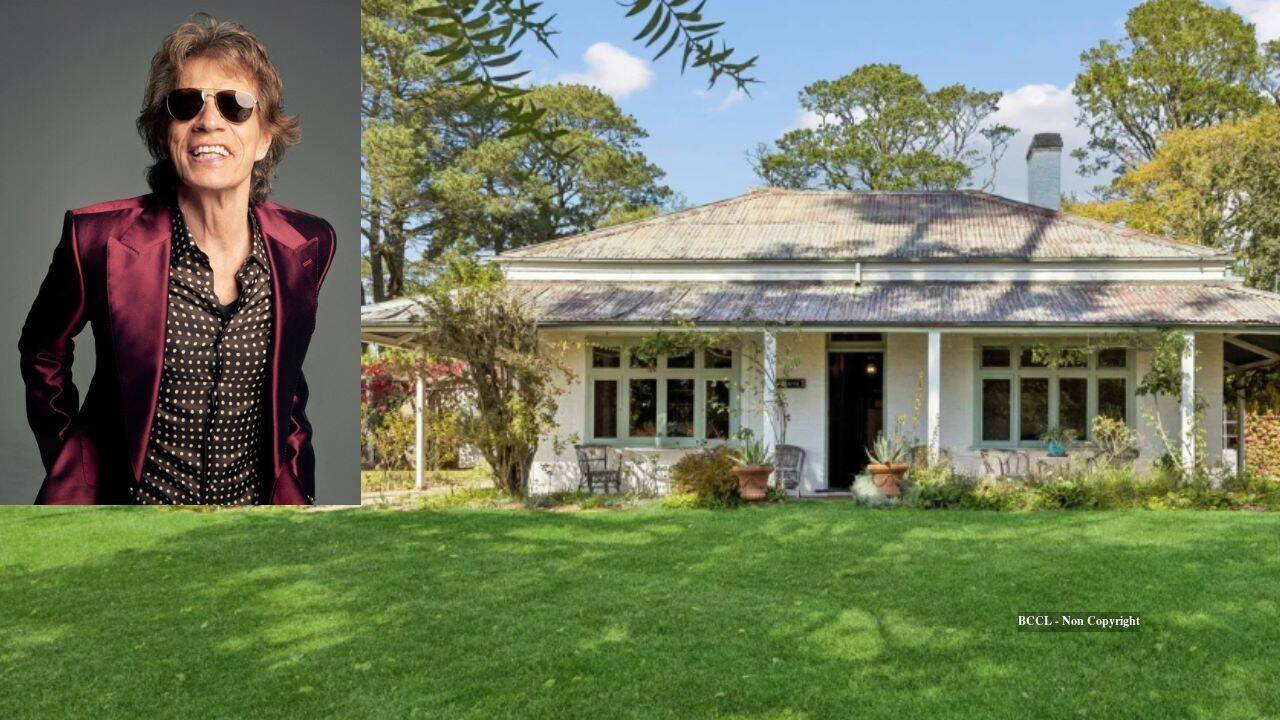
Celebrity real estate journalism runs on a predictable, syrupy formula. A famous name once slept under the roof, someone spent millions tearing out the drywall, and suddenly a rural property becomes an "unmissable piece of rock history."
The recent coverage surrounding Mick Jagger’s former Australian filming retreat hitting the market after major restoration work is a textbook example of this lazy consensus. The mainstream property press wants you to believe that combining 1970 Ned Kelly filming nostalgia with a gleaming modern renovation equals guaranteed prestige and bulletproof appreciation.
They are wrong. In high-end Australian real estate, heavily restoring a celebrity-linked heritage estate does not multiply its value—it often creates an illiquid financial albatross.
I have watched ultra-high-net-worth buyers pour eight figures into trophy rural estates across New South Wales and Victoria, only to discover that heritage prestige and modern luxury work against each other when it comes time to sell. When you strip away the glossy brochure copy and look at the actual mechanics of trophy property valuation, the "restored celebrity retreat" narrative falls apart.
The Celebrity Pedigree Illusion
Let’s dismantle the primary selling point first: the Mick Jagger connection.
During the 1969–1970 production of Tony Richardson’s Ned Kelly in regional New South Wales—specifically around Braidwood and the Southern Tablelands—Jagger stayed locally while playing the titular outlaw. Decades later, real estate marketers still trot out that single production window as if the Rolling Stones frontman spent twenty years composing Exile on Main St. in the living room.
Here is the hard truth about celebrity provenance in real estate: temporary occupancy is not cultural equity.
In luxury brokerage, valuation experts separate celebrity real estate into two distinct buckets:
- Iconic Primary Residences: Homes an icon built, owned for decades, and shaped architecturally—think Elvis Presley’s Graceland or Frank Sinatra’s Twin Palms in Palm Springs. These carry genuine collector premiums.
- Production Rentals and Brief Stopovers: Houses leased by a film studio for eight weeks while an actor shoots a box-office disappointment.
Ned Kelly (1970) was famously plagued by production disasters, injuries, and critical indifference. Jagger didn't design the house. He didn't own it for a generation. Using a brief 1970 filming stay as a valuation anchor is marketing theater designed to distract buyers from fundamental real estate math.
When a listing agent leads with a fifty-year-old celebrity anecdote, ask yourself why the land yield, architectural pedigree, or local comparable sales aren't doing the talking.
How Major Restoration Destroys Heritage Value
The second pillar of the mainstream narrative is that "major restoration work" makes the property turnkey and therefore more valuable.
Anyone who has actually managed a high-end heritage restoration in regional Australia knows the opposite is frequently true. Once you gut and modernize a historic rural retreat to meet 2026 ultra-luxury standards—importing European stone, installing commercial-grade subterranean HVAC, and overhauling structural timber—you commit a fatal valuation error: overcapitalization.
In urban trophy markets like Sydney’s Point Piper or Melbourne’s Toorak, land value makes up 70% to 85% of the asset. You can spend $10 million renovating a mansion because the dirt beneath it rises steadily enough to absorb the construction cost.
Regional New South Wales does not work like Point Piper.
In regional heritage markets, construction costs run 20% to 35% higher than metro rates due to specialized trades, freight logistics, and strict heritage conservation overlays. Yet the ceiling on local comparable sales remains stubbornly low. When a seller pours millions into a "major restoration," they are almost always trying to recoup sunk construction costs that the local market cannot support.
Even worse, aggressive modernization erases the very authenticity heritage purists pay for.
Consider the two buyers who actually shop for historic Australian country estates:
- The Heritage Purist: Wants untouched original stonework, period joinery, and authentic patina. They view a gleaming modern overhaul as a sterile suburban McMansion stuffed inside an old shell.
- The Modernist Escapist: Wants floor-to-ceiling glass, passive-house thermal efficiency, and zero maintenance headaches. They don't want a 19th-century layout with narrow hallways and strict local council restrictions on exterior changes.
By heavily restoring a historic celebrity retreat, the seller lands squarely in no-man's-land. Too modernized for the purists. Too restricted by heritage bones for the modernists.
The Hidden Operating Costs Nobody Mentions
Lifestyle articles love showing sunlit photos of manicured acreage and restored verandas. They never show the spreadsheet of annual holding costs.
Imagine a scenario where you acquire a restored regional retreat two to three hours outside Sydney or Canberra for $8 million to $12 million. Because it is a weekend retreat rather than a primary residence, it sits empty 260 days a year.
Here is what hits your ledger every single twelve-month cycle before you even pour a glass of wine on the deck:
- Specialized Estate Management: You cannot hire a casual suburban lawn service to maintain heritage gardens, acreage fencing, bushfire asset protection zones, and septic infrastructure. Full-time or dedicated caretaker retainers in regional NSW run $90,000 to $140,000 annually.
- Bushfire and Rural Insurance: Following the catastrophic Australian bushfire seasons and tighter underwriting across regional New South Wales, insuring a high-value heritage structure surrounded by native bushland has become brutal. Premiums routinely climb past $35,000 to $60,000 a year, often carrying massive deductibles and strict vegetation-clearance mandates.
- Climate Control for Vacant Heritage: Historic stone and timber structures breathe differently than modern builds. If you leave a heavily restored home unheated and unventilated through frosty Southern Tablelands winters, condensation warps custom joinery and ruins high-end finishes. Keeping smart climate systems running year-round adds thousands in regional electricity tariffs.
- Council Rates and Land Tax: New South Wales land tax thresholds and non-principal-place-of-residence surcharges punish secondary trophy holdings every single year.
You aren't buying a passive asset. You are buying an expensive, high-maintenance hospitality operation with zero paying guests.
Dismantling the "People Also Ask" Myths
When buyers research properties like Mick Jagger’s former Australian filming retreat, they usually ask the exact wrong questions. Let’s look at the standard queries dominating search engines right now—and why their underlying premises are broken.
"Do celebrity homes appreciate faster than standard luxury properties?"
No. Empirical data from luxury property indexes—including Knight Frank’s Wealth Report and academic studies on celebrity real estate premiums—consistently shows that celebrity provenance extends days on market rather than accelerating appreciation.
Famous homes attract looky-loos, journalists, and unqualified tire-kickers. Because sellers anchor their asking price to ego and media buzz rather than comparable sales per square meter, celebrity listings routinely sit unsold for 12 to 24 months before taking quiet, humiliating price cuts of 15% to 30%.
"Is a fully restored heritage home safer than buying a fixer-upper?"
Only if you plan to die in the house and never care about resale return.
Buying a recently restored trophy home means you are paying retail price—plus the previous owner’s emotional markup—for someone else’s design choices. In the ultra-prime segment, buyers with $10 million in liquid capital rarely love another owner's exact kitchen cabinetry, tile selection, or floorplan flow. You end up paying a massive premium for a "turnkey" renovation, only to spend another $1.5 million ripping out finishes you dislike.
"Can regional celebrity retreats pay for themselves on the ultra-luxury rental market?"
Rarely, and the math usually collapses under scrutiny.
Pundits love suggesting you can list a celebrity-linked retreat on ultra-luxury short-stay platforms for $2,500 to $4,000 a night. What they leave out is regional seasonality, high-end guest wear-and-tear, commercial liability insurance, and management fees that eat 25% to 35% of gross revenue. Even at 30% annual occupancy—optimistic for high-tariff regional stays—net yield barely covers basic caretakers and insurance, let alone capital expenditure.
Where This Contrarian Thesis Has Blind Spots
Credibility requires admitting when the contrarian argument doesn't apply. I am not claiming every restored historic property in Australia is a bad buy. There are three specific scenarios where acquiring a property like this actually makes strategic sense:
- You Are Buying Purely for Emotional Utility: If you have a nine-figure net worth, love the Ned Kelly lore, adore the Southern Tablelands microclimate, and view a $10 million outlay as lifestyle consumption rather than an investment, ignore the ROI spreadsheet. Wealth exists to buy things you enjoy.
- The Land Has Independent Agricultural or Water Value: If the estate includes substantial, fertile grazing acreage, high-security water entitlements, or subdivision potential separate from the historic homestead, the underlying dirt provides genuine downside protection.
- The Seller Is Distressed and Pricing Below Replacement Cost: Construction inflation in Australia since 2021 has been ferocious. If a seller spent $6 million on a meticulous structural restoration and is forced to sell the entire estate for $7 million, you are effectively acquiring the land and heritage shell for pennies on the dollar.
Outside those three boxes, paying top dollar for a freshly renovated celebrity stopover is a sucker's bet.
How Smart Capital Actually Plays the Trophy Rural Market
If you want an iconic Australian country retreat without getting burned by the celebrity-renovation trap, flip the playbook completely.
1. Strip Out the Celebrity Premium Before Making an Offer
Instruct your buyer's advocate to value the property strictly on three hard metrics:
- Unimproved land value per hectare based on neighboring non-celebrity sales.
- Depreciated replacement cost of the physical structures.
- Net present value of mandatory annual maintenance.
Assign a literal $0 value to Mick Jagger’s 1970 stay. If the seller won't budge from a celebrity-inflated price, walk away. Another buyer will overpay, suffer the holding costs for four years, and quietly relist it at a discount.
2. Buy Unrenovated Pedigree Over Turnkey Polish
Instead of buying a property right after someone else’s major restoration, hunt for architecturally significant regional estates that have been structurally maintained—sound roofs, dry foundations, updated wiring—but left cosmetically untouched.
You avoid paying a markup on someone else's taste, keep your entry basis low, and control every dollar spent on upgrades. Better yet, you preserve the authentic character that actually holds long-term collector appeal.
3. Demand the Restoration Engineering Dossier, Not the Coffee-Table Book
When inspecting a newly restored heritage property, ignore the designer furniture and staging. Demand the geotechnical reports, damp-proofing warranties, heritage council sign-offs, and mechanical engineering schematics.
In historic Australian stonework, cosmetic restorations often trap rising damp behind modern waterproof renders—a mistake that quietly rots masonry from the inside out within five years. If the seller cannot produce detailed engineering documentation from reputable heritage conservation architects, assume the restoration was cosmetic lipstick and price your offer accordingly.
Stop Buying Press Releases
Real estate media exists to flatter sellers and move listings. When an outlet breathlessy reports that Mick Jagger’s former Australian filming retreat has hit the market after major restoration work, they are selling you a romantic story—not a sound balance sheet.
A rock star sleeping in a bedroom fifty-six years ago will not fix a roof, lower your bushfire insurance premium, or convince the next buyer to bail out an overcapitalized renovation.
Buy dirt. Buy water rights. Buy structural integrity. Leave the celebrity fairy tales for the magazine rack.