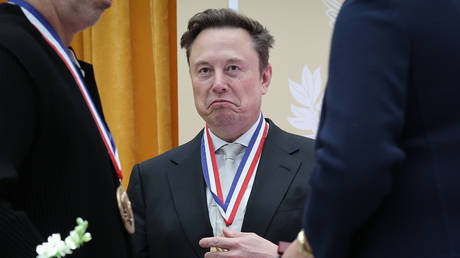
Every election cycle, the narrative returns like clockwork. A billionaire opens a checkbook, the media panics about dark money flooding the zone, and pundits declare that democracy is for sale to the highest bidder. When Elon Musk started funneling tens of millions into super PAC ground operations to mobilize low-propensity voters in late 2024, the lazy consensus wrote itself: checkbook politics was rewriting the map, and cash was king.
It is a comforting myth for people who do not understand how campaigns actually function. It turns complex sociological shifts into a simple comic book plot where the villain buys a magic wand.
I have watched strategists blow fortunes on mailers that go straight to the recycling bin and digital ads that irritate more than they persuade. Money does not buy votes. Money buys velocity. And velocity without a structural tailwind is just expensive noise.
The Fallacy of the Super PAC Checkbook
Let us look at the mechanics. You write a check for fifty million dollars. You cannot hand it to a candidate because of contribution limits, so you route it through an independent expenditure committee. That committee hires consultants, who hire media buyers, who buy ad inventory at inflated rates during peak panic season.
By the time the money hits the street, twenty percent has vanished in administrative fees and overhead.
The core misconception is that voters are blank slates waiting to be inscribed by the biggest ad budget. They are not. They are calcified, tribal, and deeply cynical. You can carpet-bomb a swing district with television spots until the screens bleed, but if the local party apparatus is broken, if your precinct captains do not know who is actually living at 424 Elm Street, and if your candidate inspires zero genuine enthusiasm, your cash is just a tax on your own impatience.
Musk did not buy an election with his political action committee. What he did was something far more interesting and much harder to replicate: he outsourced a ground game to a decentralized field operation that bypassed the sclerotic state party bureaucracies.
And even then, the return on investment was wildly misunderstood.
Why Traditional Ground Games Are Dying
For decades, the political science consensus held that door-to-door canvassing was the gold standard for turnout. Graduate students with clipboards would knock on doors, hand out glossy flyers, and claim a two-percent lift in turnout.
That model died when caller ID and video doorbells turned every suburban porch into a fortress.
People do not answer doors for strangers anymore. They certainly do not want a twenty-two-year-old college kid reading a scripted pitch about marginal tax rates or infrastructure spending off an iPad. When campaigns rely on traditional union halls or local party chapters to man the phones, they are deploying nineteenth-century infrastructure to solve a twenty-first-century engagement problem.
The reason outside money operations looked dominant is not because they outspent the opposition. It is because they treated voter mobilization like a direct-response marketing funnel. They treated low-propensity voters like consumers who needed a friction-free checkout experience to cast a ballot.
Canvassing is no longer about persuasion. Persuasion is dead. Everyone has made up their mind by Labor Day, if not four years earlier. Canvassing is about logistics. It is about pipeline management.
The Nuance Washington Misses
When analysts look at high-stakes midterms or presidential cycles, they love to obsess over ad spending totals. It makes for good television graphics. Candidate X raised fifty million this quarter.
It misses the entire point of how political momentum builds.
Cash buys you margin for error. If you make a catastrophic messaging blunder, a deep-seated war chest allows you to run counter-programming until the news cycle buries it. But money cannot manufacture a movement out of thin air. When populist energy surges through a demographic—whether it is working-class men drifting away from coastal elites or suburban women reacting to judicial appointments—that energy exists entirely independent of billionaire patronage.
The billionaires just hitch their wagons to the moving train and pretend they built the tracks.
If you put fifty million dollars into a dying coalition with a repulsive candidate, you get an expensive defeat. We have seen it happen in cycle after cycle. Wealthy donors throw tantrums at fundraisers, fund vanity projects, and wonder why their preferred technocrat loses by ten points to a populist incumbent with a rusted-on base.
The uncomfortable truth for the donor class is that money is a force multiplier, not a creation engine. Multiply zero by a billion, and you still have zero.
The Micro-Targeting Trap
Modern campaigns are obsessed with data analytics. They slice electorates into micro-segments based on consumer habits, credit scores, and magazine subscriptions. They believe that if they send a specific text message about public lands to a hunter in rural Pennsylvania and a different text about school choice to a mother in the suburbs, they have engineered a victory.
This is hubris dressed up as science.
Hyper-segmentation often leads to fractionalized messaging that makes a candidate look like a shape-shifter who stands for nothing. When you try to be everything to every micro-demographic, you end up with a platform so sanded down by focus groups that it lacks a pulse.
People do not vote for spreadsheets. They vote for power, or they vote out of grievance, or they vote because their peer group is moving in a specific direction.
The real innovation in modern cycles is not the data model; it is the peer-to-peer transmission vector. When an influential figure with massive reach tells their audience that the system is rigged against them, that message travels faster and deeper than any targeted digital ad buy ever could. It bypasses the gatekeepers entirely.
What Actually Moves the Needle
If you want to understand why political dynamics shift, stop looking at campaign finance reports and start looking at institutional trust.
When trust in media, universities, and federal agencies hits historic lows, traditional top-down messaging collapses. People stop believing the press release. They stop believing the editorial board endorsement. They look for signals from peer networks and anti-establishment figures who appear to have skin in the game.
This is why outside money only works when it aligns with an existing cultural current. Trying to buy a trend that does not exist is like trying to push a rope uphill.
The downside to this decentralized reality is volatility. When campaigns rely less on disciplined party structures and more on mercurial external actors and independent media ecosystems, the system becomes impossible to control. Establishment gatekeepers lose their veto power over who gets to play.
That terrifies the political class. It should. The gatekeepers built a cartel that protected incumbents and kept discourse safely within acceptable boundaries.
Stop Trying to Buy the House
The narrative that millions of dollars can magically rescue a flailing political party or a weak candidate is a comforting fiction for consultants who want to justify their ten percent commissions.
Money matters, but only at the margins. It pays for the fuel, but it does not steer the ship, and it certainly does not create the wind.
Until political observers stop treating elections like high-stakes corporate acquisitions and start treating them like chaotic cultural movements, they will continue to misread every major shift in American politics. The billionaires are not buying the republic. They are just paying for a front-row seat to a play they did not write.

