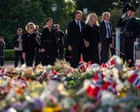
Buckingham Palace has confirmed that the Prince of Wales will cross the North Sea to represent the British sovereign at the state funeral of King Harald V of Norway at Oslo Cathedral. King Charles III will remain in the United Kingdom, adhering to an entrenched royal protocol that dictates reigning monarchs do not attend the funerals of their foreign counterparts.
Protocol dictates the absence, but the optics demand a heavy hitter. Prince William’s journey to Oslo on September 9 is more than a diplomatic checkbox. It marks a generational handover of symbolic weight, positioning the future British king at the center of a profound moment of transition for Northern Europe's royal houses. In related updates, we also covered: Inside the Greek Fiscal Package That Hides a Desperate Political Gamble.
The Unwritten Rules of Royal Mourning
Sovereigns stay home. That is the rulebook written across centuries of dynastic survival. When a reigning king or queen passes, foreign monarchs send heirs, cousins, or special envoys to avoid upstaging the grieving family and to sidestep complex, highly contentious questions of diplomatic precedence.
King Harald V passed away at the age of eighty-nine following a deterioration in his health that saw an outpouring of national grief across Norway. Known for his self-deprecating humor, accessibility, and fierce commitment to democratic monarchy during his thirty-five-year reign, Harald was a towering anchor in Scandinavian public life. His death closes an era. The Washington Post has also covered this fascinating subject in great detail.
By dispatching William rather than going himself, King Charles maintains the institutional barrier built to protect the mystique of the crown. Yet, the choice of William carries distinct resonance. The British and Norwegian Windsor-Glucksburg lines are deeply intertwined, tracing shared blood back to King Edward VII and Queen Alexandra. Harald was a second cousin to the late Queen Elizabeth II. When William attends the service alongside his aunt, the Princess Royal—who is attending in a personal capacity as godmother to the newly ascended King Haakon VIII—he is collecting a familial debt accrued over generations of cross-channel diplomacy.
The Weight of Modern Continuity
Monarchies across Europe are shrinking, visibly and structurally. As royal houses face economic scrutiny and shifting public sentiment, every international appearance by a direct heir is heavily scrutinized for its political utility.
When William and Catherine, Princess of Wales, visited Oslo in 2018, King Harald greeted them warmly at the Royal Palace, publicly referring to them as family. That trip was designed to reinforce bilateral ties post-Brexit, using soft power diplomacy to maintain frictionless relations between London and Oslo. Fast forward to the present, and the context has darkened considerably. William returns to Oslo not for a state banquet, but to bid farewell to the man who hosted them.
The funeral also serves as an unannounced summit for Europe's future kings. As older monarchs fade, a cohort of younger heirs—men and women in their forties and fifties—must navigate the survival of hereditary institutions in an era hostile to unearned privilege. Harald managed to keep his institution relevant by leaning into radical ordinariness, famously steering his own boat and engaging openly with his critics. Whether William can translate that specific brand of populist royalty into his own future reign remains the defining question of his generation.
Beyond the Protocol
The diplomatic choreography in Oslo will be flawless, yet it masks a fragile moment for the houses involved. Norway's royal family has weathered a turbulent period, balancing public affection for the late king against domestic headwinds. For the British delegation, the trip underscores a quiet transition toward operational efficiency. Charles commands from home while his son takes the physical burden of international representation, a division of labor that will only accelerate in the coming years.
The bells of Oslo Cathedral will ring for a man who refused to abdicate because he believed his oath to the Norwegian parliament was sacred. Standing in the pews will be the man who inherits an identical burden across the water, watching the end of an extraordinary life and calculating the cost of what comes next.