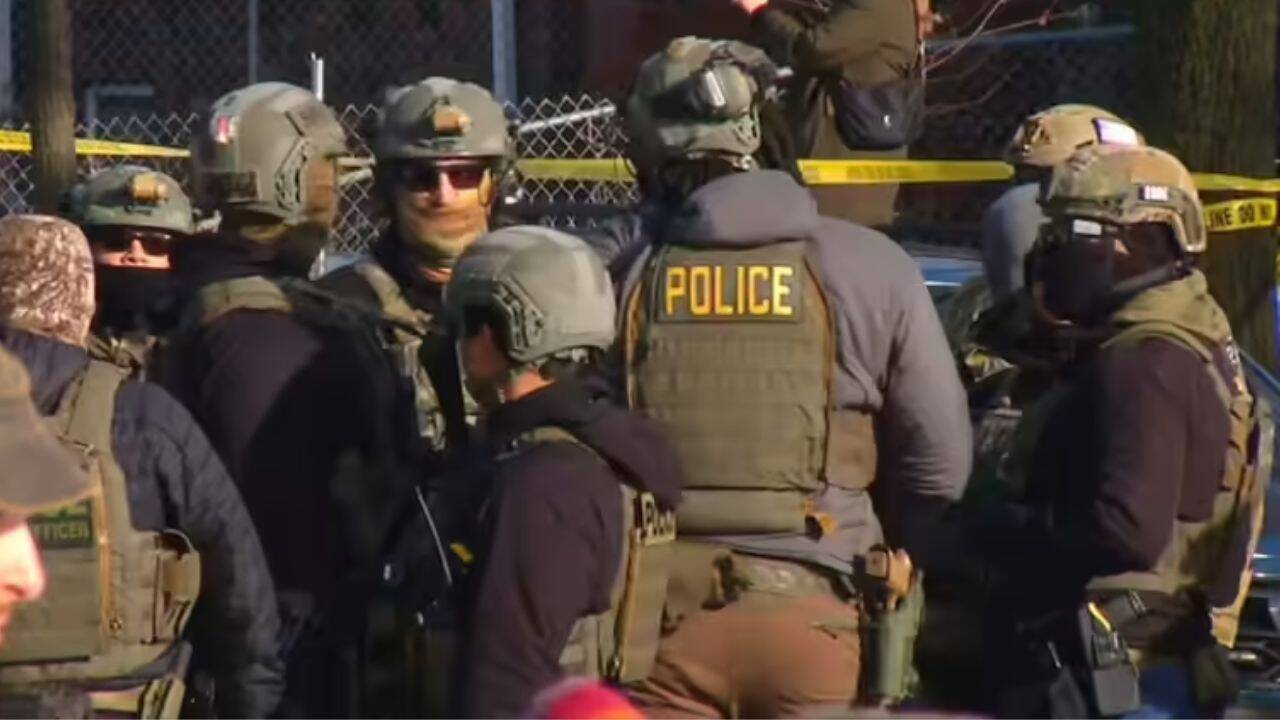
A Venezuelan delivery driver in Texas is recovering from surgery after an ICE officer shot him in the back, an incident that lays bare the lethal friction points multiplying across American immigration enforcement zones. The shooting occurred during an operation in North Texas, transforming a routine neighborhood encounter into a trauma center emergency room and igniting a fierce debate over use-of-force standards, jurisdictional boundaries, and the quiet militarization of domestic immigration sweeps.
Details emerging from local law enforcement, hospital records, and federal statements outline a chaotic scene where federal plainclothes or tactical personnel collided with civilian gig workers navigating the complex web of urban delivery routes. The victim, whose identity has been withheld pending ongoing investigations and safety concerns, was rushed to a regional trauma center where surgeons successfully removed a projectile lodged near his spine. While federal agencies frequently defend such actions through the prism of officer safety and suspected resistance, civil rights attorneys and local community advocates point to a glaring lack of transparency, calling into question the tactical necessity of discharging firearms in densely populated residential areas. For a closer look into this area, we suggest: this related article.
The broader institutional anatomy of these operations reveals a dangerous blurring of lines. Immigration and Customs Enforcement operations increasingly rely on local tactical support or conduct high-stress urban interventions without the visible insignia, uniform clarity, or community notification protocols that local police departments are typically required to maintain. When a delivery driver—a member of the ubiquitous gig economy workforce crisscrossing American suburbs—becomes the collateral damage of a high-stakes enforcement action, it exposes systemic vulnerabilities in how federal agents assess threats on civilian turf.
Accountability in these scenarios follows a labyrinthine bureaucratic route. Federal law enforcement officers operate under specific legal protections and qualified immunity doctrines that make criminal prosecution or civil liability exceptionally difficult to secure. Internal reviews conducted by the Department of Homeland Security's Office of Inspector General often take months, if not years, to materialize into public reports, leaving communities to process violent encounters in a vacuum of official information. Local police departments, frequently walled off by federal jurisdiction, find themselves sidelined from investigating use-of-force incidents involving federal personnel operating within municipal borders. For further details on the matter, extensive analysis can also be found on Reuters.
Gig economy platforms have also faced scrutiny for failing to protect workers who find themselves caught in the crosshairs of federal operations. Delivery drivers operate as independent contractors, lacking the institutional backing, hazard pay, or legal safety nets of traditional employees. As enforcement actions target apartment complexes, suburban strip malls, and residential streets where delivery workers make hundreds of daily stops, the risk of tragic misidentification grows exponentially.
The physical recovery of the driver in Texas is only the opening chapter of a much larger reckoning. As federal authorities face mounting pressure from congressional representatives and immigrant advocacy coalitions to release body-camera footage and operational logs, the core question remains whether accountability mechanisms can keep pace with the aggressive expansion of interior immigration enforcement.
Every unanswered question from the federal apparatus deepens the fracture between marginalized communities and the institutions mandated to enforce the law. The hospital bed in Texas holds a man recovering from steel and lead, but the broader damage extends across an entire labor force working in the shadows of an enforcement regime operating without meaningful oversight.