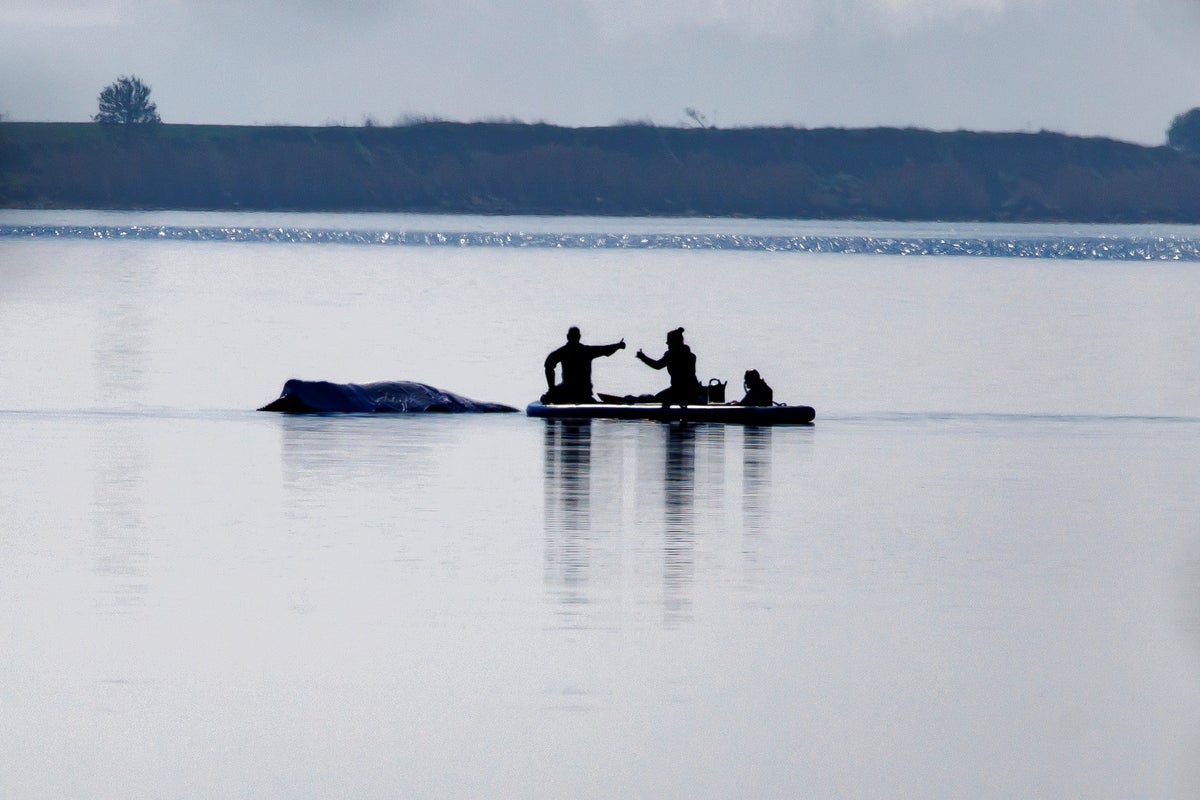
When a multi-ton humpback whale strands itself on a coastline, human emotion takes over. Crowds gather with buckets, wildlife agencies deploy heavy machinery, and social media feeds fill with prayers for the creature. But the hard truth of marine biology is that beachside interventions for large whales are almost always a mistake, prolonging suffering under the guise of compassion. Marine mammals strand themselves primarily because they are catastrophically ill or injured, and forcing them back into the ocean merely condemns them to a slow, invisible death at sea.
The public demands a rescue, but science demands a reality check.
The Anatomy of a Stranding
To understand why intervention fails, you have to understand what happens to a whale's body when it leaves the water. Whales evolved to live in a zero-gravity environment where the ocean supports their massive weight. The moment a humpback whale rests on solid ground, gravity becomes a lethal enemy.
Without the buoyant support of the sea, the sheer mass of the animal crushes its internal organs. The muscles in contact with the sand experience severe compression, leading to a condition known as crush syndrome or rhabdomyolysis. As muscle tissue dies, it releases massive quantities of myoglobin and potassium into the bloodstream. Once the animal is pushed back into the water and blood flow returns to these damaged areas, these toxins rush straight to the kidneys and heart.
The whale might swim away initially. The crowd cheers. The news cameras turn off. But within hours or days, the animal’s kidneys fail, or its heart stops due to hyperkalemia. We do not save the whale; we just move its dying moments out of human sight.
The Illusion of Success
Stranding networks track data meticulously, yet the public rarely sees the long-term outcomes. When a large baleen whale beaches, the survival rate following a successful "re-floating" is statistically close to zero.
Consider the logistical nightmare of a response operation. Heavy straps are wrapped around the whale's peduncle or flippers. Heavy machinery pulls against the tide. This process frequently causes severe skeletal trauma, dislocating vertebrae or tearing connective tissue that a wild animal relies on for deep-sea diving and feeding.
Furthermore, whales beach themselves for underlying reasons that a bucket of water cannot fix. Marine mammals are highly susceptible to severe parasitic infections in their inner ears, which destroys their navigation system. They suffer from advanced cancers, acute pneumonia, and heavy metal poisoning accumulated through the food chain. A whale on a beach is the final stage of a terminal illness. Pushing a terminally ill, crushed, and traumatized animal back into the surf is an act of prolonged torture, not salvation.
The Resource Drain and Public Safety Risks
Every major whale stranding burns through tens of thousands of dollars in municipal resources, specialized equipment, and veterinary time. These resources are finite. When conservation groups spend vast sums attempting to save a single, dying humpback, those funds are stripped away from initiatives that protect healthy populations, such as enforcing shipping lane speed limits, funding acoustic monitoring networks, or clearing ghost fishing gear from critical habitats.
There is also a significant human cost. A thrashing 30-ton whale possesses immense kinetic energy. One unpredictable flick of a fluke can crush a responder's pelvis or pin a volunteer beneath the surf. Responders face exposure to zoonotic diseases. Whales carry highly infectious bacteria, including strains that cause "seal finger" or severe respiratory infections in humans, which can aerosolize through the animal’s blowhole.
Shifting the Ethics of Marine Conservation
The current framework relies too heavily on public relations rather than veterinary science. Wildlife agencies often feel intense pressure from local politicians and emotional crowds to "do something." This pressure results in prolonged suffering for the animal because euthanasia of a large whale is technically challenging and visually distressing to the public.
Euthanasia requires specialized, large-caliber delivery systems or massive doses of targeted pharmaceuticals injected directly into the cardiovascular system. It is expensive, visually jarring, and requires heavy security to keep onlookers back. Yet, it is the only humane option available for a stranded large whale.
A New Protocol for Stranded Giants
We need a radical shift in how coastal communities handle these events. True conservation means accepting mortality on the shoreline and prioritizing the health of the broader ecosystem over individual optics.
Instead of mobilizing heavy machinery for a futile rescue, the standard protocol must pivot toward rapid assessment and immediate palliative care or euthanasia.
- Establish immediate exclusion zones to keep the public at a distance, reducing the stress levels of the dying animal.
- Deploy veterinary teams trained specifically in large-scale euthanasia rather than assembly-line re-floating tactics.
- Secure the carcass for scientific necropsy to gather vital data on ocean health, pollution levels, and disease prevalence.
When we force a dying whale back into the ocean, we choose our own emotional comfort over the animal's welfare. True stewardship requires the courage to stand on the beach, look at a suffering giant, and decide to let it die in peace.