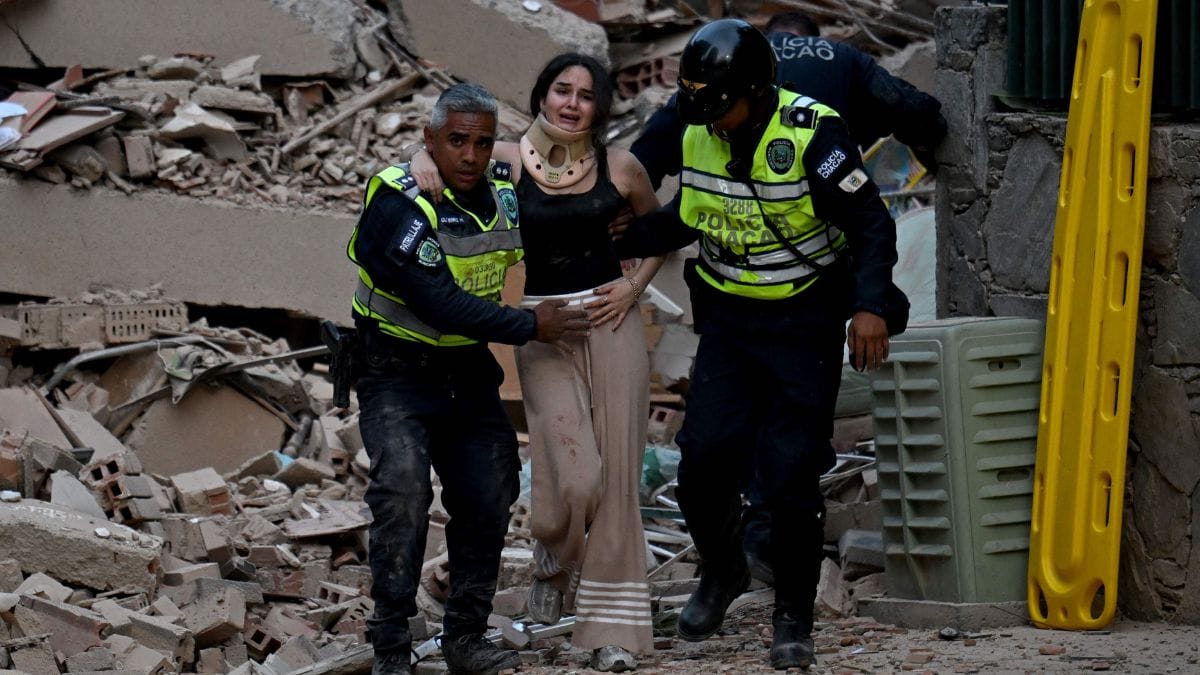
The twin earthquakes that tore through north-central Venezuela on June 24, 2026, did not just destroy concrete structures. They exposed a state hollowed out by years of systemic decay, leaving over 3,800 dead and tens of thousands missing between Caracas and the devastated coast of La Guaira. While official propaganda channels blame natural forces alone for the 80 percent collapse rate of buildings in La Guaira, the true culprit is a toxic mix of unreinforced engineering, a evaporated regulatory system, and a completely dismantled emergency response network. This disaster reveals how a long-standing humanitarian emergency multiplies the casualties of a predictable tectonic event.
The Short Seconds That Rewrote the Coast
It took exactly 39 seconds to alter the topography of the northern coast. At 18:04 local time, a magnitude 7.2 earthquake struck the San Sebastián fault system near Yaracuy. Before citizens could comprehend the initial shock, a second, more violent 7.5 magnitude mainshock ruptured directly to the east.
The double shock sent seismic waves propagating toward the capital at over three kilometers per second. In Caracas, historic neighborhoods shook violently, throwing residents into streets choked with dust and the sound of shattering glass. The worst of the energy, however, traveled straight down the mountainside toward the Caribbean sea.
In La Guaira, the narrow strip of land sandwiched between the steep Avila mountain range and the ocean, the built environment offered no resistance. The ground deformation combined the power of both tremors, delivering a maximum slip of 3.6 meters offshore near Catia La Mar. Entire apartment blocks dropped into their own foundations. The infrastructure collapsed because it had been starved of maintenance, compliance checks, and structural reinforcement for over two decades.
The Myth of Sudden Catastrophe
Government ministers quickly took to state television to describe the event as an unpredictable act of God. That narrative is fundamentally false. Seismologists at the Venezuelan Foundation for Seismological Research had spent years warning that the San Sebastián fault was under extreme stress.
The physical destruction tracks directly with a long history of circumventing building codes. During the construction booms of recent decades, developers routinely ignored seismic building regulations enacted after the 1967 Caracas earthquake. Builders substituted high-grade rebar with cheaper, brittle alternatives. They poured low-density concrete that lacked the tensile strength required to survive a major strike-slip movement.
The corruption of the regulatory framework meant that building permits were commodities to be bought rather than safety standards to be enforced. In the hillsides surrounding Caracas and the high-density sectors of La Guaira, informal housing structures stacked precariously on top of each other had no engineering oversight at all. When the ground shifted, these vertical barrios slid down the hills, pulverizing everything beneath them.
A Health System Broken Long Before the Ground Shook
When the injured began flooding into hospitals across Caracas and Vargas state, they encountered an empty shell. The earthquakes did not break the Venezuelan healthcare network. They merely pulled back the curtain on a system that had already dissolved.
For years, public hospitals operated without basic antibiotics, clean water, or reliable electricity. Medical professionals had immigrated to Colombia, Spain, and the United States by the thousands, leaving skeletal staffs of overstretched residents and students. In the immediate aftermath of the June 24 disaster, doctors had to perform triage in dark parking lots using smartphone flashlights.
Amputations were conducted without proper anesthesia. Crucial orthopedic pins and surgical plates were completely unavailable, forcing families of victims with crushed limbs to scour the black market or rely on meager supplies brought in by international charities. The lack of blood bags and working refrigeration units meant that preventable hemorrhages became fatal within hours of rescue.
The Geopolitical Standoff Over Human Rubble
The humanitarian response has become a battleground of political posturing and administrative failure. Following the dismantling of key international aid offices in Caracas during the political crackdowns of 2025, the mechanism for receiving foreign disaster assistance was severely compromised.
The United States government pledged 300 million dollars in emergency relief, yet this sum remains frozen in bureaucratic gridlock and diplomatic friction. The current administration under Delcy Rodríguez views international aid workers with deep suspicion, delaying visas for search-and-rescue teams and impounding vital water purification equipment at ports of entry.
Compare this to historical precedents. When Haiti suffered its catastrophic earthquake in 2010, the global community mobilized well over a billion dollars in immediate assistance with direct logistical access. In Venezuela, the current geopolitical isolation means that aid arriving from traditional partners like Russia or China is focused on securing industrial sites and port facilities rather than digging out civilian neighborhoods.
Local social movements have stepped into this vacuum. Neighbors are using their bare hands, rusted shovels, and car jacks to move tons of fallen masonry. They receive little to no logistical support from the central state, which has instead prioritized deploying national guard units to prevent civil unrest and secure commercial zones from looting.
The Numbers the State Refuses to Count
Official communiqués put the death toll around 3,300 to 3,800, but local independent monitors and international agencies recognize these figures as extreme undercounts. The United Nations estimates that up to 50,000 people remain entirely unaccounted for across north-central Venezuela.
In cemeteries like La Esperanza in La Guaira, workers are hastily digging mass graves with heavy machinery to bury hundreds of unidentified bodies. The speed of these burials serves two purposes for the ruling authorities. It mitigates the immediate public health threat posed by decomposing remains in tropical heat, and it effectively buries the true scale of human loss from public view. Simple white crosses bearing only the date of June 24, 2026, line the fresh dirt, leaving families to wander from camp to camp looking for any record of their missing children.
The economic reality is equally stark. Initial estimates put the direct structural damage at roughly 37 billion dollars, representing a massive hit to a national economy that was already operating on life support. The international airport serving Caracas remains shut down to commercial air traffic, cutting off the primary conduit for logistics, independent journalism, and technical experts.
The Permanent Cost of Institutional Absence
Surviving the earthquake is only the first hurdle for the population of the coastal strip. A silent crisis is now taking hold in the temporary camps and public plazas where thousands of displaced families sleep on thin mattresses under plastic tarps.
The complete rupture of underground aqueducts and gas lines means that waterborne illnesses are spiking. Dysentery and hepatitis are spreading through informal camps in Catia La Mar and Caraballeda. Without state-funded reconstruction plans or access to capital, these temporary settlements are rapidly transforming into permanent slums, solidifying a new geography of displacement along the Caribbean coast.
The state infrastructure has shown itself to be entirely predatory, focused on regime survival rather than civil protection. While official statements praise the deep solidarity of the Venezuelan people, that solidarity is born out of absolute desperation because the population knows no official rescue is coming.
The reconstruction of La Guaira and the fractured sectors of Caracas cannot begin with pouring new concrete or signing international aid agreements that disappear into bureaucratic pockets. It requires a fundamental reckoning with the structural corruption that made these buildings fatal traps in the first place. Until independent engineering oversight, unhindered international access, and accountable governance replace the current defensive secrecy, the fault lines running beneath the northern coast will remain an active threat to every citizen living above them.