The hypothetical departure of the United Arab Emirates (UAE) from the Organization of the Petroleum Exporting Countries (OPEC) is no longer a fringe theory whispered in the hallways of Vienna. It is a mathematical inevitability born from a fundamental clash between national ambition and a cartel framework designed for a bygone era. While OPEC seeks to manage prices through artificial scarcity, Abu Dhabi has spent billions to ensure it can pump more, not less. This friction is reaching a breaking point that could redefine global energy markets and strip the world's most powerful oil club of its remaining relevance.
For decades, the UAE was the quiet, reliable partner to Saudi Arabia’s leadership. That dynamic has shattered. The UAE’s sovereign wealth and industrial strategy are now tied to a massive expansion of production capacity, targeting 5 million barrels per day (mbpd) by 2027. Under current OPEC+ quotas, a significant portion of that newly built infrastructure sits idle. For a nation-state operating like a corporate juggernaut, idle assets are an unacceptable drain on the balance sheet.
The Cap on Sovereignty
The core of the dispute lies in the "baseline"—the number from which production cuts are calculated. Abu Dhabi argues its baseline is outdated and fails to account for the massive investments made by ADNOC (Abu Dhabi National Oil Company). When a country spends over $100 billion to modernize its fields and introduce carbon-capture technology, it does not do so to watch the pumps stay still.
OPEC operates on the principle of collective sacrifice. However, the UAE views this sacrifice as an asymmetric tax on its growth. While other members struggle with aging infrastructure and declining investment, the UAE is at its peak. Staying in the group means subsidizing the market share of less efficient producers. If the UAE leaves, it gains the immediate freedom to flood the market with its lower-cost, lower-carbon crude, prioritizing its own fiscal requirements over the price-floor desires of the Riyadh-led bloc.
The Murban Pivot and Financial Independence
The launch of the Murban Futures Contract on the IFAD exchange was a quiet declaration of independence. By turning its flagship crude grade into a transparent, market-driven benchmark, the UAE moved away from the opaque, retroactive pricing models often favored by OPEC. This was a sophisticated play to attract global traders and tie Asian refineries directly to Emirati supply.
Murban is a light, sweet crude—highly prized and increasingly competitive against American shale. By establishing a liquid futures market, Abu Dhabi created the financial plumbing necessary to exist outside the OPEC umbrella. They no longer need a committee in Vienna to tell them what their oil is worth; the screens in London, Singapore, and New York do it for them. This infrastructure makes an exit not just a political statement, but a viable commercial transition.
Why Saudi Arabia Cannot Fold
The tension is a classic "prisoner's dilemma." If Saudi Arabia grants the UAE a higher quota to keep them in the fold, every other member—from Kuwait to Iraq—will demand the same. The cartel’s ability to "balance" the market would vanish instantly. Saudi Arabia needs oil prices at a certain level to fund its "Vision 2030" projects, like the $500 billion city of NEOM.
The UAE, conversely, has a different math. With a smaller population and a more diversified economy, it can tolerate lower prices if it makes up the difference in volume. This creates a dangerous divergence in fiscal break-even points. Abu Dhabi is betting that in a world transitioning away from fossil fuels, the "last man standing" should be the one who can produce the cheapest, cleanest barrel at the highest volume.
The Hidden Cost of the Exit
Leaving OPEC is not a risk-free maneuver. The immediate consequence would likely be a price war. We saw a glimpse of this in March 2020 when Saudi Arabia and Russia engaged in a production free-for-all that sent prices into negative territory. A UAE exit could trigger a similar race to the bottom.
There is also the matter of regional security and diplomacy. The UAE and Saudi Arabia are bound by more than just oil; they share intelligence, defense interests, and a complex geopolitical neighborhood. A messy divorce in the oil markets could bleed into these other areas, weakening the Gulf Cooperation Council (GCC) at a time of heightened regional instability.
Infrastructure as Destiny
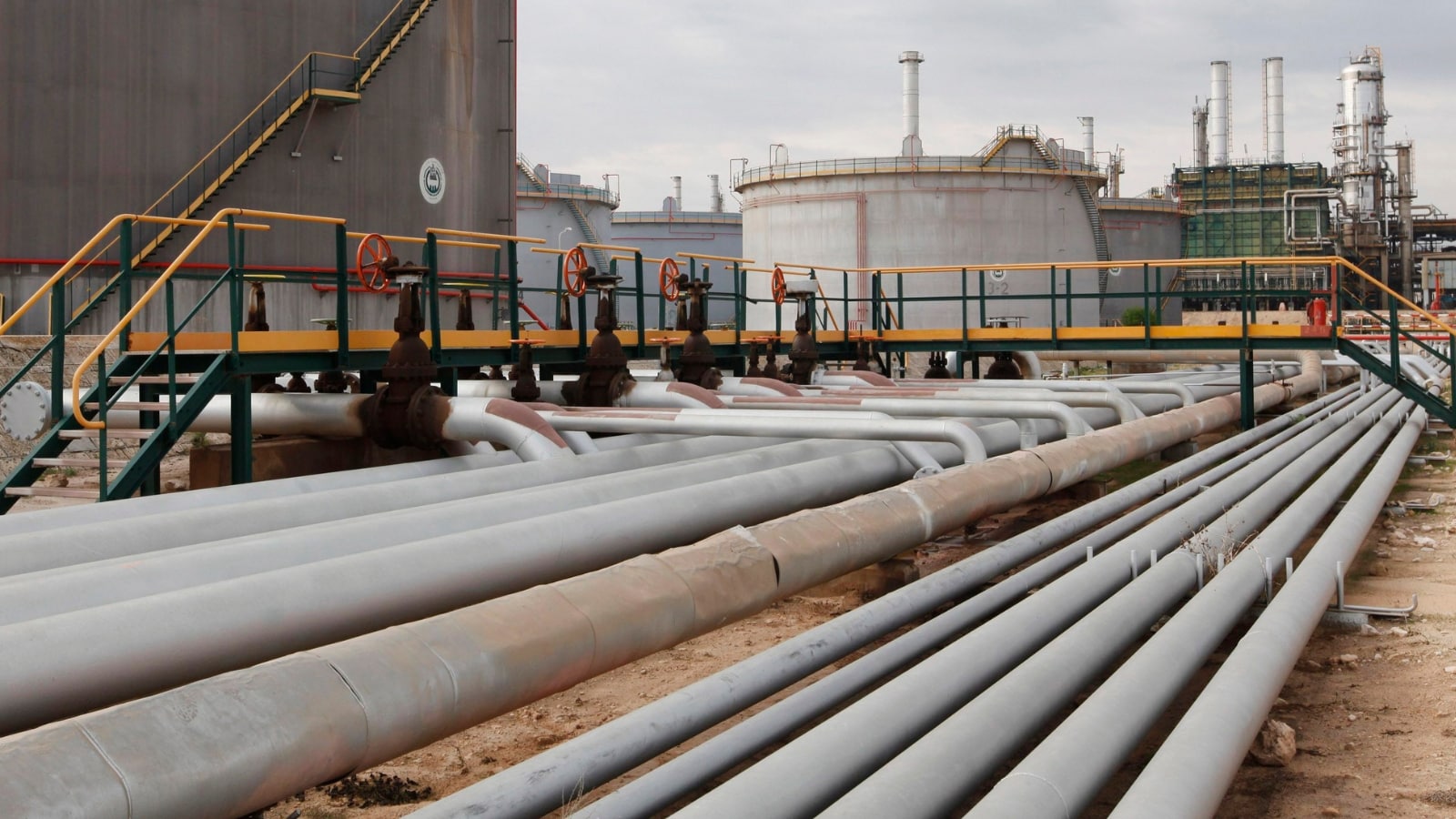
The UAE is not just building oil rigs; it is building a massive logistical network. The expansion of the Fujairah export hub, which bypasses the volatile Strait of Hormuz, gives the UAE a strategic advantage that few other OPEC members possess. This physical decoupling from the transit risks of the Persian Gulf mirrors their desire for political decoupling from OPEC’s constraints.
The Shale Factor and Global Competition
The UAE is also looking over its shoulder at the United States. American shale producers have become the world’s "swing" suppliers, often reaping the benefits of OPEC’s production cuts. Every time the UAE trims its output to support prices, it effectively hands market share to companies in Texas and North Dakota.
For the strategists in Abu Dhabi, the long-term threat isn't just the energy transition; it's being squeezed out of the market by competitors who aren't bound by quotas. By exiting OPEC, the UAE would be able to compete head-to-head with any producer in the world. They have the reserves, the technology, and the capital to win a long-term war of attrition.
A New Era of Energy Alliances
If the UAE departs, it won't stay isolated for long. We could see the emergence of a new "Energy Triangle" involving the UAE, India, and potentially non-OPEC producers like Guyana or Brazil. These partnerships would be based on bilateral trade agreements and long-term supply security rather than the restrictive, top-down management style of the current cartel.
India, as one of the world's fastest-growing energy consumers, is a natural anchor for this strategy. Abu Dhabi has already invested heavily in India’s strategic petroleum reserves. These deep ties provide a guaranteed home for Emirati crude, regardless of what the ministers in Vienna decide.
The Decarbonization Paradox
The UAE is hosting climate summits while simultaneously expanding oil capacity. Critics call it a contradiction; the UAE calls it pragmatism. They argue that as the world moves toward net-zero, the demand for oil will not disappear overnight, but it will become more selective. The market will favor producers with the lowest carbon intensity per barrel.
ADNOC has been aggressive in electrifying its operations and utilizing carbon capture. By the time the world hits peak oil demand, the UAE intends to be the most efficient producer left. OPEC’s quota system, which protects less efficient and higher-emitting producers, runs directly counter to this "green crude" strategy.
The Breaking Point
The decision to leave will not be made in a fit of pique. It will be a cold, calculated move based on the moment the cost of remaining—in terms of lost revenue and stagnant growth—outweighs the benefit of price stability.
Current internal modeling suggests that if the UAE can maintain a price of $60 to $70 per barrel while pumping at full capacity, its total national income would far exceed what it earns at $85 per barrel under current restrictions. Once that math becomes undeniable, the exit becomes a formality.
The global market should prepare for a world where the "O" in OPEC no longer stands for a unified organization, but a fractured collection of interests. When the UAE walks, it takes the cartel’s credibility with it. The resulting market volatility will be the growing pains of a new energy order where the strongest producers finally stop pretending they have the same interests as the weakest.
Investors and policymakers who are still betting on OPEC’s long-term dominance are ignoring the physical and financial reality on the ground in the Gulf. The pipelines are laid, the benchmarks are set, and the capacity is ready. The only thing left is to turn the valves.